Last year in advance of the 75th Anniversary of D-Day this week, I had the opportunity to visit the Normandy region with fellow cruise ship passengers when the ship sailed into the port of Le Havre, France. Our private tour Normandy with Brigitte (Bridget) of Unforgettable Normandy included a split of Canadians and Americans so was curated to see both the American and Canadian cemeteries, the Canadian Juno Beach centre and Omaha Beach (she offers many options and can customize an itinerary like she did for us). More than twenty years ago, I attempted to visit the American cemetery but arrived after closing time as I spent so much of the day driving from Paris stopping at various museums, sites and other places my friend wanted to visit. It’s probably good that I didn’t visit back then in my 20’s after college because I’m not sure I would have felt the full impact of D-Day (6 June 1944). It was quite emotional visiting the cemeteries and beaches. Reading about WWII in school or watching the many movies like “Saving Private Ryan” provides conceptual view but doesn’t prepare you for standing on the beautiful beach haunted by the gruesome violence and bloodshed. Doesn’t prepare you to look out to the water once filled with traps, look at the beach and feel the deep sand that is hard to walk through and look for the bunkers. During WWII, approximately 16 million Americans served in the armed forces. That’s a staggering number to wrap my head around.
Bridget picked us up in port for the long day at 8:30 a.m. (we would be dropped off by 5 p.m.). After a week at sea, we were happy to be on land but knew that it was going to be a sad day despite the blue skies and picturesque puffy white clouds. The drive to Normandy coast was going to take at least 1.5 hours (or more), lucky for us, it was a Sunday and the roads were empty. Had this been a weekday with roadworks and traffic, our day would have been a bit different. Along the way, she narrated about the history of Normandy and surrounding areas as well as answered our questions. She had spent many years working in hospitality before joining tour companies and the visitor’s centers to tell the stories of Normandy.
The Canadian Cemetery – Private Tour Normandy
Beny-sur-Mer Canadian War Cemetery and Juno Beach Center
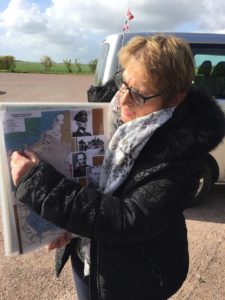
If not for the fact that the tour group was organized by a Canadian couple, I doubt, as an American that I would have known or chosen to visit Beny-sur-Mer Canadian War Cemetery which would have been a shame to miss. As we passed the open fields on the two lane road, the colors of spring and life had arrived in the countryside fields. As the van pulled into the small dirt parking lot near Caen in lower Normandy, I saw the Canadian flag. Bridget had many laminated photos and maps to show up about the various invasion points by Canadian troops along the Normandy coast. It was a coordinated effort by so many countries and the causalities spared no country.
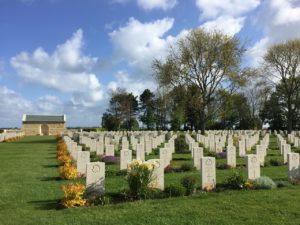
In comparison to the American cemetery, the Canadian cemetery is small with 2,049 grave markers representing the ground troops who landed at Juno Beach. There are two small towers on either side of the large stone marker. If you are searching for a particular soldier/grave site, there is a way to look them up on the guide.
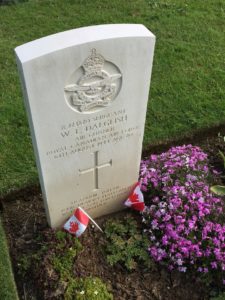
The first thing I noticed is that the neatly arranged site was full of flowers, warmth and sorrow. The majority of headstones had a Canadian Maple Leaf and a few had logos from their military division. The soldier’s name was listed along with date of death, age (teenagers to mid-40’s) and religious symbol (Latin cross or Star of David). Each family had the opportunity to add a quote or saying and when you took time to read them, it was both moving and felt invasive at the same time. Each grave is surrounded with flowers, shrubs, personal notes and other items.
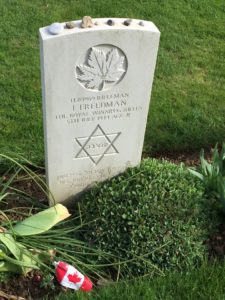
We spent about ½ hour wandering the cemetery. We all wandered separately to experience it in our own way. I walked in the center and then along the perimeter on the left side to not interfere with others in our group. There is one French grave with distinctive markings that sticks out a bit as it isn’t like the others. It belongs to a French resistance soldier, R. Guenard.

The group would continue to the Canadian Museum at Juno Beach Center. It’s Canada’s cultural center and WWII museum. Over 5,500 Canadians were killed during the Battle of Normandy, with 359 lives lost on D-Day. The museum has a small fee to visit, exhibits, a film and other displays for visitors. They also have a tour to a German bunker on the beach not far from the Center.
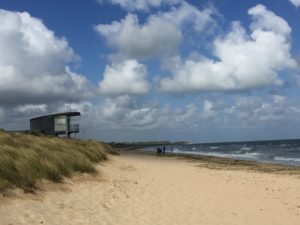
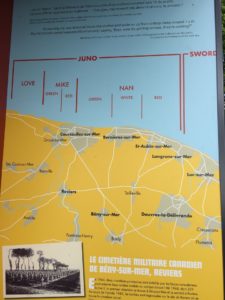
Village of Arromanches
After the long drive and the emotional visit to the Canadian sites, we stopped in the small village of Arromanches for lunch. There is the Museum of Normandy Landings, which is hard to miss with the military vehicle outside and the riveted date of 6 June 1944 in the door. Here there have information about Operation Overlord (code name for the Battle of Normandy), the Mulberry landings (man-made landing harbors that were floated across the English Channel) and WWII weaponry used.

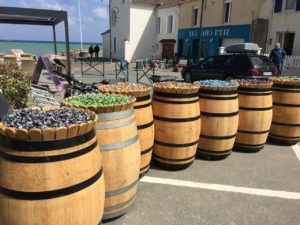
The small town along the coast is the stopping point for many tours to see the remnants of the harbor and Gold Beach. There are cafes, restaurants, quick takeaway and shops to peruse. We first followed many locals to the bakery as there was a line and many baguettes exiting the shop. From there we saw the staff setting up the I Love Caramels shop and we had to go a bit crazy filling our bags with Honfleur caramels, fudge and other treats. Totally snookered by the price per 100 grams (3.5 ounces), our fun ended with the 20 euro treats (really yummy treats but tourist expensive – rookie mistake on our part to choose the heavy items). With our timing winding down, we ate freshly made sandwiches at “Speed Food” across from the museum. Then we were back in the van to continue the trek along the coast.

75th D-Day Anniversary Banners in Normandy
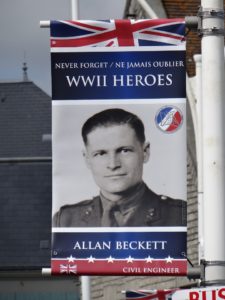
Normandy, the cemeteries and nearby towns were all preparing for the 75th Anniversary of D-Day (June 6, 2019) so there are banners around town with soldier photos and remembrances. The American cemetery would have ropes up along the paths to preserve the grass and prepare for the influx of dignitaries and visitors from around the world. Take time to read more about the Battle of Normandy this week and listen to the personal stories of the veterans.
Omaha Beach in Normandy, France
The van, unlike the big tour bus, was able to drive to the beach, which was good as the path from the American Cemetery above is now closed due to security concerns. It was a stunning beach and the gorgeous, albeit windy day, just added to the conflict in my mind. Its beauty is haunted by bloodshed and awful violence. The parts of the war not understood until you stand on the beach and look up at the ambush, look out to the water where metal traps were set up, see the memorial stone to the Army Medics who attended to wounded on the beach. How something so awful could happen here boggles the mind. I’m not sure I could have computed the heaviness of the loss twenty years ago when I first planned to visit. I think now that I’m older and understand more about the war, the sacrifice of so many young men and the military, it was affecting.
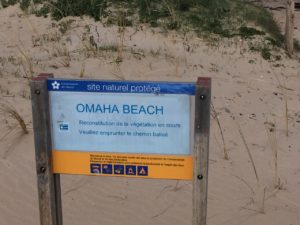
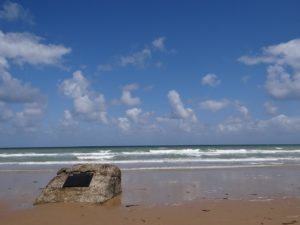
As I looked up from the beach, I knew that high above was the American Cemetery at Normandy that was filled with so many lost – more than 9,000 soldiers and names of 1,500 missing. It was a very windy day so best to turn off video sound.
[embedyt] https://www.youtube.com/watch?v=0kWNk5AVUpY[/embedyt]
The American Cemetery – Private Tour Normandy
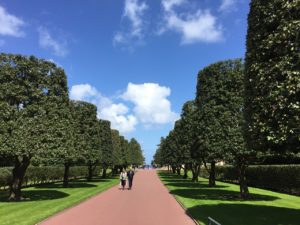
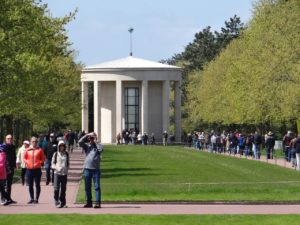
It’s quiet, serene and respectful at the American Cemetery at Normandy, France. It seems like any other park you’ve entered until you get to the D-Day time capsule marker that says to open in 100 years (June 6, 2044) to see the news reports of the day. We entered, not from the new visitor center which was closed for renovations but now reopened, but from the path in front and walked down the path of trees. You’ll first be struck by the American trees because they are obviously not of French origin.
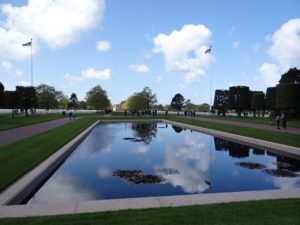
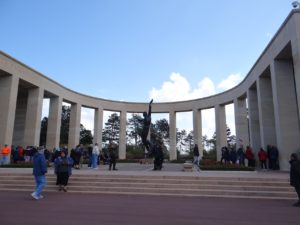
The tree lined path in the 172 acre memorial, opened to a large semicircle area with sculpture. There inscribed in the wall are invasion maps to get a scope of how large the D-Day invasion was. I had no clue to be honest. The maps of the landings, air operations and military operations of Western Europe along with the narrative were overwhelming for me.
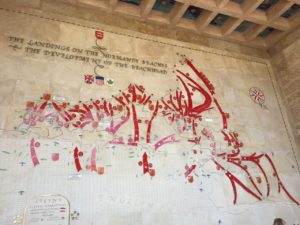
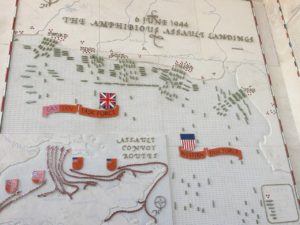
The large bronze statue in the middle of the structures is named “Spirit of American Youth Rising from the Waves”. Facing ahead is the reflection pool, similar to the one in Washington, D.C. with a small chapel in the middle of the burial areas. The wall of the missing which lists over 1,500 names is a semi-circle garden on the grounds.
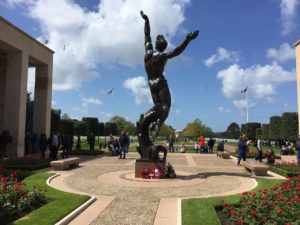

Despite all the people visiting, it was solemn and mostly quiet – but there were still many selfie takers with big smiles that seemed a bit out of place? My friend and I walked along the path with burials and crosses flanking us on all sides. The design is a cross with the chapel in the middle. There were just so many it was hard to take it all in. These men and boys sacrificed all for our freedoms – the freedom we often take for granted.
[embedyt] https://www.youtube.com/watch?v=YG7hLdsyM0w[/embedyt]

The crosses are meticulously maintained and placed. Unlike the Canadian cemetery, the markers stated only the soldier’s name, division and date of death. There are also grave markers for four women. Three from the Women’s Army Corp “Six Triple Eight” , the first all-female, African-American battalion working in the Central Postal Directory died in a Jeep crash, and one Red Cross volunteer who died in a plane crash. There are also four civilians buried here but I didn’t see those during my visit to know how their markers were different, if at all. No age, no personal statement or additional landscaping of flowers, etc. At the time, the U.S. only recognized three religions – Protestant, Catholic and Jewish. It’s all very somber.

As we reached the middle of the burials, we entered the small chapel with dome ceiling. The ceiling mosaic art is powerful depicting both American and French figures.
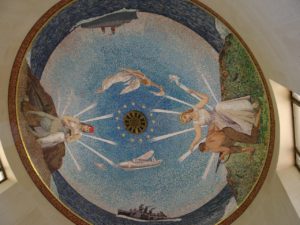
Once we left the chapel, we continued down another path toward the view of the beach down below. It’s hard to imagine landing on the beach and fighting the bullets from way up here. The movie “Saving Private Ryan” is still vivid in many of our minds and yet it didn’t indicate how high the climb up from the beach was in my opinion. Having been on the beach and now up above it, it again was hard to imagine any soldier advancing in the dark with a heavy pack and gun.

Our visit didn’t allow time to visit the Battle Museum on the grounds which has military equipment and other displays.
Final Thoughts – Private Tour Normandy
Having the opportunity to visit two cemeteries in Normandy – the Canadian and American – was a reminder how the worlds’ allies have come together to fight for freedom and the institutions and resolutions that came from that. In the world of divisiveness today, our wars are with words and ideology and the weapons are guns, social media and on the ground conflicts. I want to think that the past can be put to rest, that the sacrifices of so many on those beaches in France and around the world can be revered and remembered to avoid it happening again. At the end of the day, in my mind, the people around the world in different cultures want the same things – to live good lives, work jobs that support/provide for their families and be happy and healthy. The men and women of WWII in Normandy (and elsewhere) lost their future so that we can have ours. We need to honor their sacrifices not only on the 75th anniversary but everyday.

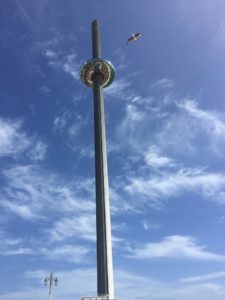
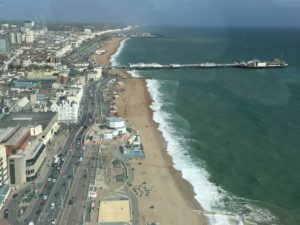
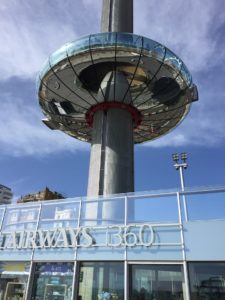
In the distance, I could see a concrete pole across the road that looked out of place here in the seaside town of Brighton, just an hour outside of London by train. A few minutes later when I looked, I saw a glass orb encircling the pole and inching upwards quite slowly. This was the i360 attraction I had read about that took you from the beach below up in the sky to have a panoramic 360 degree view of the city. Unlike other viewing platforms, this does not rotate but rather can accommodate up to 200 people inside who walk around to find their best view.
How to Buy Tickets for the i360 Brighton
It was a Wednesday in May before the summer crowds would arrive. The only competition for tickets and space would be one of many school groups. Thankfully, we were told of the groups when buying tickets and picked a time that wasn’t packed with children. I’m not anti-children, I’m anti school groups of 50-100 children at one time with a few adult chaperones. We could have purchased online for a slight discount but decided to buy i360 tickets in person once we saw the weather. The day we arrived was rainy and overcast vs the day of our visit when it was bright sun but fierce winds. The tickets cost £16.50 per adult. For summer visits, I would recommend pre-booking by buying online to avoid disappointment. There are also fun events like yoga and silent disco events for adults and children so definitely pre-book those events. They also host special events – fancy a dinner, wedding or christmas party here? Sounds fun!
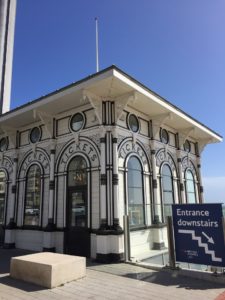
BA i360 Queue – Arrive Early
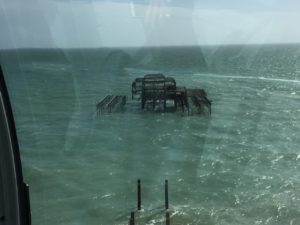
You are told that it’s mandatory to arrive 20 minutes early and with regular crowds I would suggest arriving 30 minutes in advance to go through security, watch the film and then get ready to board. They will also do the customary photo pitch before the ride, we tried to skip it but it was part of the queue experience. The film told of the history of the pier that was destroyed in a fire (a bit remains in the water, too expensive to remove fully so they are waiting for nature to do that eventually) and the folks who thought to rebuild the ticket booths and create the i360 attraction. The toilets/bathrooms (note unisex) are inside the building so use those before getting in line. The staff are quite mindful of the times on the tickets so don’t be late.
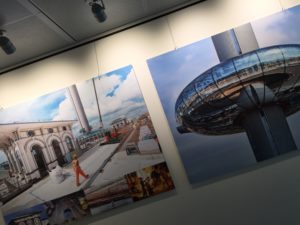
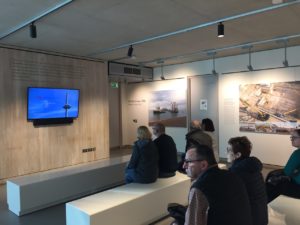
Boarding the British Airways I360 Glass Pod
When our group (about 20 people in total) boarded, we all quickly walked around, checked out the bar and its offerings and then found a seat (there are only a few against the inside). We quickly began the slow ascend and then one by one folks got up to get closer to the windows and edge to look around.
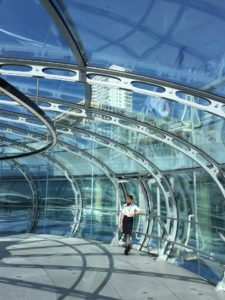
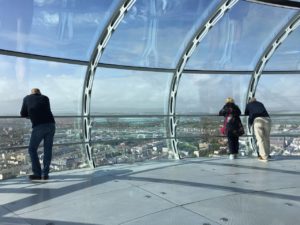
It was very sunny this day so there was a bit of a glare, some hot spots if you stayed in the sun too long (don’t worry the pod is air conditioned) and a need for sunglasses. I felt bad for the bartender and guide standing in the direct sunlight as he narrated some history and sights over the loudspeaker. As this is sponsored by British Airways, the televisions are playing highlights of destinations from London that BA fly to. The bar offers cakes, coffees, cocktails and ice cream as well as souvenirs.
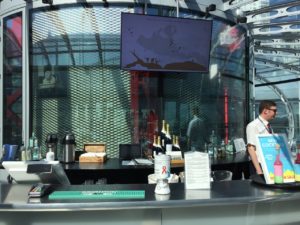
The pod moves so slowly you barely notice it until you do by looking outside. For those afraid of heights, I’m not sure I’d recommend this but the seats in the middle might help if your family pulls you along.
Brighton Views on the i360 – Up in the Sky
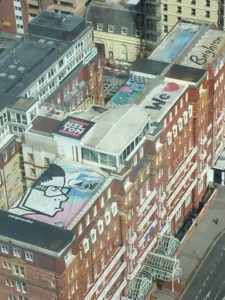
A few buildings and hotels have painted their rooftops with street art that can be seen from the i360 (smart idea and of course there’s a hashtag). You can see the railway station and beyond to the tree line and the town or city of Brighton is quite vast from above. It’s easy to see the historic rows of homes as well as the newer configurations a bit further away.
Looking out to the remaining pier in the water signifies the old while riding inside the i360 is the new Brighton.
Video Views of Brighton from the BA i360
[embedyt] https://www.youtube.com/watch?v=KKFsALvjmMM[/embedyt]
The water, beach, pier, buildings and landscapes were all pretty cool to see from above. Even my friend who was kinda blah initially about this attraction was quite impressed and surprised how much she enjoyed the ride. It is a slow ride up and then you stay a while before beginning the descent. Of course, when you arrive at ground level you exit back to the small gift shop where you can view your souvenir photo and buy it for a fee. There is a small café/bar area inside and outside to enjoy pre/post ride.
Overall – British Airways i360 Brighton
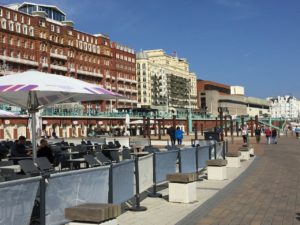
I had no expectations of the i360 so was pleasantly surprised by it. Having only twenty passengers vs. up to 200 passengers definitely made a difference in my experience. I wouldn’t want to deal with crowds for a photo spot or viewing point but that said, it’s a big pod that can handle the crowds. Arriving early you can see the film to provide history and staying a bit later to explore the gift shop with many local artists’ products for sale completes the experience. This is the new Brighton with nods to the past while exploring the future.
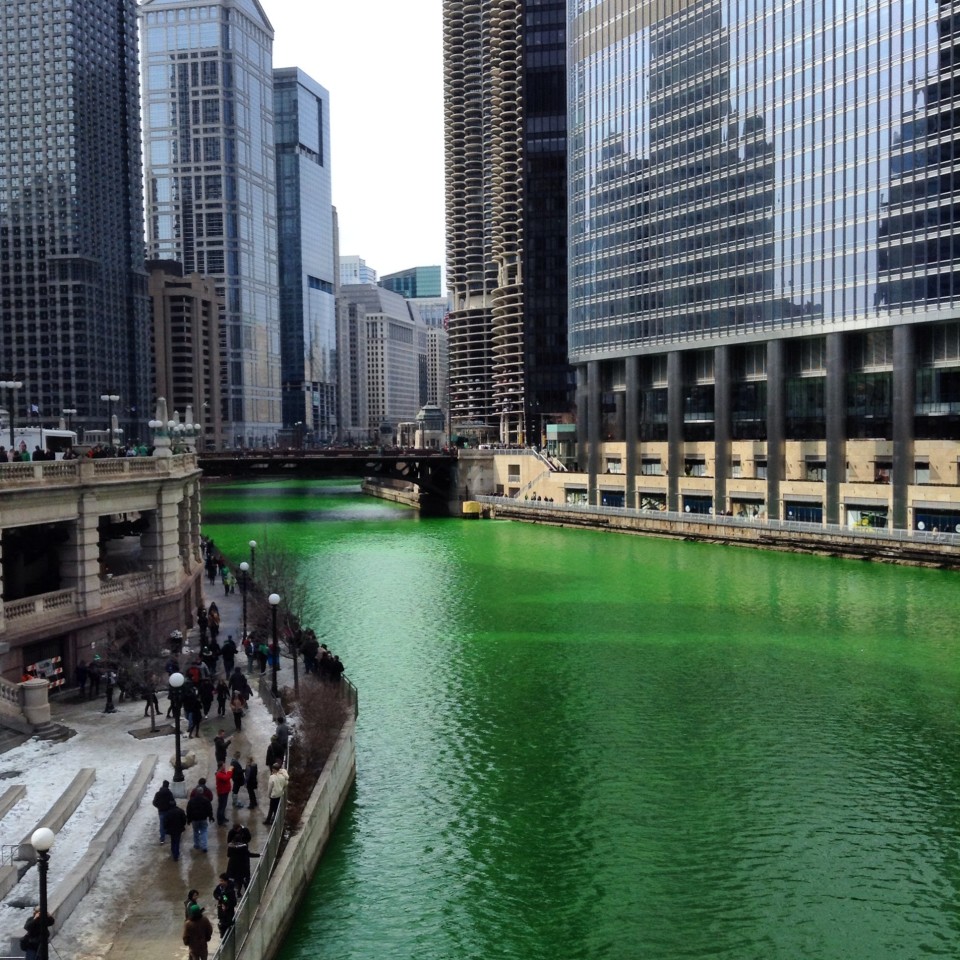
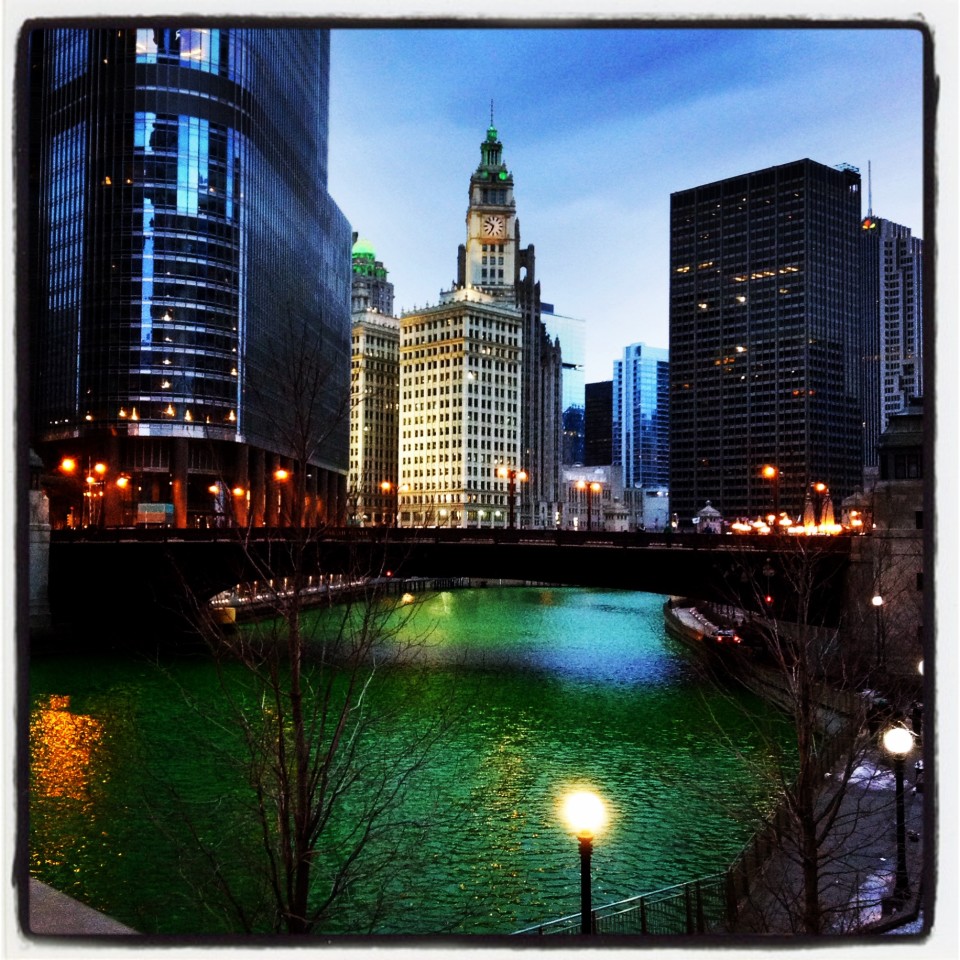
If you think your city does St. Patrick’s Day well (outside of Dublin of course), you’d be wrong. Chicago not only has multiple parades with the Downtown parade attracting over 300k people, they dye the river green! That’s taking it the extra mile and they have been doing this for over 50 years. With a eco-friendly vegetable dye the boats begin their routine of swirling the dye in the water. While I missed this part of the process, a friend had excellent photos she took from a nearby hotel high above the river (a few have rooftop viewing from bars and restaurants) – there are also multiple YouTube videos of the process from several years.
Off to see the Chicago Green River
During our extended lunch break, I was able to make my way through the kilts, the outlandish green body suits, the tall leprechaun hats and the more unbelievably dressed revelers (ah to be young, drunk and without a care in the world as those photos will definitely haunt them on social media!) to the Chicago Green River. While I had seen the green river for many years on television, seeing it in person was unreal. The actual green of the river does not translate on the television – it was a crazy bright green! I just stood there laughing it was that green.
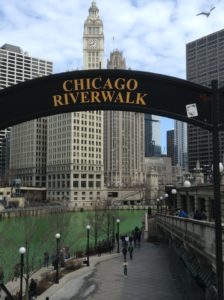
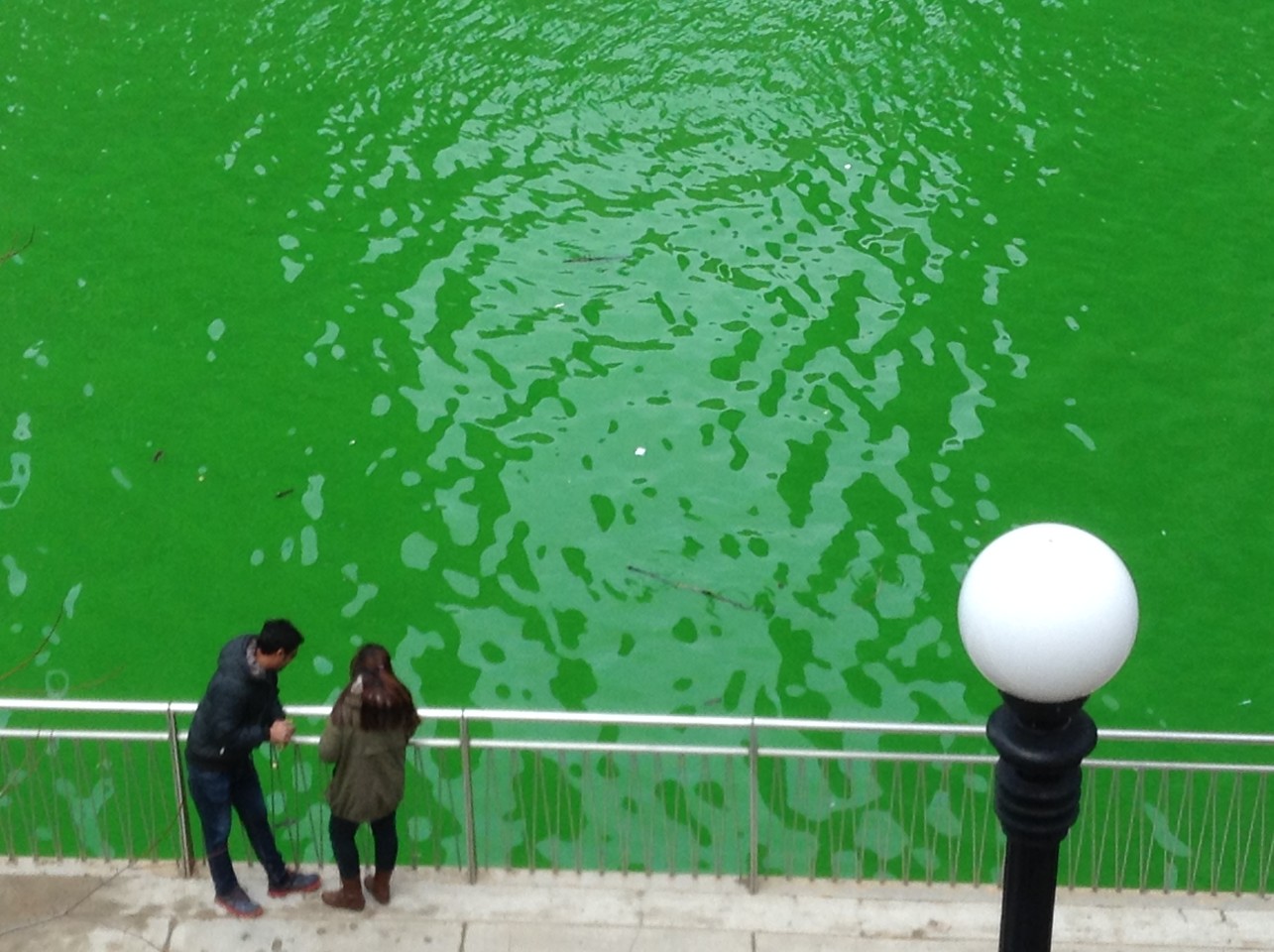
While I was at the river, the parade was nearing it’s conclusion down at Millenium Park with Irish dancers, floats, marching bands and bagpipes. I was sad to miss the parade but happy that the river wasn’t so crowded with people and easy to navigate.
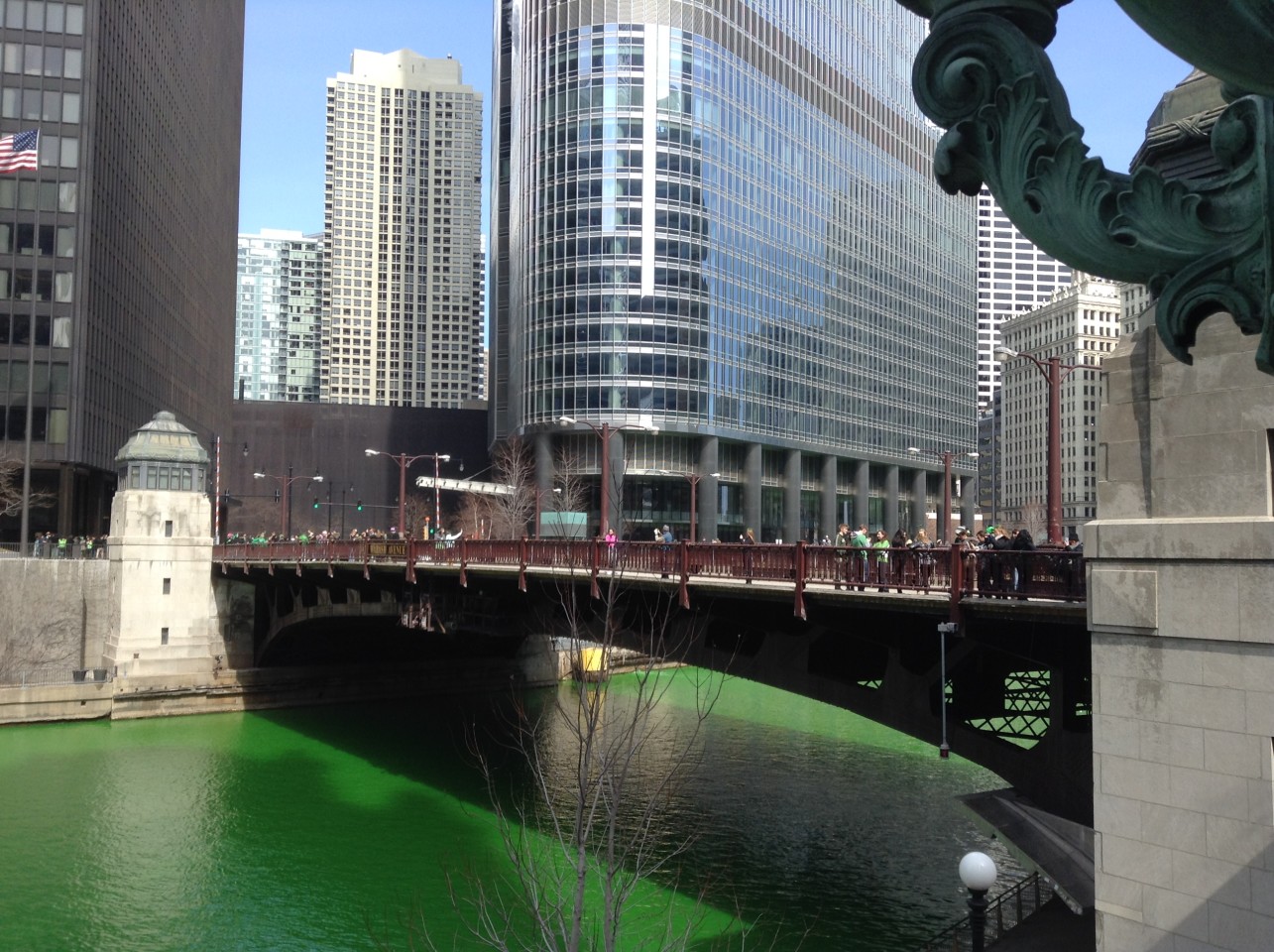
Chicago Green River Accessories – Everyone’s Irish for a Day
If you forgot your green outfit, beads, silly hat, glasses, sparkly vest or “kiss me I’m Irish button”, don’t worry Walgreen’s (which seem to be on every corner downtown) and other stores I walked into had something to make you Irish, even if it was selling you Jameson’s Irish Whiskey! Vendors were along the parade route selling hats, beads and other green accessory to make you honorary Irish for the day. Just in case you forgot you are in the city for St. Patrick’s Day, restaurants changed the light bulbs to green, buildings were lit in green and even the hotel had a subtle message. It was hard to escape the color green.
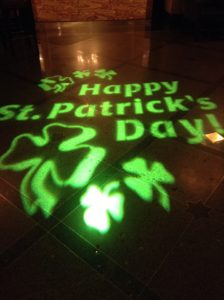
Despite all the insanity of the green river, the parade, the revelers and the outfits (some that I wished I had never seen) -it was really nice to see happy people (even if alcohol played a part). Groups of friends, families, couples and the traveling singleton (me) were enjoying the bright, sunny day walking around Chicago. So while Kermit the Frog may lament “it ain’t easy being green”, in Chicago for St. Patrick’s day, it’s super easy and fun being green (and temporary Irish).
Have you visited the Chicago green river to experience St. Patrick’s Day? If not, how do you celebrate St. Patrick’s Day in your part of the world?
]]>
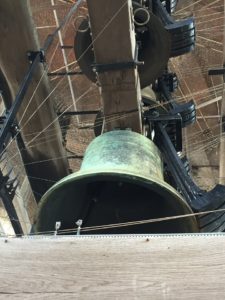
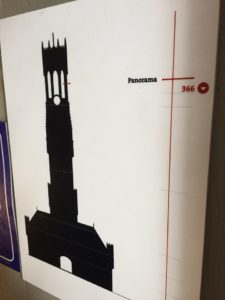
366 stairs to the top. I’m not quite sure what I expected at the Bruges Belfry Climb of the bell tower but once I started, I had to finish. The Belfry of Bruges is a medieval tower in the center of town and was featured in the classic dark comedy In Bruges (2008). Overlooking the market square and the canals, it’s a lovely vantage point to take in the views of the city. Of course, I had to climb it and learn more as it’s the highlight attraction in the city along with the canal boat tours. 366 steps to the top doesn’t sound like a lot given the “walk 10,000 steps in a day” but believe me it’s a workout. The reward is great – views and bells and if you are lucky with timing you can experience the bells as they play (see video below).
Climbing the Stairs at the Bruges Bell Tower
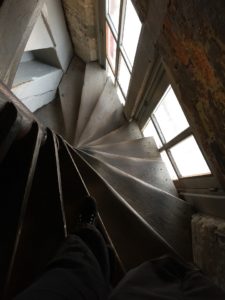
As you climb the narrow winding staircase up the bell tower in Bruges you are reminded with each flight where you are in the climb to the top which is 366 stairs.
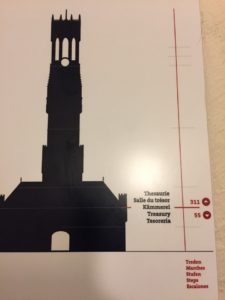
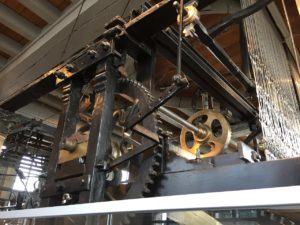
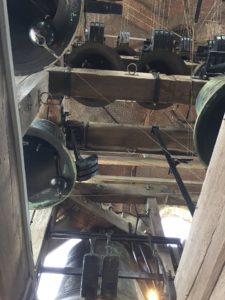
If you are like me, you’ll get winded halfway up and start cursing your decision to climb the stairs as your “exercise for the day”. Near the top when you are ready to stop, you’ll find a landing in the drum room which allows you to see the mechanical workings of the bells which control the timing and the music, which is changed every two years. There are a few benches on this landing to catch your breath. You are so close to the top now as the pictures keep reminding you.
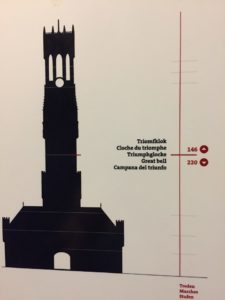
Just a few more twists and turns of the stairs to ascend.When you see the last step, you’ll start celebrating the accomplishment – sure 366 steps doesn’t seem like much but trust me, it really is a workout. If you have big feet like me, those small steps are much more challenging. Add to that, the stairs are not consistent in material, quality or distance. So expect stone, wood, marble that has worn and is uneven. You may need to hold onto the wall, a rail or other as you climb up and down.
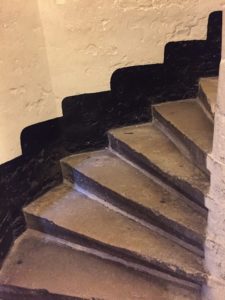
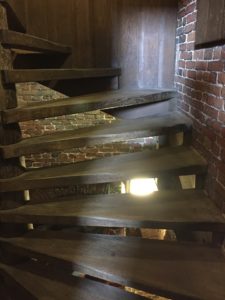
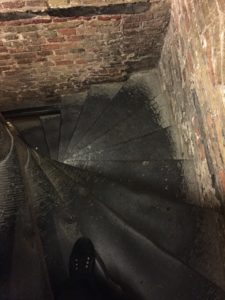
The reward for your efforts? The views! Panoramic views of the city of Bruges.
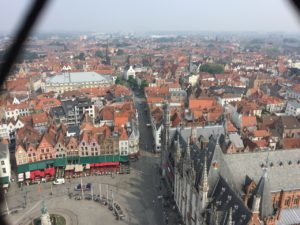
Watch & Listen to the Bruges Belfry Bells Play
If you time it right (or wrong depending to your feelings about loud bells) you’ll be under the bells as they play their medley for all to hear. You may want to bring earplugs for those with sensitive hearing or those who want to muffle the sounds.
[embedyt] https://www.youtube.com/watch?v=FD8oOr5-dig[/embedyt]
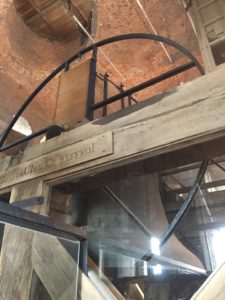
For me, I was fascinated by the sounds emanating from the different sized bells and enthralled by watching the mechanical motions of the triggers tapping the bells to produce the “bongs” and “bells”. Bells swinging, ropes above, and metal bars tapping above was beauty in motion. Having seen the inner workings a level below and realizing how this is still working today is pretty cool. There are over forty bells ranging in size and weight to produce the sounds.
The Bruges Bells
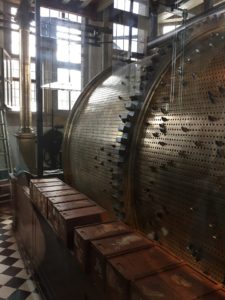
The Great Bell has changed over the years, with the last change in 1800 with the “Bell Maria” transferred from a local church. The “Bell Maria” was cast in 1680 and still rings today. If you spend time in the Drum Room on the way up (to catch your breath) or on the way down (to spend time reading the displays), you’ll learn that the brass drum is thought to be the largest brass drum in existence. With 30,500 pins to operate the outside clappers (122) on the 37 larger bells, the music medley is a wonder to experience and watch.
Bruges Belfry Climb Entrance
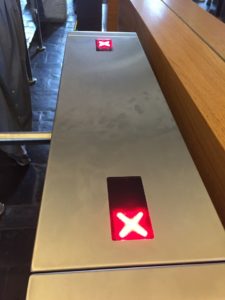
Access to climb the tower is tightly controlled given the steep spiral staircase climb to allow for folks to climb up and let others climb down which is why there is such a long line at the entrance. When you buy your ticket at the window there is then a turnstile with a red or green light. If green light you can walk through to begin the climb, if red light you need to wait until someone exits. This is important if you are a family or group – you may only get one or two people through at a time, if that is the case, arrange to meet on the first landing above. Otherwise, let each person go through and wait on the other side of the lobby.
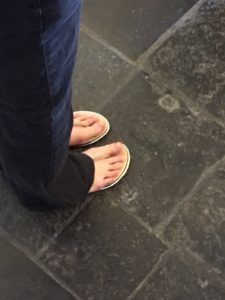
Note: Footwear choice is very important. I saw women in flip flops and others in high heels who (smartly) abandoned the line once realizing the climb. If you choose not to climb, you can still learn about the Bruges Belfry in the courtyard which has information display boards.
Final Thoughts from Climbing the Bruges Belfry
Climbing down 366 stairs is just as challenging as going up the stairs. There are ropes on the walls in tight spaces and you need to be aware of those climbing up and navigate where you will stand to let folks pass because you can’t both share the stairs at the same time. As you look down and climb down, you again see the signs on the walls indicating where you are in the journey to the bottom. 366 stairs down to the lobby is a quick task. As you exit the stairs and walk through the turnstile, the green light pings for another guest to begin their climb to the top of the Bruges Belfry.
The Belfry opens at 9:30 a.m. and closes at 6 p.m. – I arrived near 10 a.m. and waited about twenty minutes in line before starting the climb. I noticed many of the crowds to the city arrive by tour bus around 10 a.m. so I’d recommend going to the Belfry before 10 a.m.
]]>
As if nearly 90 chocolate shops in Bruges wasn’t enough….there’s Choco Story which is a CHOCOLATE MUSEUM in Bruges. A museum dedicated to the origin of chocolate around the world and in Belgium. If there was any attraction that had my name written all over it – it was this! As part of my combination ticket with the Friet Museum (the museum of French fries), I was able to indulge in my chocolate addiction without judgement. It didn’t hurt that there are free chocolate discs to eat as much as you want as you tour the exhibits. This is an in depth love of chocolate and its history telling a story throughout the historic building in the center of Bruges.
Location of Choco Story Bruges
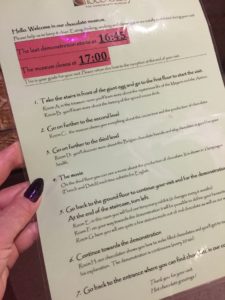
If you are coming from the Belfry and market square, the Choco Story, chocolate museum in Bruges, is a short walk away on Wijnzakstraat 2 (Sint-Jansplein). It’s not far from the Friet Musuem – just down a side street and on the corner of a historic brick building, the banner on the side wall is the only indication you’ve found it. Entering the small lobby, I showed my ticket and received an awkward laminated map of the museum. It showed me the path from start to finish (chocolate demonstration and tasting) along with visit information.
Choco Story Begins with the Mayans
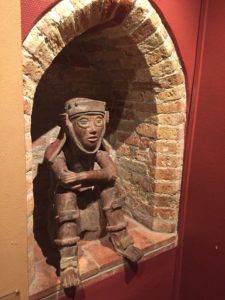
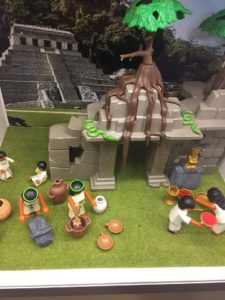
The thoughtfully curated chocolate story started with the Mayans on the ground floor. It all starts with the cacao plant. When I visited the Caribbean island of Antigua, our tour stopped at a cacao plant and the guide opened it to show us what would later become cacao beans once they were dried out. From there, chocolate begins its journey. It’s a lot of work and there is talk of a chocolate shortage due to climate change and other environmental issues. For now, we get to enjoy the history of the Mayans.
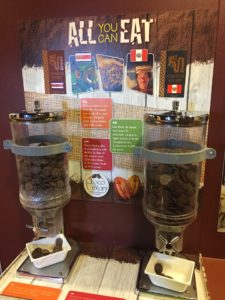
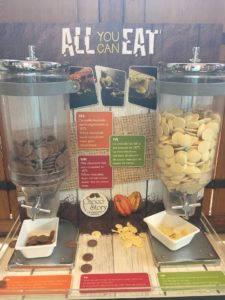
The story continues up the stairs which themselves are quite the attraction. As you weave around the displays, there are help yourself chocolate stations (where is my Ziploc bag when I need it?) which allow you to eat as much as you want in milk, dark and white chocolate discs. Need I say more?
The Choco Story Bruges Displays
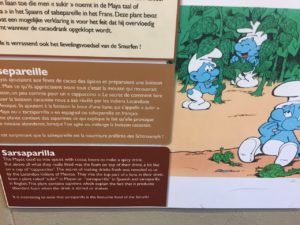
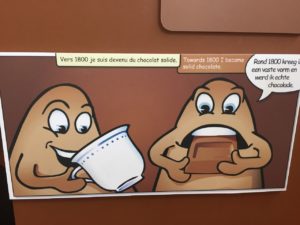
For a bit of fun in the displays there were Lego like toy displays for the kids (and adults) to enjoy as well as cartoon chocolate mascot and of course Smurfs! I now know years later what the smurfs meant when they talked about Sarsaparilla!
As I walked around, I was intrigued by pots to melt the chocolate into drinking chocolate and the china cups created for enjoying the liquid chocolate drinks. The men with mustaches had their own uniquely designed cups. As chocolates were an indulgent treat to share, there were specially crafted chocolate display accessories for the home. The small rooms are curated nicely with a mix of historical items in the display cabinets along with walls adorned by posters and advertising.



Mixed in are the free chocolate stands – with only two types displayed, they tend to be milk & dark chocolate and milk & white chocolate.
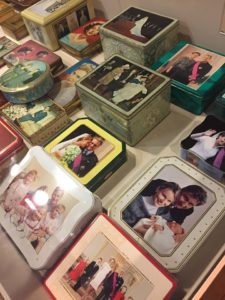
The Belgium Royal Family have a tradition of sending chocolates and have commemorative tins each year. A bit of the tin history is on display along with packaging and advertisements over the years.
Making Chocolate – The Supplies
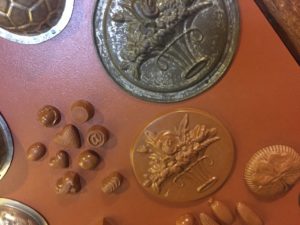
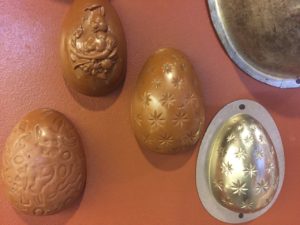
The Belgian molds and shaped were represented in the plastic and iron pans. The various equipment used to make chocolates took up a good deal of space in the exhibit. When you think about chocolate, I doubt you think about the various steps and patience that is required to make your favorite creations.

Just looking at the various equipment used over the years, the myriad of molds and pans and other chocolate making supplies, you can really appreciate the pastry chefs around the world that specialize in chocolate. The molds might have flowers or logos or the name of the chocolate shop. They could be the popular egg shape or whatever you can think of to create a mold for. While it might look a bit easy in the factories churning out favorite chocolate recipes, in Belgium, many shops are still producing pieces by hand – true artisan chocolate.

The Making of Chocolate Film
In the screening room, one of the last stops on the upper floor, a film is playing on a loop. It’s a “behind the scenes” at the Belcolade Belgian chocolate factory, owned by the Choco Story founders. It showcases all of the steps you’ve read about in the Choco Story museum into the factory experience. It starts with the cacao plant and ends with the chocolates produced on the factory line. Seeing how chocolate comes to life gives a new appreciation to the process in my opinion. Once you are finished here, since there are seats, many folks stay through another showing, you can proceed to the ground floor to watch the chocolate demonstration.
The Chocolate Art Sculptures
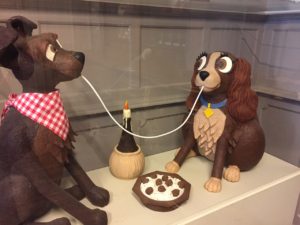
On the way to the chocolate demonstration and tasting which is held twice an hour, I played a game on the wall to see which country of origin best matched my chocolate tastes. The result was Costa Rica, a destination I’ve not yet visited but now have a good reason to. I then passed by the room of Chocolate art, well actually I the aroma of chocolate greeted me a few steps before I entered the room. All of the sculptures are made with chocolate. Can you tell? If you thought the chocolate Easter bunny you consume each year was the ultimate chocolate experience, well take a look at these works of art. Sure they look too good to eat….but really? It’s chocolate! Which would you pick to indulge in?


Chocolate Demonstration & Tasting
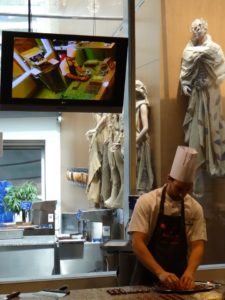
The pastry chef starts a chocolate demonstration which lasts about 15 minutes which is easy to watch live or via the television monitor above and includes tastings. The chef explained in English how they make chocolate before filling the molds, tempering it and cooling the molds before expelling the chocolates to the serving tray for attendees to sample. The praline filled chocolates were rich in texture with a smooth after taste that lingered on your tongue. After the demonstration was over, the chef escorted the group out of the demonstration room and allowed us more chocolate to enjoy (I may have taken two pieces).
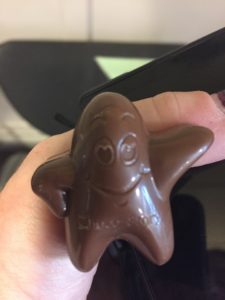
Exit through the Choco Story Gift Shop
Surprisingly, the gift shop had a limited selection of chocolates available for purchase. The praline crème filled chocolates that we tasted in the demonstration room were available in a small box (of course, I bought a box) along with smaller chocolate gifts. There were also books, t-shirts and other chocolate related souvenirs.
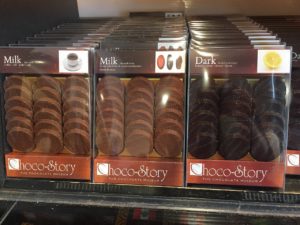
Sweet Endings – Chocolate Museum in Bruges
Um, Chocolate! How could I not LOVE Choco Story Bruges? Its simple setup over multiple floors in small rooms lends itself to an intimate visit and luck for me it was a quiet Wednesday at the end of May before the summer crowds. The Choco Story Bruges is a wonderful way to learn more about chocolate from bean to bar and beyond. My inner chocoholic was happy to learn more about her favorite indulgence at the chocolate museum in Bruges. Choco Story is open daily from 10 a.m. – 5 p.m. and I would allocate two hours to explore if you are keen to read the displays.

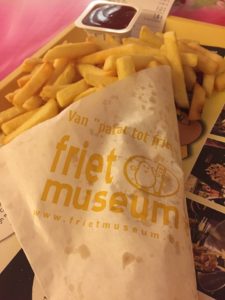
If you are reading from the U.S. this week, I’m sure you’ve seen or heard the soundbite “…eat only six French fries as a portion” – yes, we all laughed because who can only eat six individual fries? I know that fries aren’t quite healthy but they are really tasty and that matters (in moderation of course). We love french fries in the U.S., chips in the U.K., friets in Belgium and the potato in general in its many fried forms around the world. This love of the potato and its fried form in Belgium is taken to a new level at the Friet Museum. I thought I was passionate about French fries but I never thought to open a museum of french fries to celebrate the history of potato and the evolution to fries (Belgian Friets). So join me on this quirky museum tour of the Friet Museum Bruges.
Belgian Friets or French Fries?
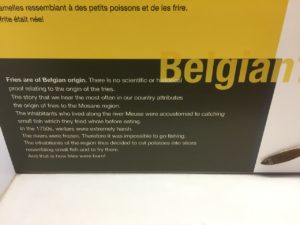
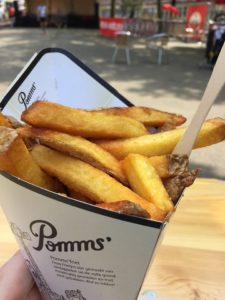
Legend has it that during the world war, the Belgian soldiers shared their Friets (fries) with American soldiers who thought the soldiers were French and called them French Fries and thus was born the French fry. The French have never claimed the French fry and the Belgians have had to live without the fame and glory knowing that they created this popular potato concoction. Belgian Friets are unique in that they are cooked in two separate phases and served in a paper cone to eat on the go usually with a mayonnaise on top (or other delightful condiment) and a wooden fork like utensil.
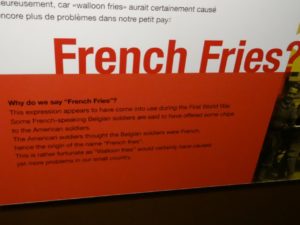
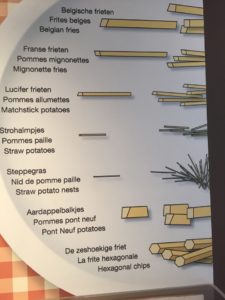
In Belgium, the type of friet depends on the measurement in millimeters (mm) or centimeters (cm). They include Belgian fries, mignonette, matchstick, straw potatoes, straw potato nests, pont neuf. Honestly, I don’t care what you call them or how they measure up, I’m always ready to eat fries…..and definitely more than six fries.

Friet Museum Bruges
I ended up at the Friets Museum because it seemed quirky enough to visit in Bruges plus I could get fresh friets at the end of the visit in the basement snack bar (discount coupon provided with admission receipt). I also had the false illusion that after climbing up and down the 366 stairs at the Bruges Belfry, I could indulge in the fries without guilt.

The museum is open from 10 a.m. until 5 p.m. each day and located five minutes from the market square and Belfry of Bruges. The entry fee is 7 Euro (adult) so I combined it with the Choco-Story ticket (a museum about chocolate, including Belgian Chocolates – sign me up) – two museums dedicated to two of my favorites foods – french fries and chocolate.
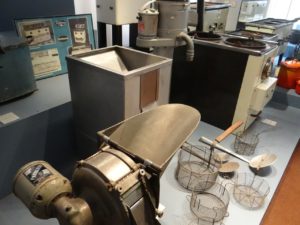
How much is there to learn about the potato? More than you’d think and I was actually surprised by it all – it was quite interesting. The museum, founded in 2008, explores the very beginnings of the potato in various environments and continents and is set up to educate you (and many schoolchildren). It then showcases farming techniques and tools before moving on to the preparation stage of the potato and cooking options.

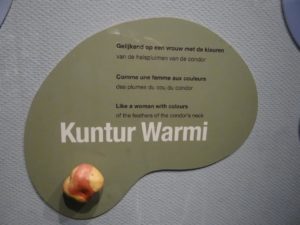
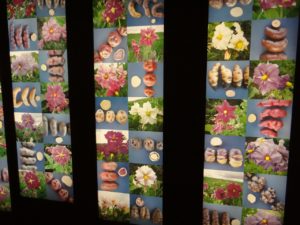
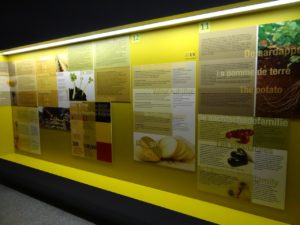
Friet Museum Building
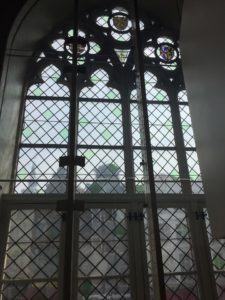
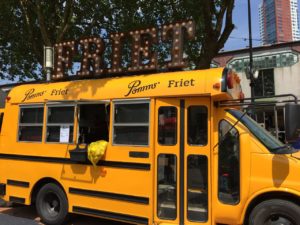
With the displays similar to museums, it was easy to navigate and read the boards throughout the exhibit as it continued upstairs in the 14th and 15th century buildings (one of the oldest in town, formerly the Genoa commercial representation building and annex with the date 1399 on the outside facade) to the large vaulted room that streamed light through the ornate Gothic glass windows. In this room, you can discover the fun side of the potato in the form of Friets and fries and all the ways to enjoy our potato addiction. Popular condiments by country – Belgium enjoys mayonnaise and a sauce pomes Friets (similar to béarnaise). I’m quite the fan of the truffle mayo that I had in Rotterdam with my Friets.
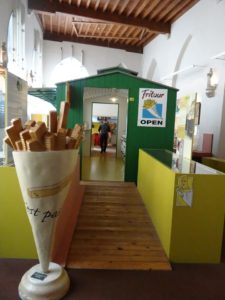
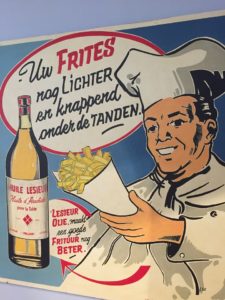
This colorful and slightly interactive room was designed for the kids but adults can enjoy just as much as the advertisements adorn the room as do the mini kitchens and cookware stations. The displays are in a few languages, including English. Its low tech but seriously educational in the “I’d watch this documentary on television and find it fascinating” kind of way.
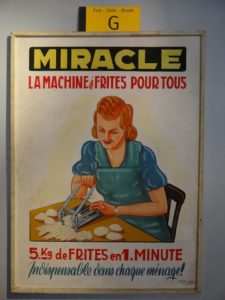
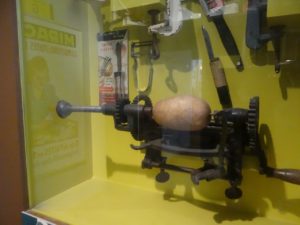
Once you have gone through the mock friet shop and read the colorful advertisements on the wall, you descend the stairs back to either exit on the main floor or continue to the basement snack bar for the freshest Friets you’ll have in Bruges.
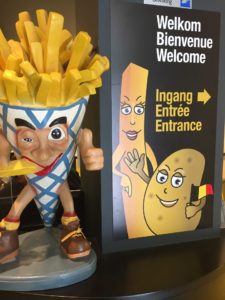
Friet Museum Snackbar – Friets Tasting
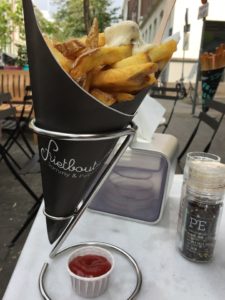
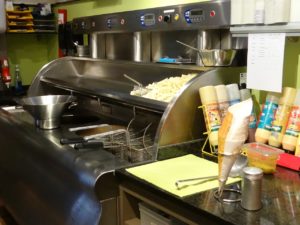
The snack bar sells a few other snacks and drinks but I was keen on an order of Belgian Friets with a side of ketchup (there’s an entire menu of condiments each for an additional fee). I was given a beeper after ordering and was able to watch the two man operation go about creating the customer’s orders. While waiting and watching, I sat at a table in the basement and admired the stone walls and archways of the original building. When my beeper went off, I retrieved my tray with Friets spilling out of the paper cone. As this was my lunch (hey, no judgement), I easily ate all of the fries (after adding some salt).
Final Thoughts – Bruges Frietmuseum
Once full of fries, I walked through the small gift shop (always a gift shop) to exit. What looked like an odd place from the outside was really a thoughtful surprise. Two families created the Frietmuseum and ChocoStory to celebrate Belgian’s culinary favorites – fries and chocolate. The collection was thoughtfully curated, easy to understand, flowed nicely throughout the building and provided educational value. You can easily visit in about an hour if there are no crowds and you decide to read a few displays. I’m glad I decided to be quirky and visit the Frietmuseum in Bruges.

Seriously though, who can say no to french fries? I ate fries in Rotterdam, Bruges, Ghent and London on my trip. Now I know so much more thanks to my visit to the Friet Museum Bruges.

New Year’s Eve has never been my favorite holiday. The forced “fun”and thinking that life changes at midnight wiping the old year’s slate clean and offering a tabula rasa isn’t quite realistic in my experience. As I entered my 40’s, I settled into my single girl comfort (after work) of the couch, pizza and wine to toast the New Year at 7pm East Coast Time when London celebrated because I knew I’d long be asleep by my midnight. Each year, I said “I’m going to go to see the London Fireworks for New Year’s Eve in London next year and not be on this couch”. So I signed up for the email notices from the City of London but then missed the email notice so I ushered in 2017 back on my couch. 2018 was going to be different – I was determined to be in London, on The Thames, to watch the London fireworks with The London Eye and Big Ben in the distance.
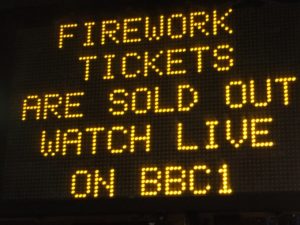
Tickets on Sale Now at https://www.seetickets.com/content/london-new-years-eve-fireworks#
The Bucketlist Plan – London New Year’s Fireworks
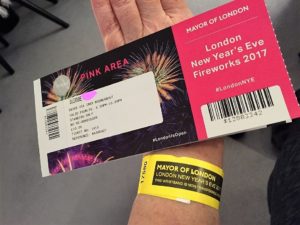
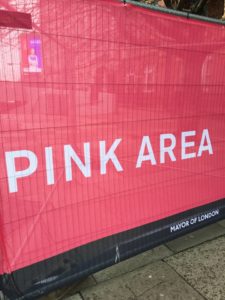
So I made a note of when the tickets would be released (October) and put the date & UK time in my calendar for a reminder. The City of London, in their effort to produce a safe environment on New Year’s Eve by controlling crowds and keeping a secure border, has implemented a ticket fee (£10 GBP for 2018), which seems fair enough but for many locals it caused an uproar when first announced. So this time, my notification led me to check my email for the notice to buy a ticket. I quickly began my research into what area what best before hitting “buy”. I bought two tickets to the “Pink Area” on Waterloo Bridge, received my confirmation email and was thrilled to be able to be “live in London” at midnight hoping that this bucket list item could be crossed off.
I would still be single going and was doubtful of a midnight, romantic comedy, “When Harry Met Sally”, kiss but I wouldn’t be on my couch and that was a plus. When my job was eliminated and I was made redundant a few weeks after booking my trip, I was a bit apprehensive about taking a trip whilst unemployed because of the costs but I had already booked the non-refundable trip so I was a go.
Researching the Pink Area of Waterloo Bridge, it was imperative that I avoid any form of transit that night as it would be packed with people all night long. The underground tube journey would be free after a certain time to make the crowds easier to deal with and avoid lines at tap in/tap out. I decided that I would walk to Waterloo Bridge and looked at all the hotel options on the south side of the bridge to make life a bit easier. I had two interesting choices – Sea Containers Hotel London (formerly the Mondrian Hotel London) at Sea Containers and Citizen M Bankside. Both were easy walking distance to the Pink Area security checkpoint.
Collecting Tickets for London Fireworks at New Year’s Eve
When buying tickets, you can opt to have them mailed to the U.S. or pick them up in person. At the time, I wasn’t sure what I was doing but having dealt with international mail before, I took no chances and chose to pick up my tickets in person. “See Tickets”, the ticket distribution company, set up a collection booth at Trafalgar Square starting at 8 a.m. for two days prior to the event as well as day of event. Since a majority of attendees live in the UK and could get tickets in the mail, I was happily surprised that the booth was empty when I arrived to pick up my tickets. I needed the confirmation number (email) and photo ID and I was now in possession of my tickets and overall instructions for the night.
Pre-Event Walk Through – Pink Area on Waterloo Bridge
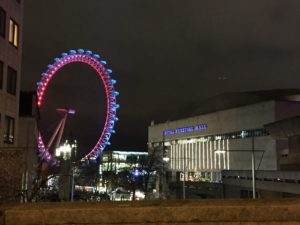
I don’t like surprises so I did a walk through inspection of the area the day before. I walked along the Southbank from the London Eye down to my hotel, The Mondrian Hotel at Sea Containers, easily finding my Pink area entrance at the IMAX Centre (hard to miss circular building with Times Square lighting and displays at the base of the Waterloo Bridge). The signs for the various security entrances had been placed and the area was getting ready for street closures to complete the process.
London Fireworks Street Closures and Hotel Access
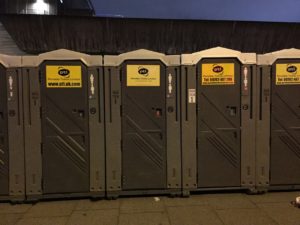
As my hotel, Mondrian London, was within the street closure area, the hotel provided wristbands to wear the day of fireworks to be able to access the hotel without fireworks tickets. The roads near the hotel were closed and the main road lined with portable loos (port a potty) and signage. The intent was to drive pedestrians in one area to control the crowds and flow of people to the underground station to queue up. When I returned to the hotel at 6 p.m., the roads were just starting to close and no one was checking for wristbands.
Security Check at London Fireworks
The line for security was quite long as it wrapped around the block directly below the bridge. There were two lines in the area so make sure you are in the right one. Luckily the rain had stopped and while the streets had a few puddles, the night sky was clearing. It was cold but not so bad. Since this is London, you are allowed to bring alcohol in with you but nothing in glass bottles. The guy in front of me left the line and ran into the corner store to buy some beer. You are also allowed to bring blankets, food and friends (with tickets of course).
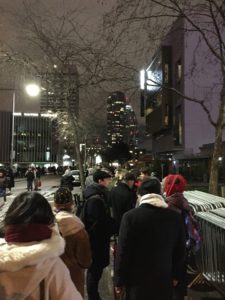
The couple in front of me and the couple behind me were each speaking in another language so I didn’t make any friends in the queue to adopt me for the fireworks. The line ended up moving quite quickly and in less than an hour I was on the bridge. Just prior to the bag check, there was, as expected, people who thought they could blend into the line (in London queue jumpers) but I wasn’t having it neither was the local man a few people behind me. This is where my very American personality comes in handy as neither couple in front or behind me were pushing the two groups away. The local guy and I got the groups to walk toward the end of the line. None of us would let them skip the hour wait and butt in.
Watching London Fireworks from Waterloo Bridge for New Year’s
Waterloo Bridge is a motor roadway with a small center divider. The sides of the bridge have pedestrian walkways but those were closed to ticketholders and allocated to event security. The bridge contained a plethora of portable loos and nary a line. My map also said there was food and drink for sale but I never got that far over the bridge. My initial spot on the bridge, I was standing with many people huddled on the ground to keep warm. One guy was swaying back and forth and with two hours until midnight he was clearly drunk already so security easily removed him. I decided to venture to the loos (thankfully I had a US flashlight (UK torch) with me as they don’t have light inside) and then on the way back found a small slice of the curb to sit on for the next hour and a half. No one spoke to me but I had a great people watching spot for the night. It was a nicely mixed crowd – young, old, families, groups of friends and a few solos like me – overall a happy crowd.
There was room to walk for most of the night on the back of the bridge. The music was on the other side of the river and faint in the distance. I should have tuned into the television coverage while I was waiting but didn’t want to drain my battery as I was saving it for the photos and videos of fireworks.
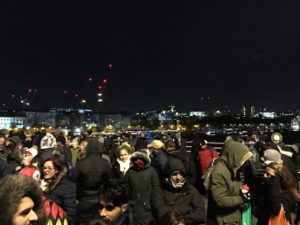
London New Year’s Fireworks on the Thames
With five minutes to go, I stood up on my small spot of a curb so had a nice elevated view over most of the people. Then the countdown began…….5…..4…..3….2…..1 followed by 12 (exact) minutes of fireworks. Unfortunately with the restoration of Big Ben ongoing for the next couple of years, the bells were silent. I was bummed by this but hey I was finally off the couch with an up close view of the fireworks in my favorite city. Starting the New Year differently than any in the past.
[embedyt] https://www.youtube.com/watch?v=ETAgPPBTGAw[/embedyt]
Overall Thoughts – Pink Area Waterloo Bridge Fireworks
It was easy to secure London Fireworks tickets online and pick them up in person. I spent £20 for two tickets and wasn’t able to convince my friends to sit with me on the bridge as many were happy to avoid the transit and be on their own couch with wine. Staying near the Waterloo Bridge, I only had to walk ten minutes to the Pink Area was a fantastic decision. And the fireworks were just stunning. Watching them for years on television was always pretty cool but seeing them in person was wonderful.
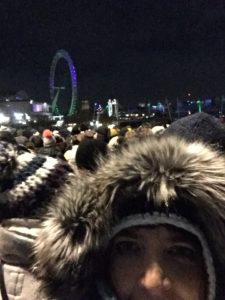
London Fireworks Tips – Waterloo Bridge:
- Allow an hour for security line if you want to arrive early to find a great spot on Waterloo Bridge
- Bring a blanket and scope out the elevated middle divider curb for your group so that you can stand above the crowds for an unobstructed view.
- For most areas you will be crowded as the clock nears midnight obviously so be prepared to stand in the cold for the few hours. The key is layers, layers and more layers to keep warm.
- You might want to pack a thermos of hot chocolate, mulled wine or tea to keep you warm.
Tickets on Sale Now https://www.seetickets.com/content/london-new-years-eve-fireworks#
]]>
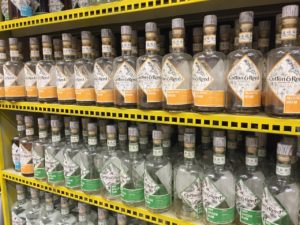
Rum and Me – we had a bad time together on Spring Break in Cancun, Mexico many years ago. So I’ve avoided rum in its various forms and flavors around the world for decades. Even the pina colada was off limits which was a shame because it’s a tasty rum drink on the beach or in the city on a hot day. So rum was off limits until I put on my big girl pants to suck it up and get over my college years which are (sadly) a memory in the rear view mirror of life. It was visiting Cotton & Reed Rum Bar & Distillery in Washington, D.C. that got me back in the friend zone with Rum. Unlike the rum of my youth, they are producing artisanal small batch rums in a few flavors and through a visit of the distillery with a tasting did they reintroduce me to rum and the iconic Pina Colada.
Located along the warehouses and across from Union Market in Washington, D.C., Cotton & Reed have brought rum into the forefront with their bespoke distillery and tasting room. Think farm to table but with rum.
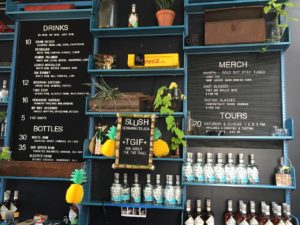
Our blog group was in town for the whirlwind weekend in D.C. which included a jam packed art itinerary that, of course, had us running late but no one wanted to skip the rum tastings. As we approached their outpost, there is a window serving Pina coladas in case you can’t find a seat inside the small bar which has high top table, bar seats and a counter to stand and enjoy drinks with friends. The menu says it all “no beer, no wine….only rum”.
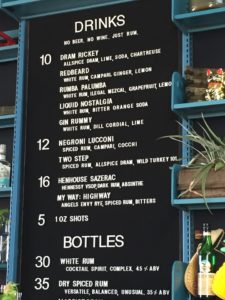
Cotton & Reed Rum Tour & Tasting in D.C.
We wandered to the back of the house where the Saturday tour & tasting would take place in front of the large vats where the rum is created. The Cotton & Reed rum tour and tasting is held at various times on the weekend in the back room. Set up on the table were shots of water, sugar water (yuck!) and three flavors of rum (White, Dry Spice and All Spice Dram). One of the owners told us the story of the brand, their awards and how their rums are found in prestigious bars throughout the city of D.C. As if working for NASA wasn’t cool enough, they left their jobs there to create rum! That’s a true passion!
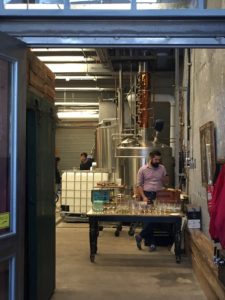

Now for someone who had a bad beginning with rum, the straight shots were a bit tough for me to handle right after lunch, however, hearing about how the flavors were created and what I should be tasting, it was close to a wine tasting just much stronger. Our group was quite receptive to learn more, share shots not taken and take photos along the way.

Bottles of Cotton & Reed Rum are sold on-site and at a few locations in D.C. The special release flavors are limited and sold on site. They are open Wednesday – Sunday and available to host tours with tastings and events. Tours (30 minutes) are held on Saturday at 1:00 pm, 2:00 pm and 3:00 pm and the price ($22 subject to change) includes the tasting flight, distillery tour, ingredients tastings and a cocktail from the bar. Must be 21 to sign up for the tour & tasting.

Rum Bar D.C. – Pina Colada
Once the tasting was done, we reentered the bar area which was crowded for a sunny summer Saturday afternoon. We shared Pina coladas as we all sang verses of the Pina Colada song (really who doesn’t have this in their head…..”If you like Pina coladas and getting caught in the rain…..: by Rupert Holmes). As kids, it was a catchy song, as an adult I now know it was about more than pina coladas. The Cotton & Reed rum is, to me, quite strong. It might just be that I’ve been drinking wine too long and rarely drink liquor, but that said, make sure you take an Uber or Lyft back to your hotel.

Rum Volunteers at the Distillery
They also have bottling parties for VOLUNTEERS which sounds dangerous – how much will really make it into the bottle? How straight will those labels be (look at the photos and you’ll see a few folks are a bit misaligned)? And who gets the shrink wrapping machine? I’m guessing there’s no drinking on the job until all the work is done. Sounds like a fantastic volunteer event to help the small business continue hand producing the small batches of high quality artisan rum in D.C.
Final Thoughts – Cotton & Reed Rum
After visiting Cotton & Reed Rum Distillery in Washington, D.C., I have a new found appreciation for rum again. Likewise, I was quite impressed with the passion to produce such a high quality liquor. So many more folks are going local with craft beers, whiskey and gin that I would recommend you support these local businesses in your area and when you travel. Its a wonderful way to get a (literal) taste of the city. So now I can go back to the beach and order my pina colada in pineapple with the little umbrella or order a fancy rum cocktail in the swanky (posh) craft cocktail bars in the city.
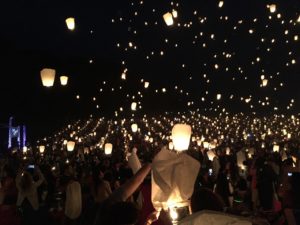
I’m not quite the “festival in the field” kinda of girl – it doesn’t matter which field or what festival, chances are if there are porta potties, there’s a high chance that I’ll say no. Festivals all day in the sun just sound exhausting with lots of downtime, too many people and traffic aggravation – frankly it’s just never been my thing even when I was young. Now I get to be that old, crabby lady without having to explain myself. So when my friends asked me to go to the field in the middle of nowhere to light a fire in a lantern and send it into the sky as part of The Lights Festival Philadelphia on a Saturday night, they were surprised when I said “yes”. I was surprised I said “yes” because it seemed like a lot of wasted time for a few minutes of social media fun. For the instagram crowd, this was gold. But when the song Hallelujah began and thousands of lanterns lit up the sky, for a few minutes, I could enjoy the beauty of it all.
Finding The Lights Festival in Philadelphia
My friend Maria and I set the GPS coordinates in Waze and began our trek to The Lights Festival field in Kennett Square, PA (about an hour from Philadelphia, way out in the open field/farming suburbs) which led us down back roads, neighborhoods streets, dirt roads and finally to the road that led to the open field hosting 3,000 people (and their cars) at the Lights Festival. With rain in the forecast and some dark and foreboding clouds, I hesitantly parked up the hill on the grass field hopeful for no rain because I wasn’t quite sure how we get through the mud.
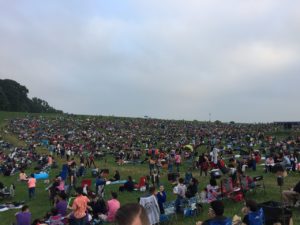
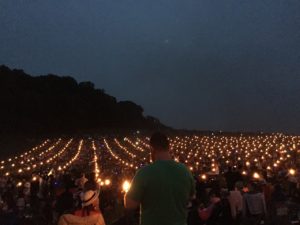
Walking through the knee high grasses to the ankle high grass field we checked in and received our rice paper lantern bag (with instructions printed) and a bag containing a pen and wristband. The large field was portioned out by tiki torches not yet lit in rows and aisles. At the bottom of the hill was a stage with an acoustic musician singing popular songs with some children dancing in front of the stage. Our friends had arrived earlier than we had and found a square flanked by four torches on the corners to call their own. They set up a table with foods and a blanket on the ground. Maria and I brought our chairs and more foods to enjoy.
Food & Souvenirs at The Lights Festival
In the distance by the row of porta potties, there were long lines for the six food trucks. Given the waits of the people walking with food (nearly an hour), I’d suggest packing your own picnic like we had and so many others had done. Six food trucks and nearly 3,000 people? Definitely not enough to count on. There were enough porta potties so the wait was minimal. Do bring a flashlight with you as the tiki torches only light the launch area, the surrounding common walkways, porta potties and fields were dark and uneven terrain.
If you had forgotten your chair or blanket, they were selling blow up couches embossed with the “Light Festival name and logo”. For kids, there was a children’s play area and for those who “need” to shop there were a few kiosks with jewelry and photos to buy in addition to the event merchandise.
Hopes, Dreams and Wishes on Paper Lanterns
The main event though would need to wait until after sunset, until it was dark enough to set the thousands of lanterns drifting up to the sky, after the local fire officials deemed it safe enough. There was a chance that the hours of waiting (or socializing I believe it’s called) might result in a “no go” if the weather didn’t cooperate.
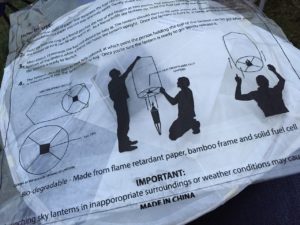
During our wait, we each took our sharpies provided to write messages, wishes and hopes on our lanterns. For me, my mind could only think of “Peace, Love, Cookies” and then “I need a job” and then shifted to my wishes “I’d like to hit the lottery and retire on an island” and find “love with an EU work permit” – you know all the fun stuff.
Lighting the Lanterns at The Lights Festival
With the torches lit throughout the field and the speaker on the stage to demonstrate what to do, there was the stray lantern lit ahead of time and sent up into the dark night that elicited a rousing “boo” from the crowd as the fire captain didn’t give the go ahead yet.
Video – [embedyt] https://www.youtube.com/watch?v=zVN15h2GjBg[/embedyt]
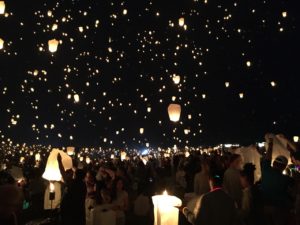
Once we did get the “all clear”, it became interesting. 3,000+ people don’t always follow directions or execute the same. A few folks didn’t wait until the entire bottom was aglow with fire so their lanterns quickly fell to the ground and started small fires that had to be stepped on or doused with water bottles. The two man process was a test of patience because two minutes is longer than you imagine trying to get the bottom lit with the torch fire. Once the lantern felt a bit full we started letting go and watching the field of lanterns gently and slowly float into the night sky. Many would travel to the adjacent field (the targeted landing spot) and fizzle out. As for the others, the wind wasn’t carrying them too far so I’m not sure where my hopes and dreams written on the lantern drifted to or fell.
[embedyt] https://www.youtube.com/watch?v=MZ6VgQCRfO8[/embedyt]
Environmental Concerns at The Lights Festival
For many critics, it’s about the environment. The lanterns were made with bio-degradable rice paper. Lights Festival officials map out the landing field area for the low flying lanterns to fall to the ground. Volunteers were set up to clear the trash and pick up lanterns. As for the bulk of the lanterns, many could have just gone up in smoke. I would hope that the local authorities prior to issuing permits for such an event had figured out all the trash logistics. Each aisle had a trash box for the plastic wrappers and event trash.
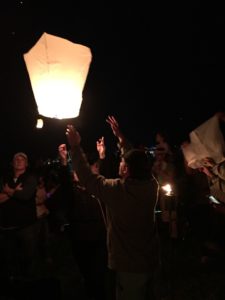
I do know that I have a Facebook friend with horses that abhors these events as the stray lanterns land in her field and the horses and other animals try to eat them. So when you do post about your Lights Festival experience, do understand that while the Festival has a leave no trace policy and tries to be environmental, there will be stray lanterns that get away and folks who have valid environmental concerns about these types of events. I know that I had some disapproving comments on my social media accounts.
Leaving the Lights Festival
When our lanterns were done ascending, we waited and watched for about 1/2 hour before we began the crazy rush to the parking lot as thousands of cars were now all intent on exiting at the same time down the one lane road. Unlike a sporting event, there was only one way out. Somehow for me, parking on top of the hill, I had this gut feeling that I needed to follow the stray car going in the opposite direction down the dirt and hay covered road. I followed slowly and began a bit of off-roading through the field and to the open gate, thereby escaping the throngs of cars in only 10 minutes. Good things like that don’t usually happen to me (my friends waited nearly two plus hours in the car exit line). Maybe the lantern wish “hit the lottery” was a bit vague and I hit the parking lot lottery to avoid the intolerable wait.
Overall Thoughts – The Lights Festival in Philadelphia
That’s the thing with hopes, dreams and wishes, you may need to be quite specific rather than vague. Either way, it was a fun night out with friends in a random field in Pennsylvania launching our dreams, hopes and wishes into the air. We wrote down fun, silly and serious statements on our lanterns to represent us in that moment and then we let it out (and up) into the universe if only for a few minutes of spectacular wonder. It was a stunning spectacle and now that I’ve done it once, I’m good.
The Lights Festival is international and happening in cities around the United States, Canada and the United Kingdom. To find your local Lights Festival check out the festival of light schedule on the event page. It’s scheduled back to Philly in October if you want to go, sign up early for discounted tickets.
]]>
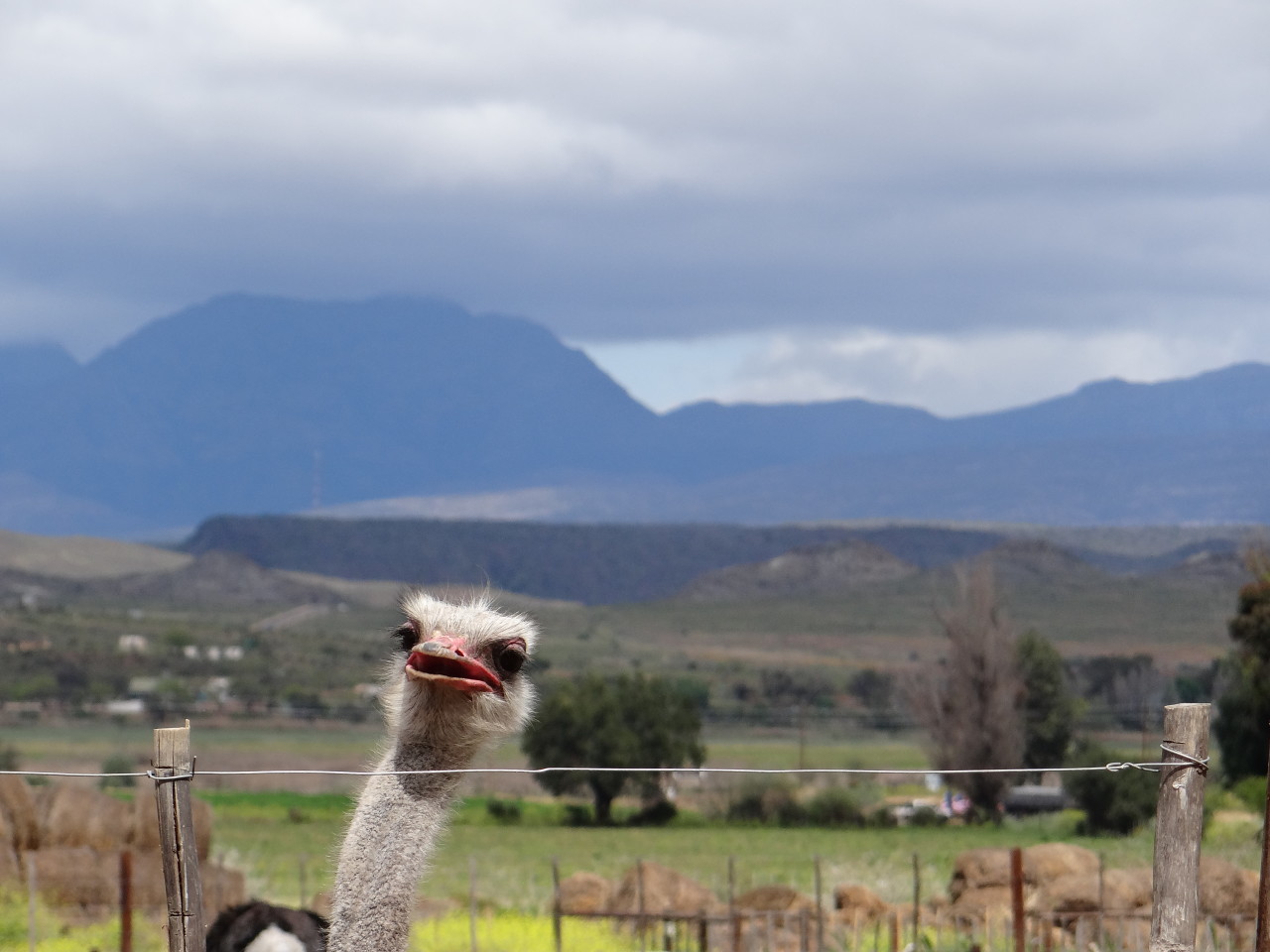
Our small tour began as we stepped on a disinfecting mat before entering the farm building with the guide. She introduced us to the world of the ostrich – the feathers, eggs and breeding information. Sadly no eggs were hatching this day so we left to walk the grounds, again stepping on a disinfecting mat to ensure we didn’t bring anything onto the farm to infect the animails. If you knew nothing of the ostrich like me, well, after this you knew almost everything (until the next tourist site overwrote the info in your head). The birds are oddly interesting – they can run up to 43 mph, live up to 40 years and don’t hide their heads in the sand when hiding. It was fascinating to watch them move and interact with each other.


While the female lays the eggs, it is the male ostrich that sat on them this day and watched them (good shared responsibilities for the parents). As it had rained, the grounds were muddy and still wet so the ostrich riding/racing was canceled. Visitors are encouraged to hop on an ostrich and have races against each other. The birds don’t seem that strong to hold an adult, yet they do – I would think it’s fun for children to do. Even if the weather were good, I was too heavy to ride an ostrich (there is a weight limit of 75 kilo – all those cookies I eat!) but even if I could ride one, I would have declined as I was having issues with this whole concept – I think because the birds seemed so fragile unlike riding an elephant, horse or camel.
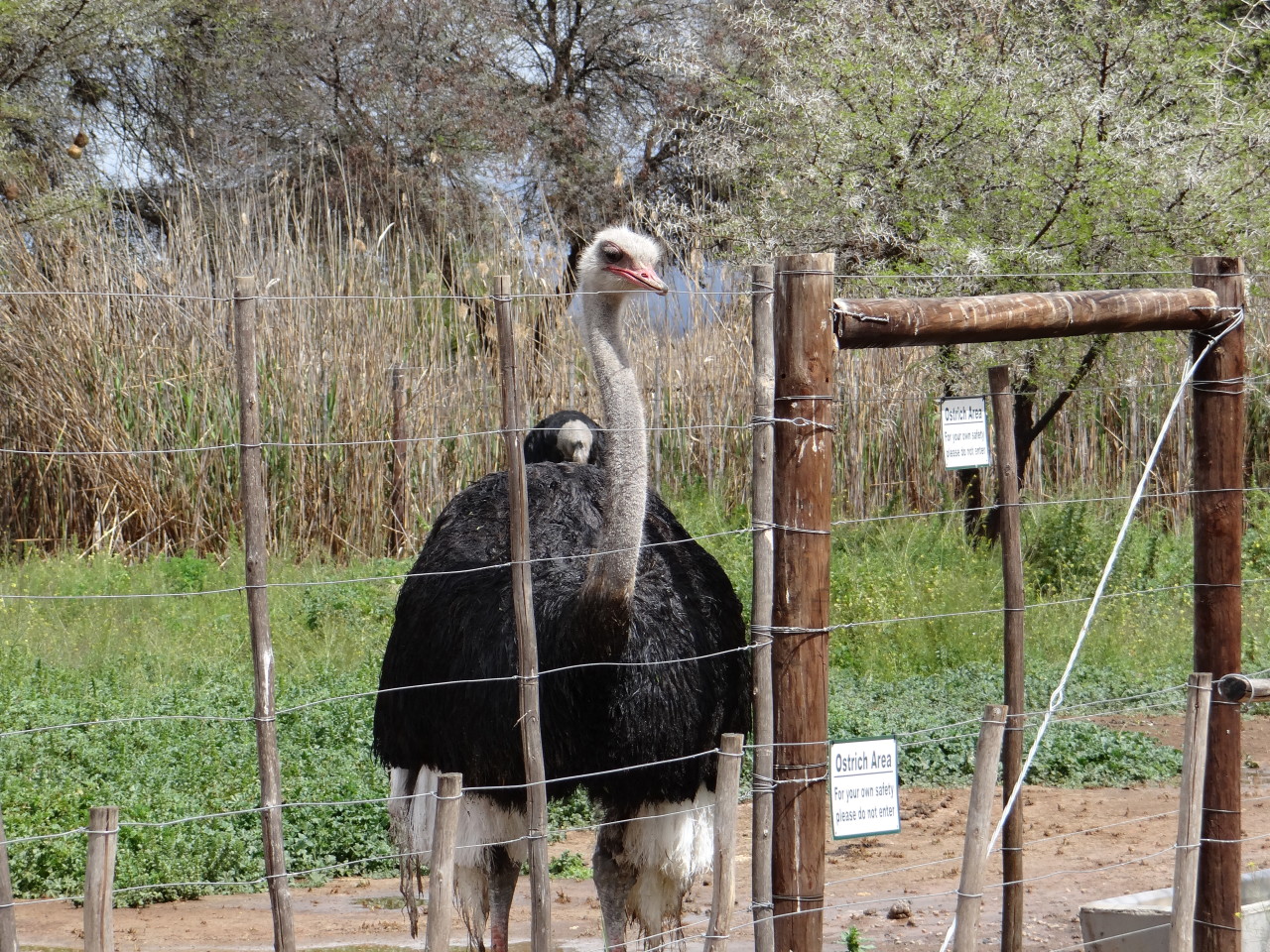

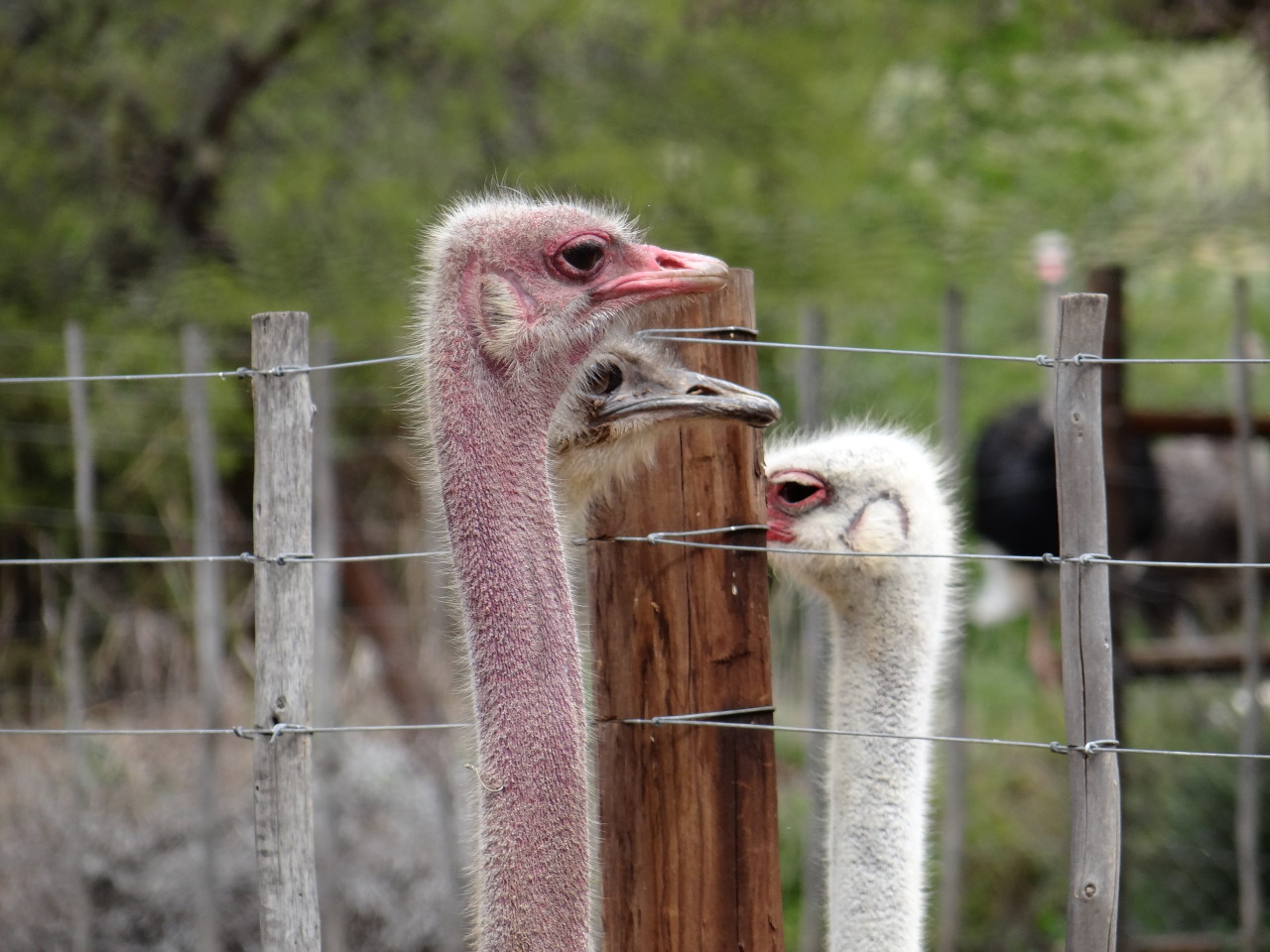
After the breeding area, we settled into a nice pace of discovering all the different types of ostrich from around the world (plus an Emu) who live at the farm for the “show and tell”. They were kinda cute in a balding fuzzy way – their craned necks went up and down as the body moved along with them – they seem so oddly disconnected in a weirdly graceful way.
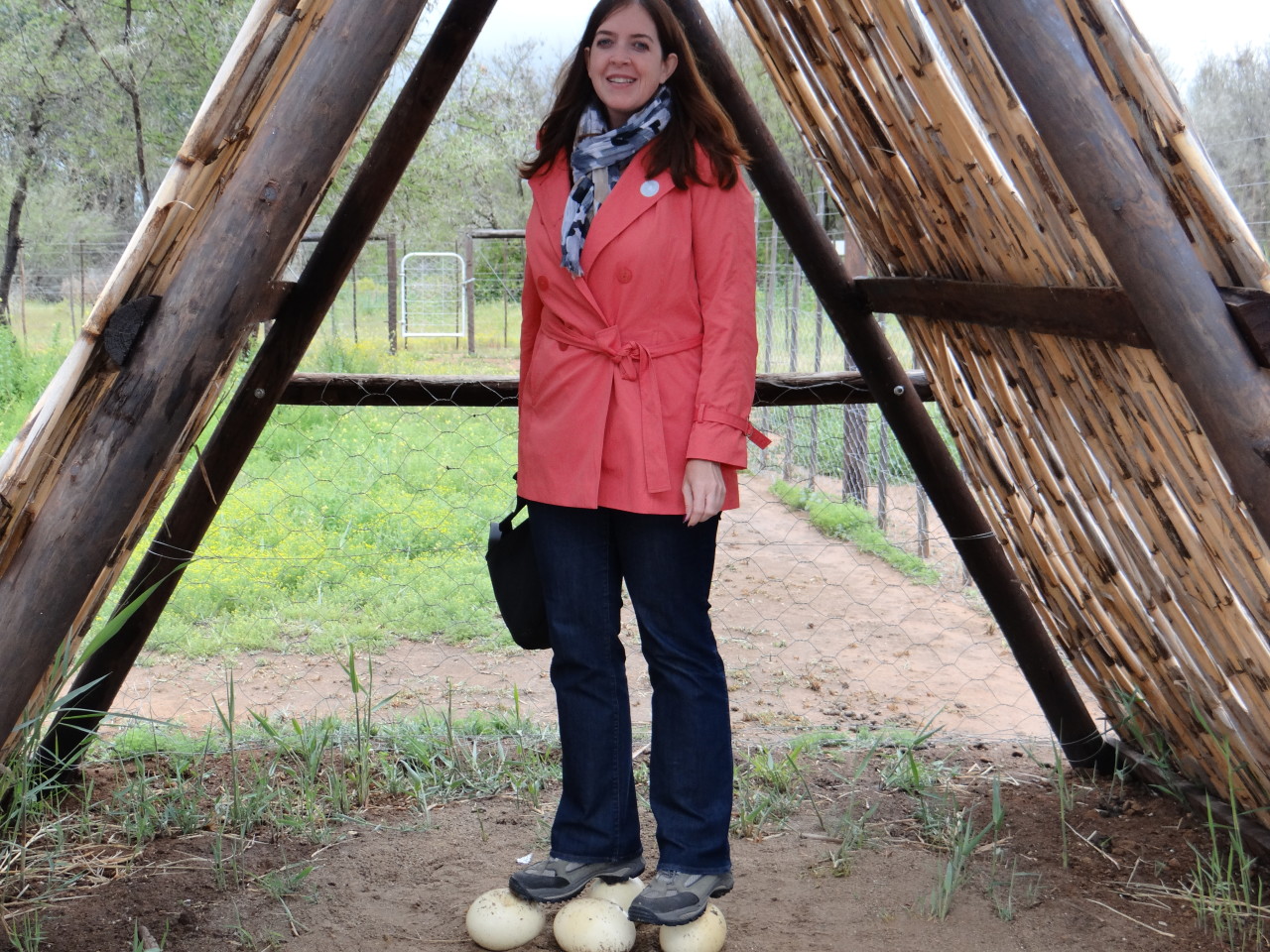
We had a bit of fun standing on an ostrich egg (quite large and sturdy holding up to 120 kilo) for the required photo opportunity before retiring to the dining room for lunch.
Before we arrived, we were told that lunch was included in our visit, did we want to order Ostrich? Wait, what? I’m going to visit the farm and eat the fresh killed animals? No thank you, I couldn’t do that – a restaurant far away from the animals is fine in my hypocritical world but there was too much guilt in person so I chose a toasted ham/cheese sandwich. Could you just have visited the fuzzy cuties above and then sit down to feast on them? I couldn’t. The rest of the room, however, was enjoying their ostrich meal. After lunch, we wandered to the store to check it out – there were feather boas, purses/bags and many other ostrich products in a rainbow of color options, all quite expensive. We would take only our photo memories with us from our visit.
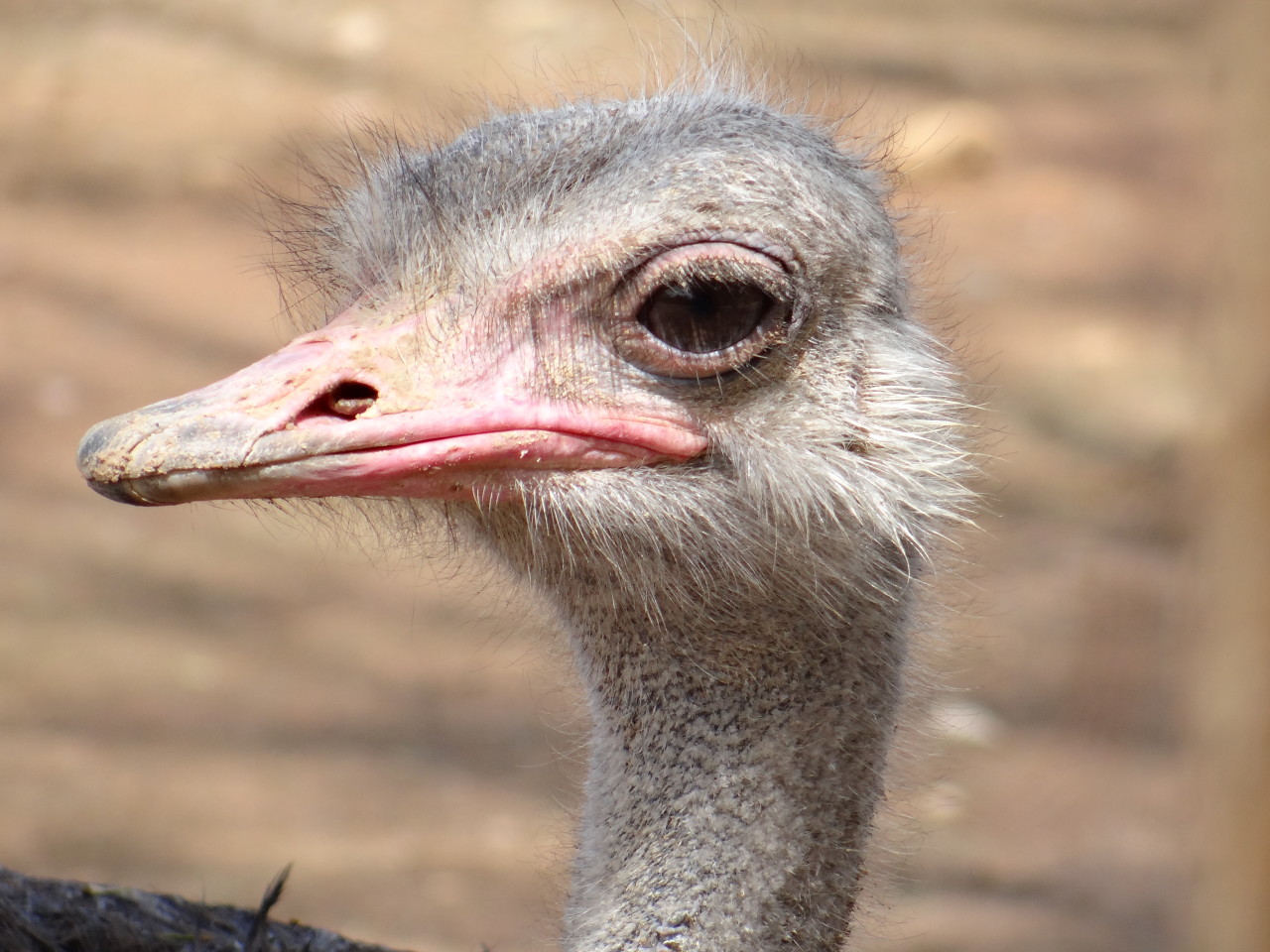
The Ostrich farm was an interesting stop along the Garden Route as it gave me a glimpse into a different type of farming so important to this town in South Africa. I didn’t buy the diamonds (in this case the Ostrich feather boa and handbag) on the tour stop but learned something new and that’s always priceless. And seriously, how cute are those ostrich?
]]>