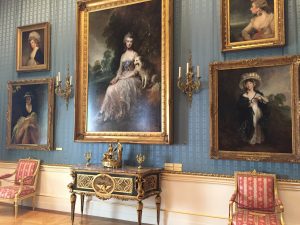
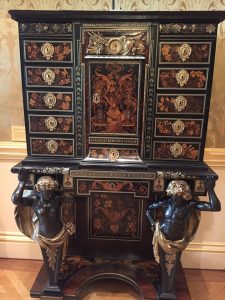
London Art museums can be overwhelming for me as I don’t know where to look first and how to navigate the vast space packed with tourists to ensure I experience the art and the curation properly on my own timeline. My first visit to the V&A was supposed to be the highlight tour and I couldn’t leave once the tour ended and thus spent hours exploring nooks and crannies. Well, imagine my surprise at the hidden gem of an art collection (museum) in Marylebone – the Wallace Collection. I walked up to the grand home, Hertford House, on Manchester Square and was gobsmacked by the sheer volume of art that was in the home, a home that from the front seems small but once inside you realize it is a city block in length which would have included outer buildings and a stable.
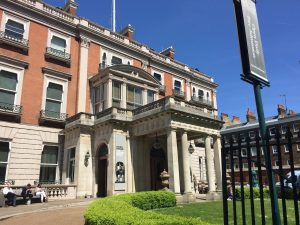
I left the quiet street and walked up the circular driveway admiring the small garden and view of the square from inside. The benches along the path were filled with what seemed like local workers enjoying their lunches in the sun. Once I entered the home, I was greeted by staff and given a map for a self-guided visit (there are guided tours throughout the day for a fee). Admission to the main collection and house is free, however, special exhibits will have a fee and may need advanced tickets. On the day of my visit, there were no tour buses/groups (The Wallace Collections limits groups to 25 people given the size of the rooms) so that was a nice surprise. Photos are allowed without flash which means I took enough to create my own souvenir guide book.
For a video tour, check out their London wedding video as it guides you through all of the rooms of the museum. It’s pretty cool to see how the collection is curated and a glimpse into what to expect when you visit.
[embedyt] https://www.youtube.com/watch?v=LFsuvJqGgRw[/embedyt]
Hidden Art Gem in London at The Wallace Collection
The Wallace Collection is probably an art museum you’ve not heard of or if you have, you’ve not yet visited. Big mistake! For even the casual art enthusiast will be impressed and instantly fall in love with how easy it is to navigate, to linger and to experience. The collection is beyond impressive with 17th, 18th and 19th century furniture, paintings, sculptures, clocks, jewelry, wine cups, porcelain, arms and armor and so much more. If you are keen on masterpieces, there is a Rembrandt painting, “Titus, the Artist’s Son” but the rest of the collection are lesser known but equally impressive artists. The museum hosts daily events so check their website for details during your visit.
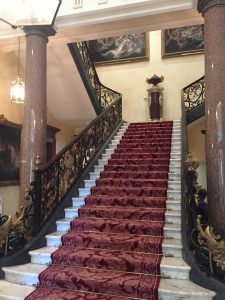
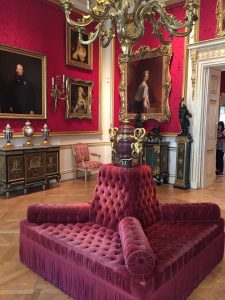
The Wallace Collection Galleries
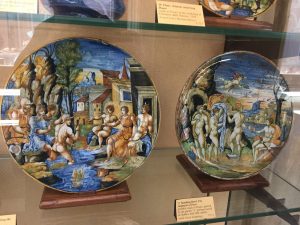
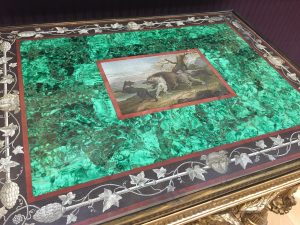
Even now, months later I’m still struck by how amazing the collection was and how well curated. There is a room of armor and a room of jewelry, rooms of paintings and tapestries and small boxes covered in leather to avoid light on the miniature artwork.
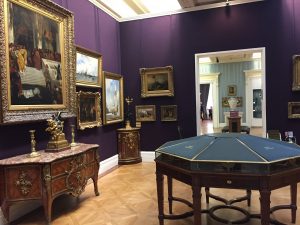
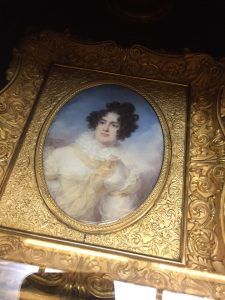
What is now an art collection given to the British government, was once just part of the family home’s decoration. Think about how you have decorated your home – you choose objects, paintings, art that reflects your taste and preference and that’s what struck me about the Wallace Collection. It was a family collection that continued to grow with each Marquesses of Hertford and one son, Sir Richard Wallace and his wife, Lady Wallace. It feels personal. There’s no theme to the collection that I could pinpoint and that made it even more interesting for me.
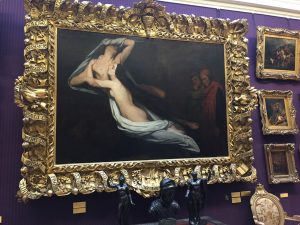
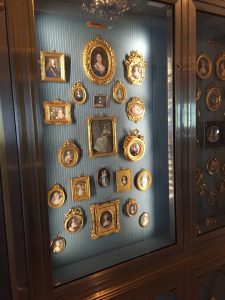
Wallace Collection Rooms of Color
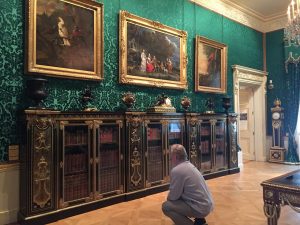
Upstairs the rooms were easily identified by the wallpaper color – of course, they have formal names but I preferred to reference by color. The purple room was one I spent a good amount of time in reading about the art from the room books available.
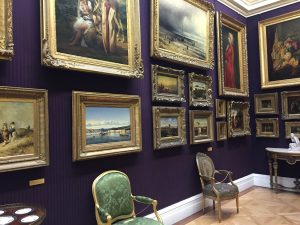
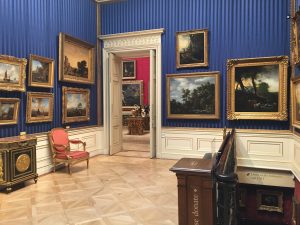
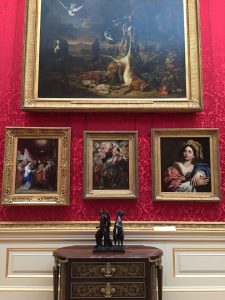
I knew when my tour around the collection was complete when I ended up in the original room of blue wallpaper. In some ways, I was reminded of how The Barnes Collection in Philadelphia is curated with many art pieces on the walls causing the visitor to linger and try to find a common thread/theme in the art. One wall had ten or more paintings above a chair or table – it was spectacular. Another wall was full of women. Another wall had hunting and animal paintings. So there were some themes.
Wallace Restaurant Couryard Brasserie
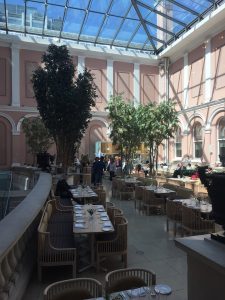
On the main floor of the building, there are front rooms on either side as you would expect in the grand home and then hallways on either side of the building that had a view of the interior covered courtyard which serves as a sumptuous Parisian brasserie, The Wallace Restaurant, serves breakfast, lunch and dinner during opening hours with late night service on Friday and Saturday nights to dine under the stars.
Medieval Rooms and Armor at The Wallace Collection
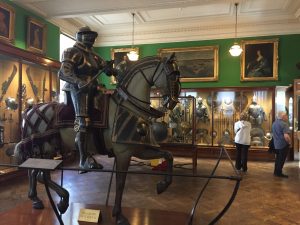
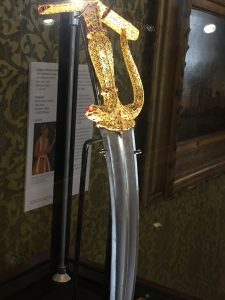
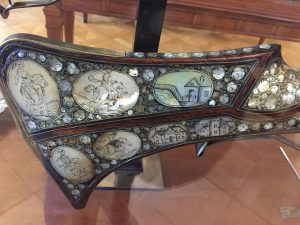
In the back rooms of the home the theme was medieval with armor, arms (weapons) and art from around the world. If the rooms were movie settings, then the men would be drinking and smoking in the downstairs rooms, while the women enjoyed the lightness of the front room and also that of the upstairs gallery suite with window seats.
Final Thoughts – The Wallace Collection in Marylebone, London
I’m not an art historian to deep dive into the collection, I’m just someone who can appreciate the artistry of the clock design, the care taken in carving the furniture, the beauty of an everyday object that holds water or wine.
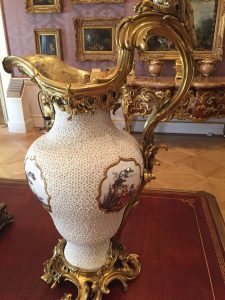
The Wallace Collection is art that made me smile, made me appreciate the skills and artistry as well as the fact that Lady Wallace wanted folks to enjoy the art. She didn’t sell it or give it to charity, she bequeathed it to the British Nation to maintain, preserve and showcase.
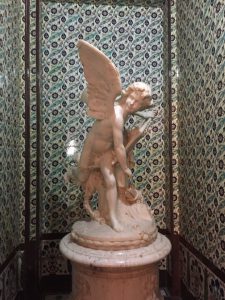
The Wallace Collection opened as a museum in 1900, the turn of a century. Now over a hundred years and twenty years later you can still discover and enjoy the art collection just a short walk away from the crowds of Oxford Street in Marylebone. Get a peek inside the marvelous history of art from a time we only read about in history books. We often talk about hidden gems in a city and The Wallace Collection is that gem you need to visit on your next trip to London. Shame it took me over twenty years of London visits to discover it!
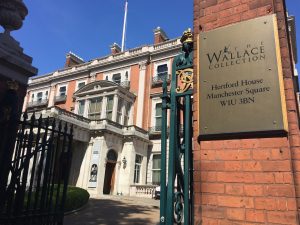
The Wallace Collection is opened daily from 10 am – 5 pm except during Christmas (24-26 Dec). You can rent the building for (quite memorable) corporate events, meetings, filming/photoshoots and weddings. Groups are limited to 25 people as the rooms are small and you don’t want to impede visitors.
The Wallace Collection is fully accessible for limited mobility, deaf/hearing impaired as well as blind/partially sighted visitors. The website has information for Wallace Collection accessibility and the front desk has aids and assistance available. It’s quite impressive how much care has gone into making the art accessible for all – young and old.
]]>
I have a (not so good) history with Modern Art – some has left me wondering “WTF” and others have caused me so much emotion (usually anger) that I need to leave the gallery immediately whilst muttering to myself. I’ll probably never understand “The Rose” (white canvas painted white) at The Philadelphia Museum of Art, the camping equipment display at The Whitney, or the pile of rocks at the Chicago Art Institute. I get annoyed that if I arranged garden rocks in a circle no one would pay me thousands upon thousands of dollars and call it “art” (My garden is full of rocks so anyone wanting to buy “my art” let me know). I don’t understand the video of an ice cream cone melting that I saw in Dunedin, New Zealand (lots of people were fixated to watch minute by minute of the dripping ice cream). I have no idea the metaphor or what it was to represent? Life slowing dripping away? The need to lick or bit the ice cream and enjoy the moment? Who the hell knows? So imagine my surprise when in Hobart, Tasmania which is part of Australia (yes, really folks), I happened upon an art museum referred to as MONA. MONA is the abbreviation for “Museum of Old and New Art” but it’s really an “FU” to the art world in my opinion and for that reason, I had so much fun with art that I felt in on the joke in some way. MONA Tasmania is a MUST DO for all visitors to the city. After days of unending rain during my visit to Australia, the ONLY sunny day was when I booked my visit to MONA which had me singing a few notes of Alanis Morrisette’s “Ironic” as I spent the only sunny day indoors underground with modern art.
Note: I visited a few years ago and the experience has stuck with me even now. I didn’t write about it then because my Australia trip was during a challenging period where emotions were raw and I didn’t want to revisit that trip for a while. Now I want you all to know about MONA- the exhibits will change but you’ll understand the general feeling hopefully.
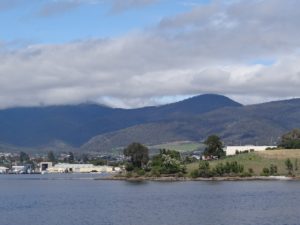
MONA Tasmania – Background History
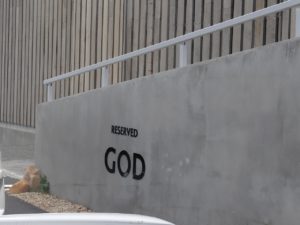
The ancient, modern and contemporary art is from the collection of the David Walsh (noted as GOD in the parking lot), a professional gambler from Australia who is also an art collector and businessman. His former museum, Moorilla Museum of Antiquities, opened in 2001 and closed in 2007, underwent a massive four year renovation to open as MONA, the Museum of Old and New Art, in 2011 on the grounds of his Moorilla winery and built into the rocks. The MONA architecture inside and outside is art all to itself.
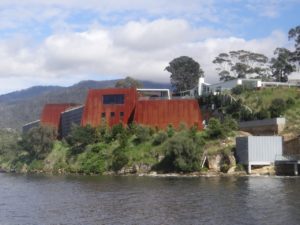
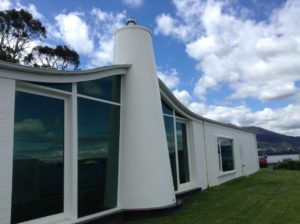
There are many themes you will pick up along the way (hopefully) – sex and death are two but for me just life and what we make of it was key. All the possibilities of life and yet all the ways we might waste time, opportunity and chances. Read the website introduction to MONA and then judge each piece of art for yourself – believe or don’t believe in the artist vision.
Very Interesting Ferry Ride from Hobart to MONA
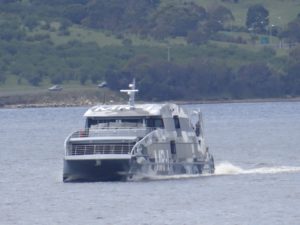
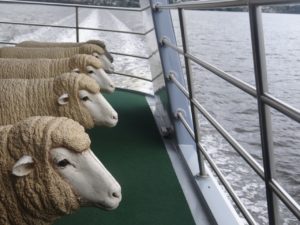
Should I sit on the sheep was a valid question I was asking myself as I boarded the yacht which functions as a ferry to transport visitors from the Hobart docks to MONA (takes about ½ hour to sail). The military camouflage colors of the boat were already the first impression that this won’t be like any other museum visit in the world. Onboard there was street art graffiti on some of the walls and animal sculptures on the outside decks to sit on. Of course we all let the kids have the animals but when there was a free sheep, the adults all looked at each other wondering “should they jump on”, “can they forget they are an adult and enjoy like a child” and “really?, what would x think”. Ok, so this is what I was thinking and just assumed everyone was to.
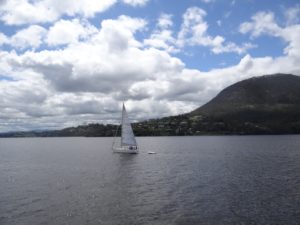
With my first day of sun in Tasmania, it was a lovely ride on the water to see the city and surrounding suburbs. The passing sailboat did give me pause to wonder if I should really be spending hours inside an art museum rather than enjoying my time on the water. I had already had two action packed water adventures (in chilly weather under the cloudy sky), one of which was surprised by a whale swimming past us. Everyone was surprised by the whale and that was a feeling that followed me to MONA. That unexpected glee….for art?
Entrance to MONA
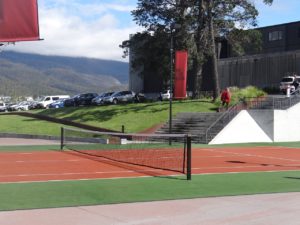
With each part of the journey, MONA was already a surprise. When we arrived and climbed up the stairs to the lookout and entrance, we encountered art outside and a tennis court in the front entry. Yes a tennis court which signified what? Is a tennis court art? Or does it become art when out of context and in this case part of the entrance apron?
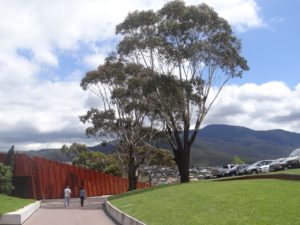
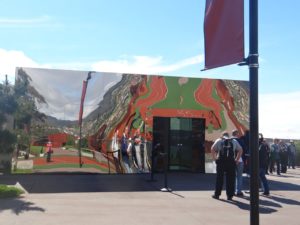
Upon entering the Museum of Old and New (MONA), each guest was given an IPod loaded with directions, art information and interactive feature. The interactive feature asked for your email address and then at each art installation you can mark thumbs up or down for your thoughts on the work. You would then receive the information by email.
I screwed something up because at the end, my IPod erased my visit instead of sending the data. How fun it would have been to get a list of the art I liked and didn’t like. But again, I hummed more of the song “Ironic” The iPod has GPS in it (your phone doesn’t work here but this does) so it tells you what artwork is nearby. It also had all kinds of information to dive into such as a summary of the work, curator notes, David Walsh notes/comments as well as tidbits like artist interviews, quotes and features. For the art that piqued my interest, I was able to deep dive into the works which really added value for me during my visit.
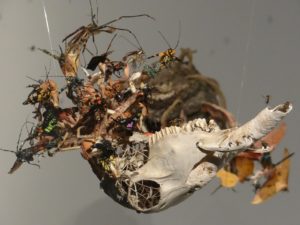
First View of the Museum of Old and New Art
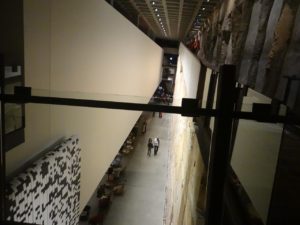
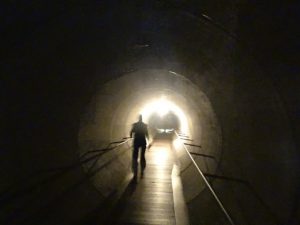
MONA is built into the side of the cliff and goes underground so there is little natural light. When I first looked down and over the museum, I had this flash of “Batman’s underground cave” or a scene from Star Trek. It was pretty cool how the natural stone and finishes were themselves works of art – architectural art. The interior spiral staircase was the first thing I encountered to begin my visit – you walk down the three flights of stairs.
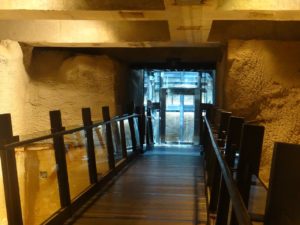
The Exhibits at MONA
I visited MONA on my last Australia trip, adding Tasmania because why not? With close to 2,000 works of art on exhibit from the collection, I’m not sure if what I saw and experienced is still there but no doubt you will have a memorable experience like no other. The exhibits at the time were video, interactive as well as a section I’ll call “I have no idea what this is”. For me, it felt a bit like a “wink, wink” on the whole concept of modern art and for the first time, I didn’t run screaming.
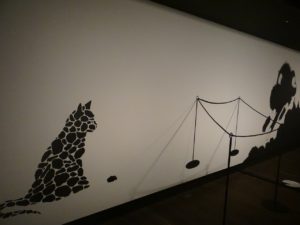
I did have a few choice words but chose to view this as an experience – an individual experience that in itself is performance art maybe? A bit meta – I’m creating art by interacting with art and my art is different than your art. See, this place had an instant effect on me especially when I saw and heard others reacting to the art. Don’t worry I didn’t become an instant convert (see my time at The Whitney and the sneakers and camping equipment). But I could appreciate a collector who bought pieces that spoke to him, even if made with elephant poop.
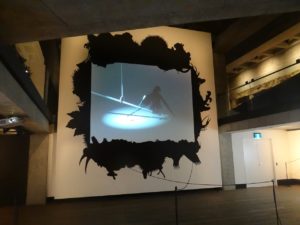
Highlights of MONA
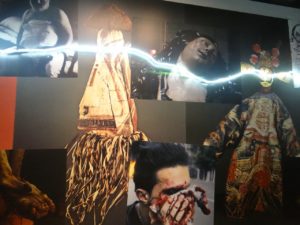
The Red Queen exhibit occurred a few years ago and of course we all know (or should remember) Through the Looking Glass (Alice in Wonderland). The exhibit was to challenge the question of evolution and how we might meld into the environment around us rather than run toward goals and change. A messy life congealing with what’s around us in television, on our phones, etc.
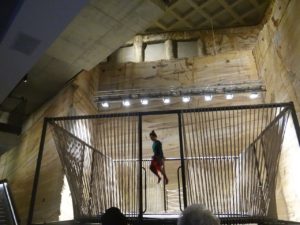
There was a musical trampoline that obviously sounds different with each person’s weight, jumps and falls. The line to experience the art was long and filled with more adults than children. This was the first of many interactive art installations. I didn’t get to jump during my visit as the lines were long with folks filming friends and family and of course, I was solo and not keen to jump alone in front of all the people.
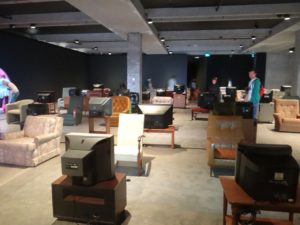
A room full of recliners and televisions. The room was filled with familiar patterned recliners of my youth (think 70’s patterns, colors and goes well in wood paneled rooms – so basically a bit ugly but in a good way. Of course, I tried to find my family tv and crazy chair) placed in front of a variety of televisions all in a show to make you think about how television is consumed and in some ways part of a cult (ok, my interpretation). Getting sucked into television as a medium to share stories and create an escape.
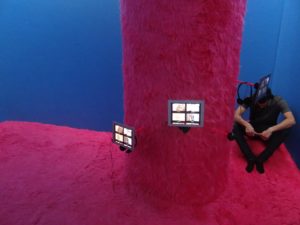
The pink playroom required me to take my shoes off and climb inside. As it was empty at the time, I climbed inside the uneven surfaced pink shag rug filled room and tried to steady myself only to fall into one of the carved out spaces in front of the video monitors. I put the headphones on and dialed up a video about wedding planning and bridezillas. Sure, this sounds like reality television or a documentary – but one is often considered an art film and the other mindless escape – you know which is which. But is the reality show art due to all the facets or building the final product – the script, the setting, the cinematography, the lighting, etc. At what point does visual art deviate from being seen as “art”.
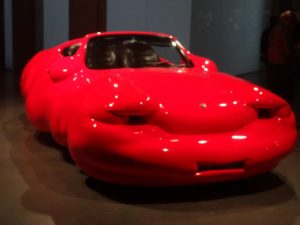
The puffy car was about excess fat, consumption and a lavish lifestyle (of Americans IMO). I felt bad for the car, I felt bad for the perception of Americans, and I felt bad that I wanted a cookie after viewing the puffy car.
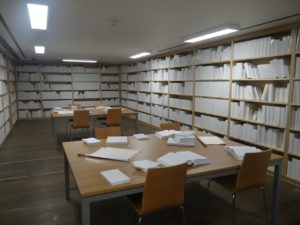
The library of white paper, white books and everything blank was….interesting. I had a moment of waiting to go all Jackson Pollack in there because it was the perfect canvas. But of course there was a larger meaning in the exhibit by Wilfredo Prieto was about the importance of the books that are never read. This is part of the permanent collection.
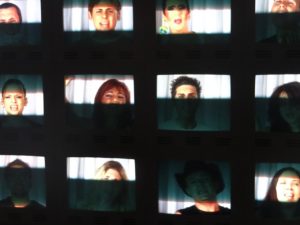
The Madonna video room was all about the “Vogue” as we were surrounded by people singing to the song and dancing to “Vogue”. At my age, I remember we all were “vogue-ing” but now to be surrounded by the videos, it was fascinating to see the diversity included in the videos at the time. You couldn’t help yourself and you had to sing, dance and vogue.
Ugh, I smelled an awful smell – rotten eggs crossed with something else. This room was all about the body, digestion and excrement (yes, really). The mechanical art was ingesting food and processing it. I didn’t last long in that room, it was to show what our bodies go through in digestion – I’d rather watch a movie about it than smell it. The name of the piece is Cloaca Professional by Wim DeIvoye, a Belgian neo-conceptual artist. This is in the permanent collection.
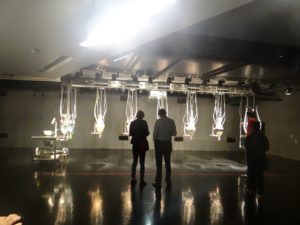
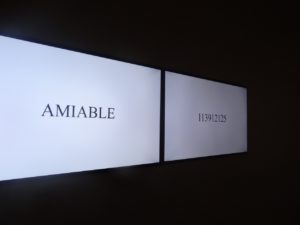
When I walked into the room with video screens of data and what seemed like the forthcoming world of AI, I stood still mesmerized by the light, colors and overwhelmed by it all – data paralysis of sorts.
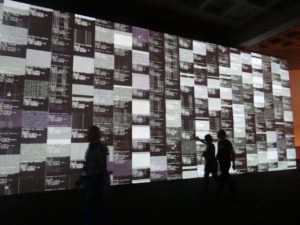
As I wandered and tried to visit each and every piece in the museum that day, I scored thumbs up or thumbs down on my guided device. Approaching the “art” with a sense of quirky sarcasm, I had more thumbs up than down which to be honest surprised me. The “FU” sense of curating art for MONA allowed me to view the different types of art differently.
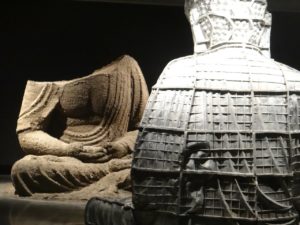
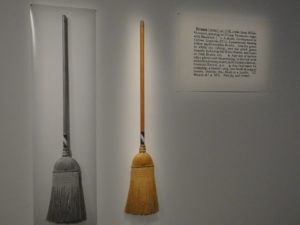
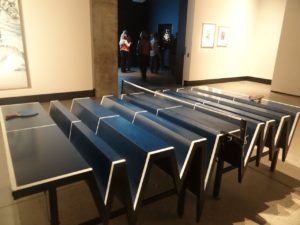
Unlike the decapitated Barbie heads or glasses filled river water and sticks I’ve seen in Philly or the pile of candy in Chicago or the gold shoes in NYC at The Whitney, MONA was about art that poses a question about life and death and our experience with it. Death can be the final act or it can be the loss of love, friendship and possibly the loss of your spirit and soul on a daily basis. Life can be interpreted in many ways as well. And so can art – experience it, interpret it in your own way. And of course, there was the broom….and ping pong table…because I can’t not have my head explode in a museum and need to apologize for cursing under my breath.
Final Thoughts – MONA Art Museum Tasmania
I spent a few hours at MONA knowing that I was sacrificing the gorgeous blue skies of Tasmania outside. Acting like a vampire shunning the sun consumed by the art and questioning my own sense of art and messaging was fascinating to me on so many levels. It was an intellectual pursuit deeper than my normal museum experience.
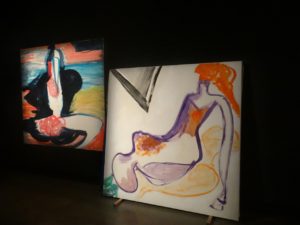
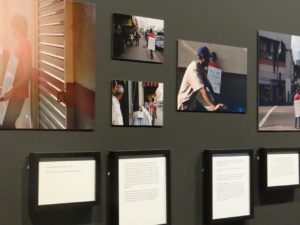
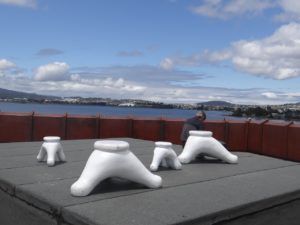
As I exited squinting at the brightness of the sunny day, I took in my final views of the art outside before making my way back to the boat to sit on the sheep. MONA had made me a sheep – I was part of the flock who had experienced the Museum of Old and New Art and I was ok with that. I’m sure there’s more meaning to the sheep and my choices that day but at the end of the day, it’s really just a thumbs up from me for MONA. Go see for yourself next time you travel to Hobart, Tasmania in Australia. You’ll never forget MONA!
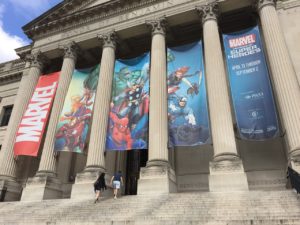
I fell down a rabbit hole of Marvel Super Heroes recently which started with the movie Spiderman: Homecoming. From there, I went to the movie theatre to see Spiderman, Far From Home (yes, I know out of order) which led me to Avengers: Endgame which led me to the only East Coast exhibition of Marvel, Universe of Super Heroes at the Franklin Institute in my hometown of Philadelphia (there’s still some time left to visit as the exhibit is ongoing until September 2nd). The Franklin Institute Science museum is a must for any Philly visit and often has really fun and cool special exhibits like the Science Behind Pixar and the Lego exhibit, The Art of the Brick.
My Marvel Superheroes History
I grew up reading comics of all kinds including Marvel superheroes. I think my dad was initially more interested in the comics but at some point I fell into the world where a boy gets bit by a spider and has powers and then on television I watched the super hero shows of the 70’s/80’s. The Marvel universe was all around me as well as the DC Superhero universe (Wonder Woman, Batman, Superman, Justice League, etc.) and of course Star Trek: The Next Generation and the original three Star Wars movies. My dad had two girls so we grew up with superheroes, science fiction and sports.
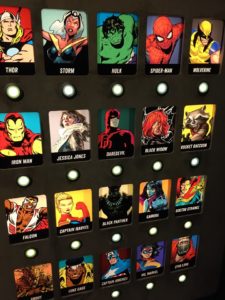
When the Marvel movies started eons ago, I still remember my friend making me sit through what felt like a forever and a day’s worth of credits along with two other people in the theater for the special clip, a spoiler in some cases for what was to come. Little did I know then how many movies were yet to come and how our secret geek group of four who sat through the credits would slowly grow as more learned of the bonus scene(s).
The Franklin Institute – Philadelphia’s Science Museum
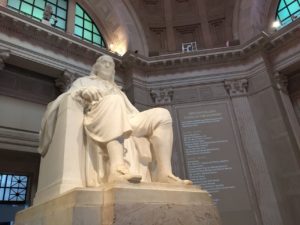
One of my favorite “Philly” iconic views is at the Franklin Institute. Between the front entrance and ticket area is Ben Franklin statue in the soaring domed atrium. I’ve been visiting Ben for over thirty years now, he doesn’t age and frankly my sense of adventure doesn’t either – I’m still a kid discovering something new in the science museum. I wonder what he would think of the science, imagination and the storytelling that Marvel begat.
Visiting Marvel, Universe of Super Heroes

The timed ticket is good for a 30 minute window so my 9:30 entrance ticket sold at 9:45 was good to enter the Marvel exhibit up to 10 am. The ramp up to the entrance is a bit long and during peak time will be filled with folks waiting to enter. As it was early Sunday morning, there was no line and my only wait was a few minutes as there is controlled entry to view the short film before beginning your visit.
And with that I was led into the Marvel universe,
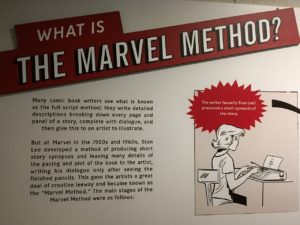
Did you Know? The Marvel universe was created in less than two years primarily by Stan Lee and Jack Kirby.
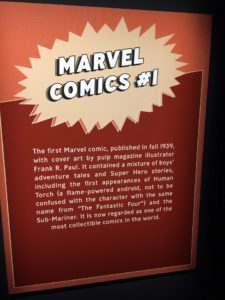
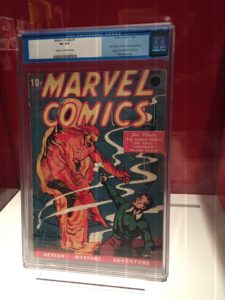
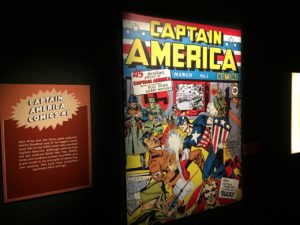
The short film gives you a peek into the early days when Stan took over a fledgling paper. Once the 12 minute film ends you can begin the visit. There tends to be a bit of a bottleneck here to read the panels and see the first comic book produced (worth millions!). Once you get past this hallway the exhibit opens up and gives you the freedom to wander about.
Marvel Superheroes – The Photo Options
Fancy a picture with a superhero? There are a few to choose from – The Thing, Spiderman, Black Panther and The Hulk. A few folks planned ahead – kids in Spiderman masks, kids with hulk hands, etc. Such creativity on display for the perfect social media post. But it was the adults having a bit too much fun with their superhero t-shirts and multiple selfies with the characters.
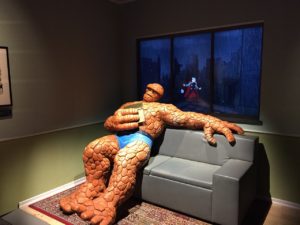

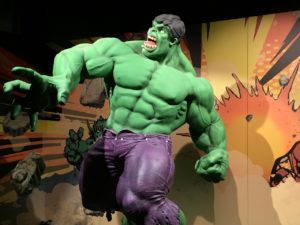
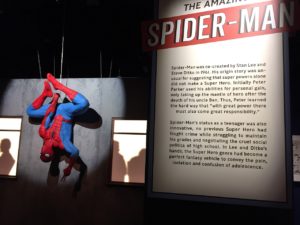
A Marvel Walk Through Comic Books History
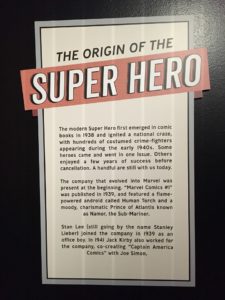
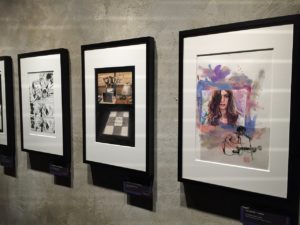
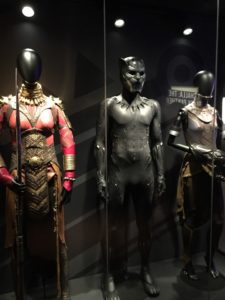
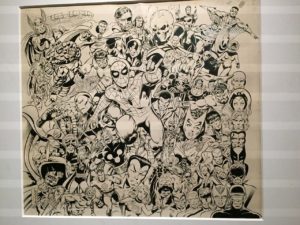
Each superhero is given his or her area with detailed boards and a few bonuses like comic books, original art, art mock ups and movie costume and props.
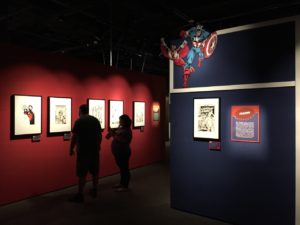
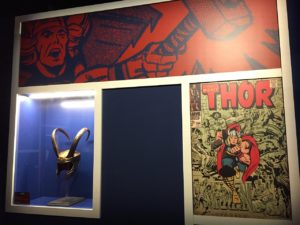
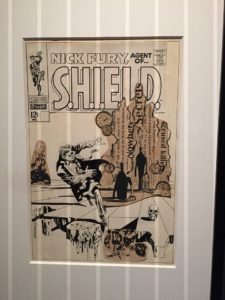
Did you know? Stan Lee has had a cameo in every Marvel movie made until his recent death earlier this year.
Entering the World of Marvel is falling down a rabbit hole of your childhood, teenage years and adulthood. How you relate depends on your age – did you grow up with the comic book stories spending your allowance on the next story? Or did you dive into the film and streaming world? Either way, there’s something for every fan and non-fans too. The toughest question of my visit was “Who is your favorite superhero?”
Captain America Comics and Movie Props
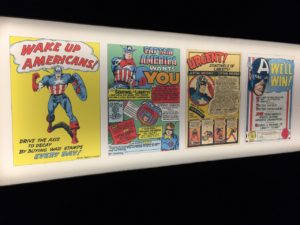
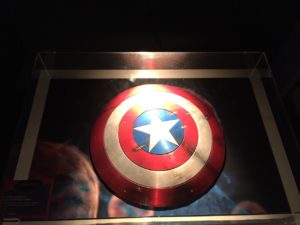
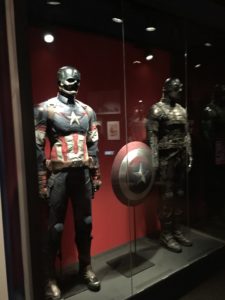
Captain America was born out of war time as a super solider and appeared in the first comic in March 1941 by Timely Comics, the comics before they became Marvel Comics. He became popular during World War II and then faded in the early 50’s and reemerged in Avengers #4 in March 1964.
Spiderman
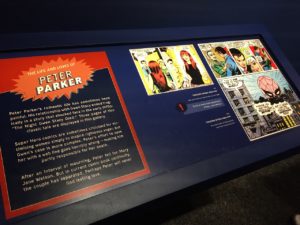
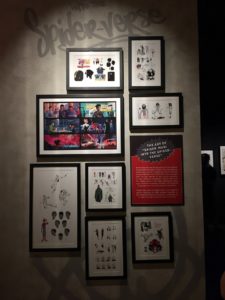
We all know the story of Peter Parker and have probably watched some (if not all) of the movies with different actors portraying the web slinger. The displays at Marvel Universe of Super Heroes highlights Spiderman over the years in the comics, art, props and newest entrant, Spiderman, Entering the Spiderverse, which received an Academy Award for animated feature. The Spiderverse introduces us to Miles Morales and the many universes of Spiderman. Spiderman continues to be a fan favorite and new movies are planned for the future.
The X-Men Comics and Artwork
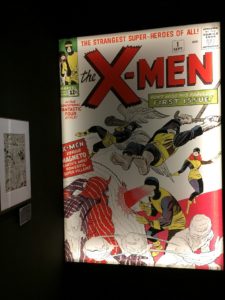
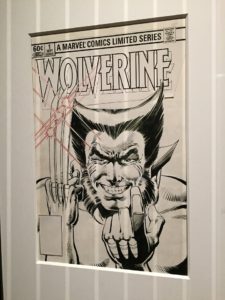
The X-Men created in the 1960’s are primarily mutants born with an “X” gene which gives them superhuman abilities. They fight for a world of acceptance for all humans and mutants.
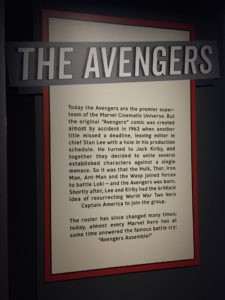
The Avengers Art and Movie Props
The Avengers were brought together as a team in the 1960’s (September 1963) to fight against Loki, the brother of Thor. The original Avengers were Thor, Hulk, Iron Man, Ant Man and the Wasp.
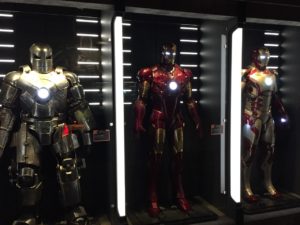
Did you Know? The Wasp was originally a housewife who divorces The Ant and becomes a powerful heroine for feminism in the 1960’s. She named the group “The Avengers”.
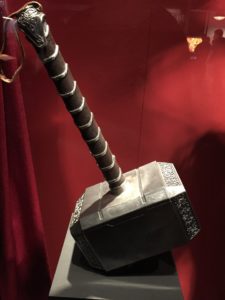
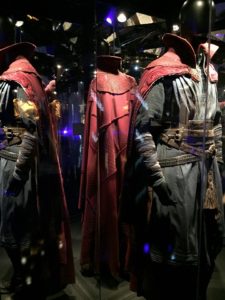
The Avengers continued to add to the roster as you’ve seen in Infinity War which includes Dr. Strange, Black Widow, Hawkeye, Captain America and many others.
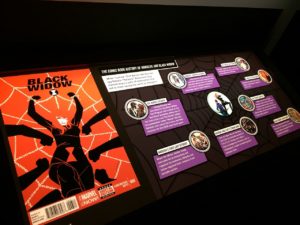
Marvel – Wall of Aliens
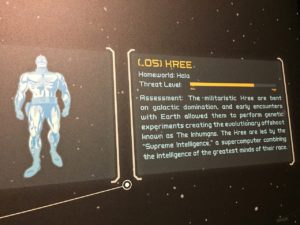
The world of superheroes needs not only villains but a world of aliens to encounter and potentially fight off world destruction. The map of alien worlds along with threat level and background information is truly for the superfan. You need to know which aliens are which. For me, after recently seeing Captain Marvel, I focused on the Kree because frankly that’s all I could remember. For the guy behind me with his Gen-X friends, they got a bit more intense into the deep dive of the aliens and didn’t need to read the boards.
Marvel Superheroes – New to Me
There are a few Marvel superheroes I’ve not heard of – the Street Level Heroes – Luke Cage, Iron Fist, Misty Knight, Jessica Jones and the Punisher. All of whom have found their stories come to life on television and streaming services like Netflix. The X-Men spawned the New Mutants in 1982 (never heard of them either). The Runaways was created in 2003 which follows the children of super villains and their struggles with their inherited powers (that sounds like an interesting story to follow)
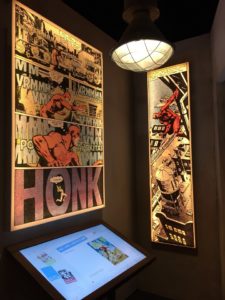
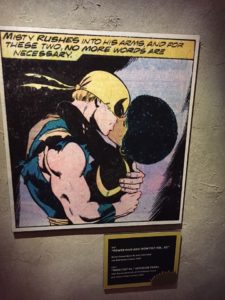
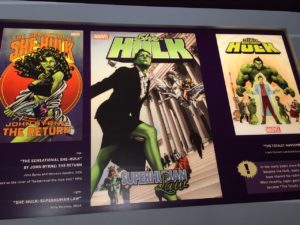
Did you know The Hulk had a cousin? SheHulk decides to incorporate her inner Hulk into her outer appearance (leave it to a woman to decide this is who I am). I’m sure it was about all the ripped clothes and budget, right? Who wants to buy so many great clothes only to rip them apart every time you get angry?
Final Thoughts – Marvel, Universe of Superheroes Exhibit
If you are a fan of the comics, you’ll enjoy the exhibit. Love the movies? Then the props and costumes will make you happy. Know nothing and are along for the ride with your passionate partner or kids? No worries, I think you can enjoy the show too.
If you do a drive by with highlights and selfies, you can do both rooms in an hour. If you want to read everything and view it thoroughly then allow two hours at least. If you are in your 40s/50s and come wearing your Captain America tshirt and bring your friends, well, let’s say you might want to bring snacks with you as you discuss who is the best superhero and villan.
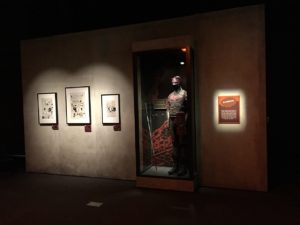
While your wristband allows you to come back into the Science Museum, the Marvel exhibit doesn’t allow you to exit and reenter. As it is spread across two rooms, same thing there, once you say goodbye to The Hulk to go to the other room you can’t go back. The ticket price of $35 is a bit steep but totally worth it in my opinion as it also includes access to the science museum and a few extras like Planetarium, live shows and demonstrations (IMAX and Take Flight Simulator are additional).
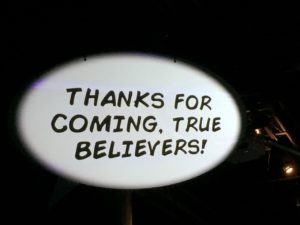
So I leave you with words from Stan Lee…..
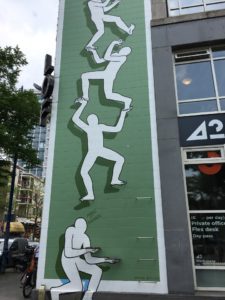
Arriving late to the conference, I missed out on the Rotterdam Street Art tour. But lucky for me (and you) that I discovered the ReWriters app that you can download (for a small fee) and tour the city’s street art on your own. If you are familiar with street art, you know that it is a living museum that changes daily and really is never the same tour twice. I encourage you to take time to check out a city’s street art as it takes the pulse of the city, country and the world through local and international street artists. The Street Art in Rotterdam is a bit unique as it showcases local Dutch artists and much of it is commissioned by shop/building owners so the shelf life is a little longer than most street art.
Rotterdam Street Art App by ReWriters
The ReWriters app is definitely worth the money as it is lovingly developed to not only showcase the Rotterdam Street Art on one of three walking tours but each artwork is featured in the app with artists detail as well as description and background of the wall art. One bonus feature for me, although it does use data, is having the location set so that as you walk, the phone will prompt you when the street art is nearby (**Note: It requires “Location Always” to work so turn that off once done). No longer are you the Google Maps blue dot wandering aimlessly through alleys and streets (I’m a bad blue dot), the ReWriter app directs you the best it can (I had one blip only due to a construction zone blocking the walls but a resident figured I was lost looking for art and pointed it out). You can choose to download the “offline” version which does everything except real time direct you to the art – so decide if you want to be the blue dot or not.
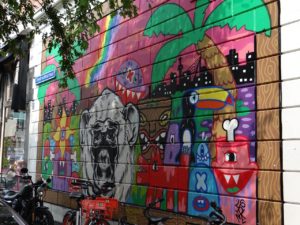
Rotterdam Street Art – City Center Art Walk (Modified)
Given my lack of time and location far from the iconic Centraal train station which is the starting point of the main City Center walk, (estimated time of three hours for five miles or 8km and 167min) I cut the main walk down to what was nearest to my hotel (The Mainport Rotterdam) and would provide a good assortment of art. The city center street art Rotterdam tour is 8km/167 mins. (about five miles and nearly 3 hours).
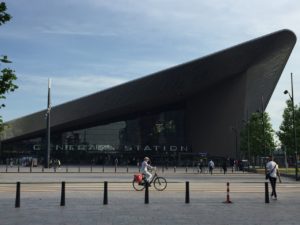
To be honest, I was pretty impressed with the modified route and the plethora of art on the walls to find. A bit like an organized scavenger hunt of Rotterdam Street Art with an introduction to new artists in the medium. The street art that I saw was primarily painted pieces by local Rotterdam artists – I didn’t see wheat pastes, stickers or yarn bombing or my walk (a few mediums of street art in Paris, London and Melbourne).
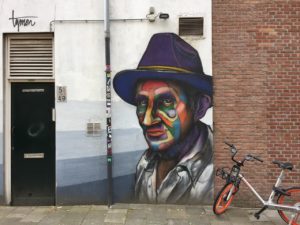
I began my tour at #17 by Ces53 entitled “Painting in the global tradition, slight return” not far from Leuvehaven Street and the Maritime Museum.
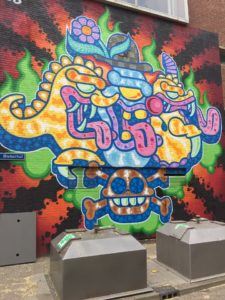
I then made my way to Witte de Withstraat which is filled with restaurants, cafes, entertainment and a popular King Kong hostel and bar (note they have dorms and private room options).
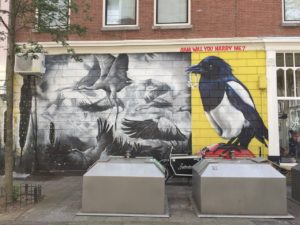
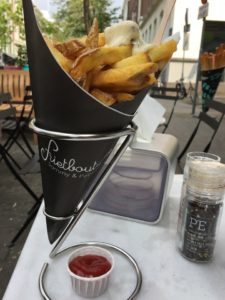
If I didn’t find the art, there was enough food and drink to make me happy but I found the art easily and took a break for delicious frites from Frietboutique by Sammy & Pebbles. It helped that art stop #26 was on the nearby shop side wall – this popular piece “Love Birds” also served as the artist’s marriage proposal (she said “yes”).
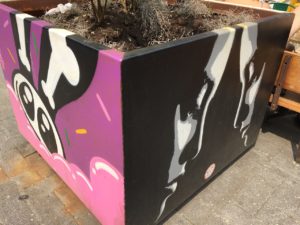
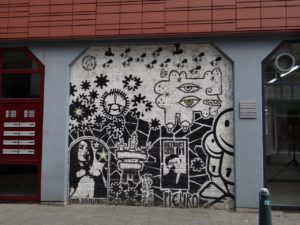
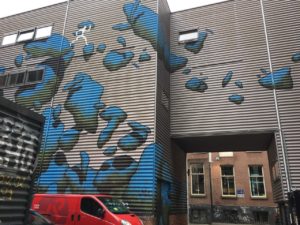
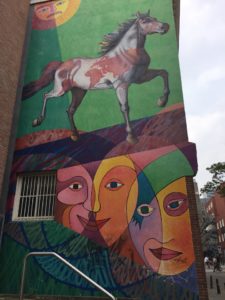
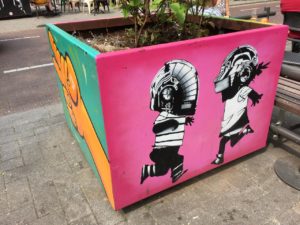
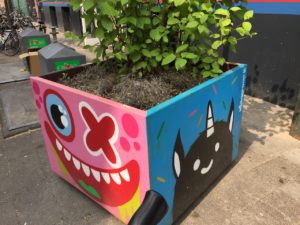
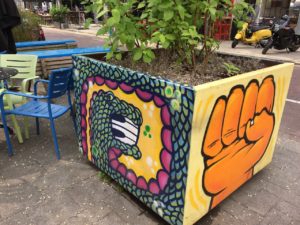
The artwork is quite varied, colorful and located throughout this small section of the city along storefronts, planters (cleverly disguised security barriers), and side walls laid bare before new construction and in the normal places. It didn’t much stick out but blend in as much as it could especially in the children’s park. But each piece of art has an origin, a story to be told and a lesson to be learned (hopefully). You can see influences, feel themes and also escape into the art (see the steps for you to interact with the art).
Rotterdam Street Art – Message & Security
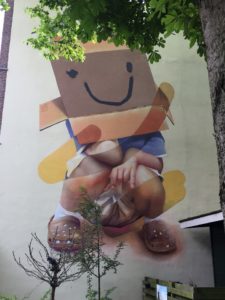
The art in the children’s park has quite a story – “Children are more dependent on their electronic devices than human contacts” by the artist duo TelmoMiel. “This wall shows the life of modern kids that shut themselves off from the outside world. The majority of today’s emerging generation does not learn how they can expand their world by using their own mind instead of using technology and social media”. What at first seems playful with a child in a box is meant to convey so much more. I’m not sure I really got that on my first viewing of the art in the playground. The ReWriters app definitely added the missing background information and context – I wonder how many folks who see the art daily get the intent behind the playfulness?
When the city became concerned about security in public gathering places, they added concrete barriers along the street to prevent cars from driving on the sidewalk and at people. Street artists were asked to brighten the square barriers and artists such as Ox-Alien and various artists from the Lastplak Collective contributed their works on each side of the squares.
Other Street Art in Rotterdam
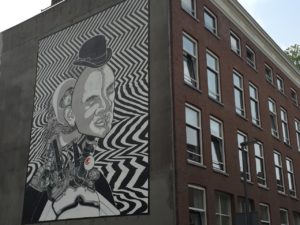
With so much street art highlighted in the app, there are other art pieces that haven’t made the ReWriters app but you can see as you wander the area. Buildings boasting portraits, paintings and murals.
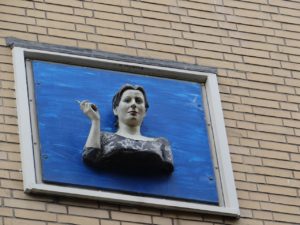
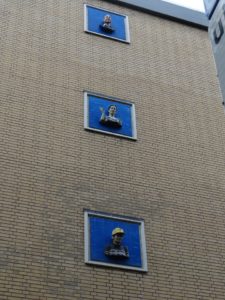
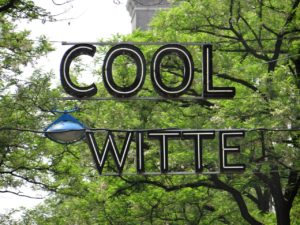
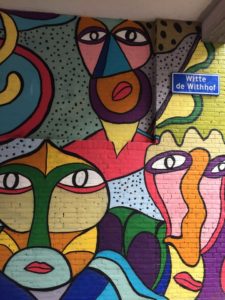
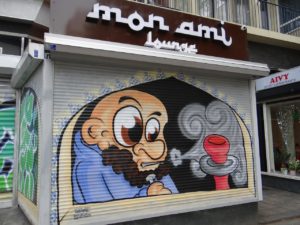
The streetscape lined with lighting and words such as “Cool”, “Witty” and “Zwart”. Once you see street art, your eyes are keyed in to find more hidden secrets on the walls, in parking lots behind fences and in the alleyways. Storefronts have jumped into colorful art to hide the drab security gates and the local group #MaisonSavant creates murals based on their Outsider Art program which helps disabled people. I found their Mural Wall #3 -2018 on Witte de Withhof as I was struck by the colors in the alley as I was walking by.
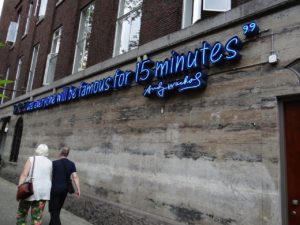
Even the neon sign with the Andy Warhol quote “In the future, everyone will be world famous for 15 minutes” can count as street art in my opinion. The fleeting nature of celebrity, of fame, is similar to the fleeting nature of street art.
Final Thoughts – Rotterdam Street Art
As a fan of street art around the world and a few famous international artists, it was nice to see the local flair of the Rotterdam Street Art and the Dutch artists. For the most part, the art wasn’t controversial as it might be elsewhere especially as the city and shop owners are keen to commission the street artist to create artwork on their property.
That said, if you are keen to see the Rotterdam Street Art, you can happen upon it, pay for an organized Street Art Rotterdam walk or go it alone like I did downloading the ReWriters app and exploring the city’s charm through its art and food.
You can choose how you consume the art, how you interpret it and how you share it with friends, family and social media. If you do share on social media, please remember to list the artist and hashtag #streetart so that their work is credited appropriately. It doesn’t take much research to find the artist of the work you experience so please be responsible with the art. My wander around Rotterdam was quite fun as I discovered new artists, colorful art and learned more about the art. On my next visit to discover Rotterdam to #MakeItHappen, I look foward to doing the entire Street Art in Rotterdam walking tours to see even more local art.
]]>
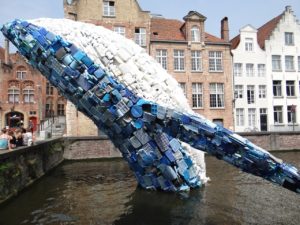
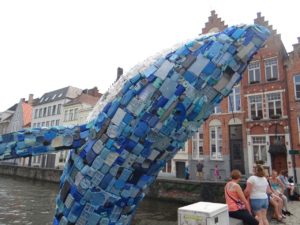
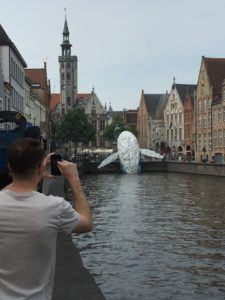
When I turned the corner walking toward the canal and the city center of Bruges (site of the Jan Van Eyck statue), I didn’t expect to see a massive four story high plastic whale “Skyscraper” aka “The Bruges Whale” trying to jump out of the water in the canal. The Bruges Whale is part of the Triennale Brugges which is an art exhibit held every three years throughout the city of Bruges, Belgium; this year’s theme is “Liquid City” and features fifteen works meant to be experienced, provoke conversation and serve as a meeting point. Contemporary art will definitely evoke a feeling from me – more often it is anger and confusion and sometimes it causes me to explore further and challenge my own beliefs. The Bruges Whale was a haunting piece that even now, a few weeks removed, continues to resonant with me.
Experiencing the Bruges Whale
Art can be very powerful and emotional, it might even get you to think. “The Bruges Whale” is like a tail fin to the head. It’s message is so strong you almost want to cry when you think about what people are doing to the oceans and to the wildlife (what’s left). For me, it felt as if the Bruges Whale wanted to escape the water and the plastic and beach itself on land (where it would likely die) rather than live in the water. You might think (or feel) otherwise when you see it in person or experience it from the water. That’s what art is meant to do….be an individual experience that may lead to a larger conversation. I kept coming back to the Bruges Whale many times during my three day visit to Bruges.
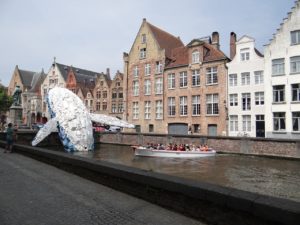
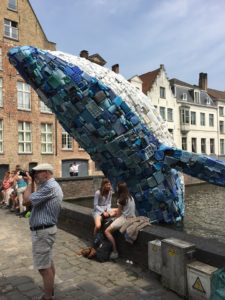
I saw it from all angles including the water on the canal boat tour. Each time I saw it at different times of day and night it was powerful and affected me. I watched other people interact with it and was a bit surprised that there wasn’t an environmental group or other nearby to engage people in the art – to talk about the plastic in the water and our responsibility today and in the future. For many, it was a photo op but I felt that so much more could have been said, more could be done to educate visitors or have a call to action. So while this was to be a post about plastic whale art in Bruges (look it’s so pretty), it’s a bit more now.
Time To Tweet “The Bruges Whale” and Learn More
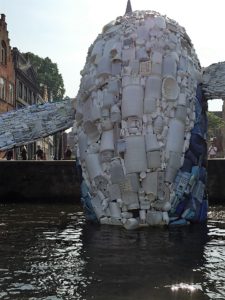
So as I tweeted out my photos and mentioned it was “thought provoking”, the design firm replied to tag the other groups involved in creating this Skyscraper. So here’s more information about this art piece and hopefully once Triennale Brugges concludes in September, the Bruges Whale “Skyscraper” will travel to other cities to start a conversation about our role in plastics, consumption and ocean garbage.
The New York based architect design firm, StudioKCA, designed Skyscraper (aka The Bruges Whale) and they collected over 5 tons of blue and white plastic waste from the Pacific Ocean that washed up along the Hawaiian shoreline. They also collected plastic waste found in the NYC waterways and Bruges canals. 5 tons of plastic waste in 4 months! That alone should make you sad, it makes me sad. Working in partnership with the Surfrider Foundation (Kauai Chapter) and Hawaii Wildllife Fund to collect, clean and sort the plastics that would be used in the Bruges Whale piece, StudioKCA also sought additional funding of $15,000 via their Bruges Whale Kickstarter campaign to support the heavy lifting (steel fabrication, assembly, transport, etc.).
I’m sure you are thinking 5 tons of blue & white plastic must be a lot but sadly it’s barely a drop of water in the ocean. Estimates are that there are 150 million (yes million) tons of plastic trash in the ocean with an additional eight million tons added each year. This isn’t global warming, this is MAN MADE catastrophe in the water in my opinion. The ocean has become a trash can and sadly wildlife suffer when they eat plastic (the now infamous turtle wtih a straw in its nose), get caught up in plastic and can ultimately die from plastic. The Bruges Whale is trying to make a statement about plastic waste in the oceans and the fact that we need to rethink how we use and dispose of plastic.
The Ban on Plastic Drinking Straws & Plastic Bags
Plastic bans have been in the news and social media lately (or maybe I’m more tuned in now). This past week, I’ve seen more stories and chatter about banning plastic straws, which isn’t a big laundry basket that ended up in the sea but given the sheer number of straws used worldwide on a daily basis (500 million per day in America!!!) – plastic drinking straws are a powerful start. They are so thin that they usually get past the filters at the processing centers. There are alternatives to plastic straws each with pros and cons so you need to research your best options if you give up plastic straws. Vancouver’s ban on plastic straws, foam cups and containers was recently passed and they are the first Canadian city to do so so this ban on plastics is only growing.
Another insidious plastic is the plastic bag that we all have from Target, CVS or a supermarket. These plastic bags are banned in a few U.S. cities like Seattle (where I received my first brown paper bag at Target) and many countries. I bring my own reusable bag for shopping when I travel (otherwise there is a fee for each plastic bag). It’s just a small step that each traveler can easily action immediately on their next trip.
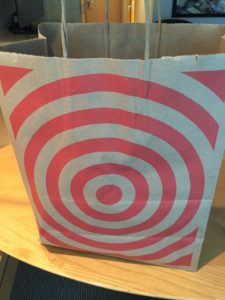
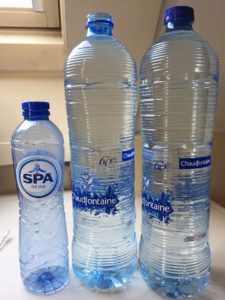
Choosing to bring your own reusable bag and refusing to use plastic drinking straws are a small step that we, as travelers, can make during our travels and in our everyday lives. It’s also something that we can educate others on – this plastic disaster. Many travelers already bring their own water bottles to refill in airports, hotels and in Bruges, there is a public water fountain to drink from. Again, all of these are small steps you can choose to do or not do. To be honest, I’m still learning – I’ve got my bag, say no to straws but am still having issues with bottled water abroad. During my trip to Rotterdam/Bruges/Ghent, restaurants served glass bottles of water (expensive) or charged (nominal) for filtered water. I would generally buy a small bottle of water (€2) and then go to the market for the larger (and cheaper at €1.10) bottles to refill the smaller bottle. Is recylcing enough? I don’t know to be honest.
The Great Pacific Garbage Patch
During my plastic googling, I learned (and sadly can’t unlearn) that there is something called “The Great Pacific Garbage Patch” (seriously? garbage patches and more than one? apparently about five known so far) is about 80% land made (Asia and the U.S.) while the other 20% is from boats in the water that either dump their trash or lose their shipping containers along the route. Recent estimates put the size at twice the state of Texas and costs to clean it up astounding (one estimate was $500m+ for one year). Since it’s “international waters” no country is keen to invest the time and money to clean the ocean so it’s up to the various non-profits that wish to do so. Since the garbage patch is still floating in the Pacific Ocean, it’s crazy to imagine that the bulk of the plastic materials collected and used in the making of the Bruges Whale “Skyscraper” wasn’t part of that. A few encouraging groups and people working on this massive endeavour The Ocean Cleanup and a Dutch high school kid who had an idea that now with $320m investment has produced a solution that is currently being tested in the Pacific Ocean.
Final Thoughts – The Bruges Whale & Plastic Waste
The Bruges Whale (Skyscraper) in the Triennale Bruges is hard to miss as it is only five minute walk beyond the Belfry (stay to the right and follow the road as it turns right toward the canal). The sheer size of the plastic whale is at first pretty stunning. After you read the information board it might make you ponder the oceans and plastic trash. But it may also stay with you long after you see it. In this Liquid City of Bruges – everything is fluid and change is possible once you look past the cute whale and truly see (and feel) the message.
How do you deal with plastic where you live? when you travel? Thoughts on the Bruges Whale?
]]>
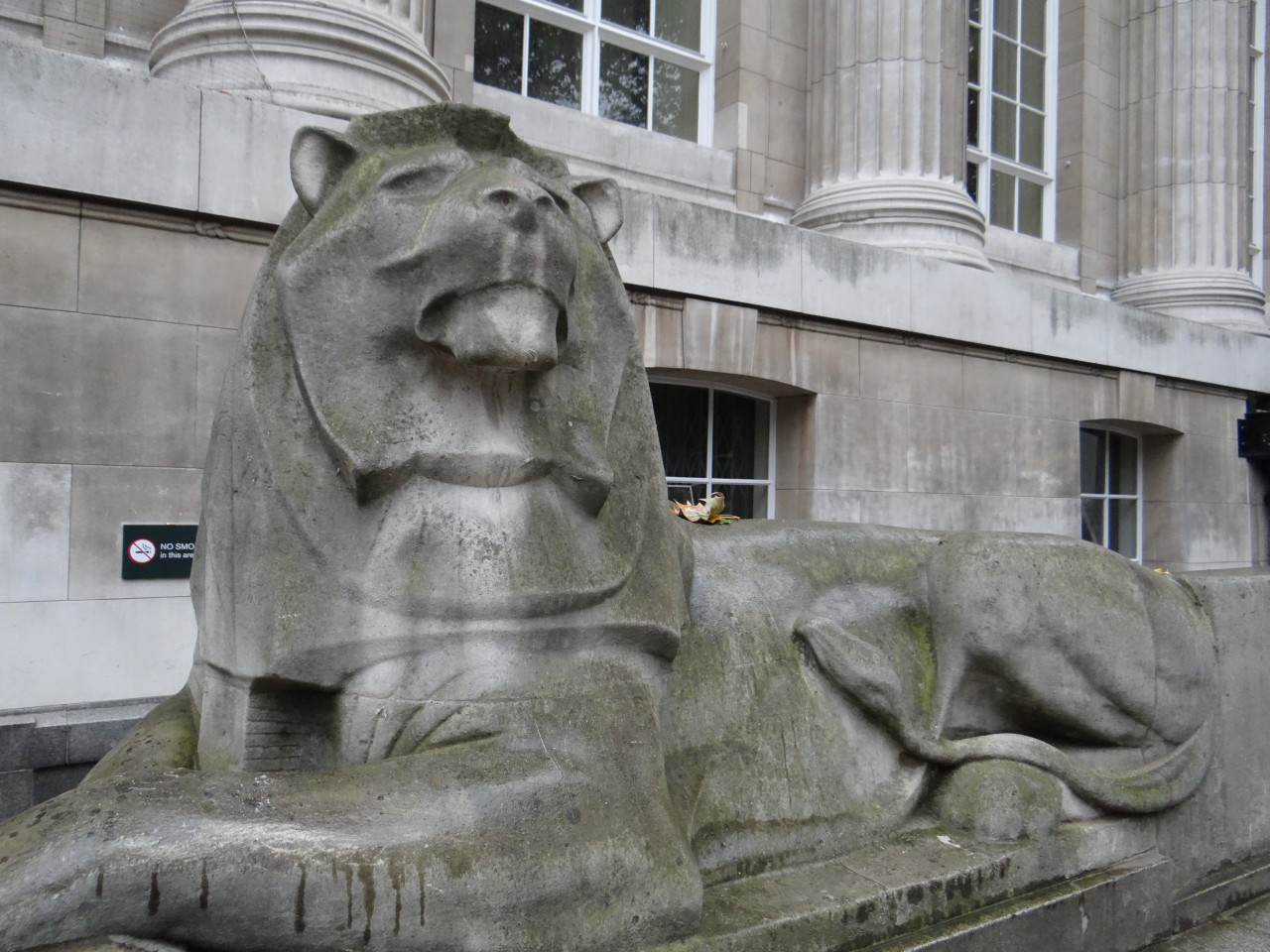
The British Museum is massive, no other word for the sheer size of the building and the collections. It is free to visit so I entered from a back entrance street, walked past the guard and up the steps to explore the galleries. It was weird (but also quite nice) to just walk in – not buy a ticket, not get my hand stamped, not hand over a reserved timed ticket, etc. I was expecting a bit of stuffiness (it is a museum after all) but I was pleasantly surprised to see the old and new co-exist.
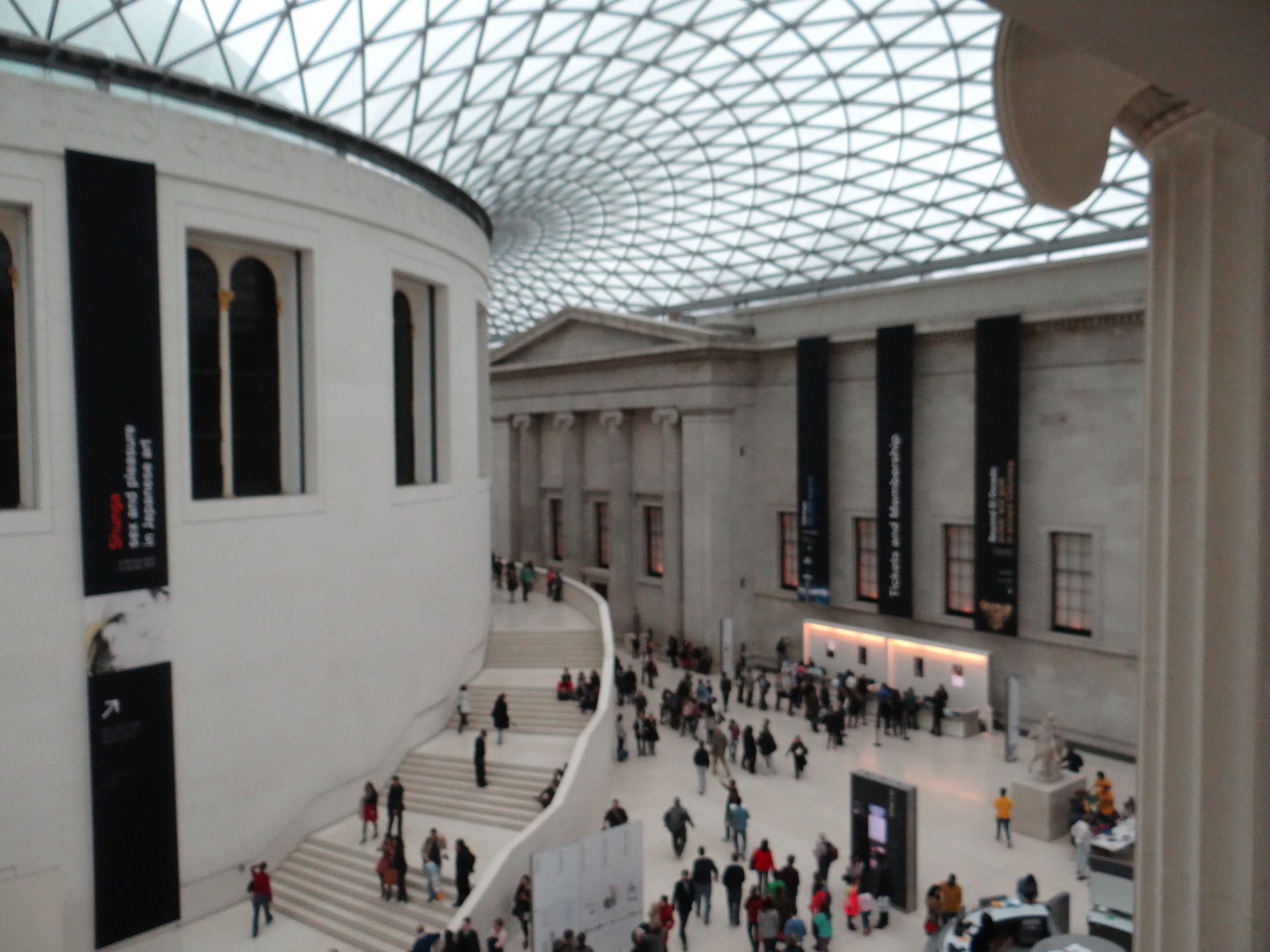
Visiting The British Museum – Collections
Without a plan for visting the British Museum (you need a plan folks!), I walked through galleries, followed hallways with curiousity waiting to be surprised. I found my first surprise when I entered the currency collection at the end of the display. A quick flash of “old lady” entered my head when I realized cash registers and credit cards were a part of the musuem collection? Items that I grew up with were consider museum worthy to teach the next generations. Ouch! Luckily we haven’t completely gone paperless but how many years when your phone or a chip in your hand is your method of payment? It was an interesting room to peruse especially as the rise of the credit card spawned the award points that I so lovingly use.
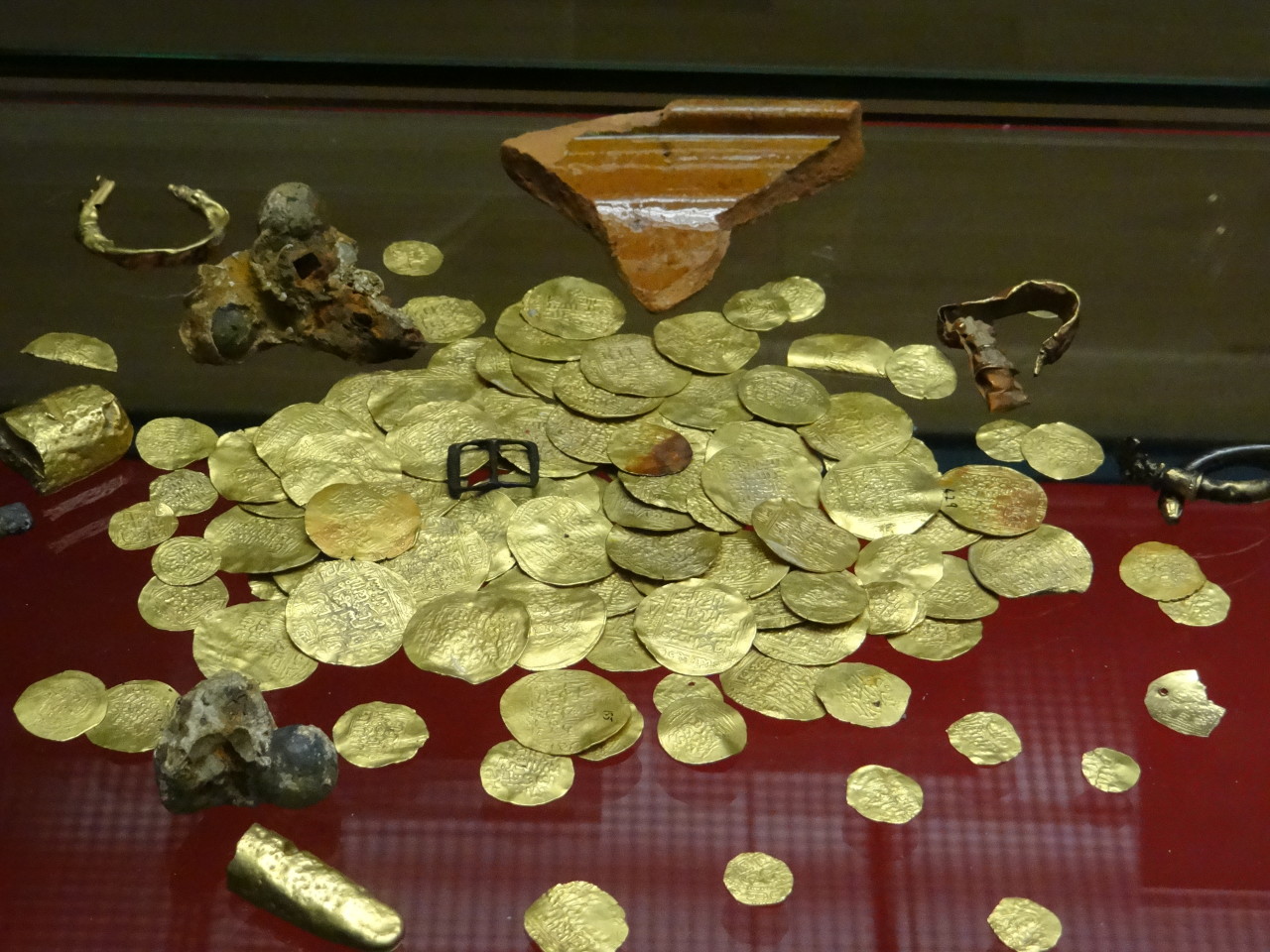
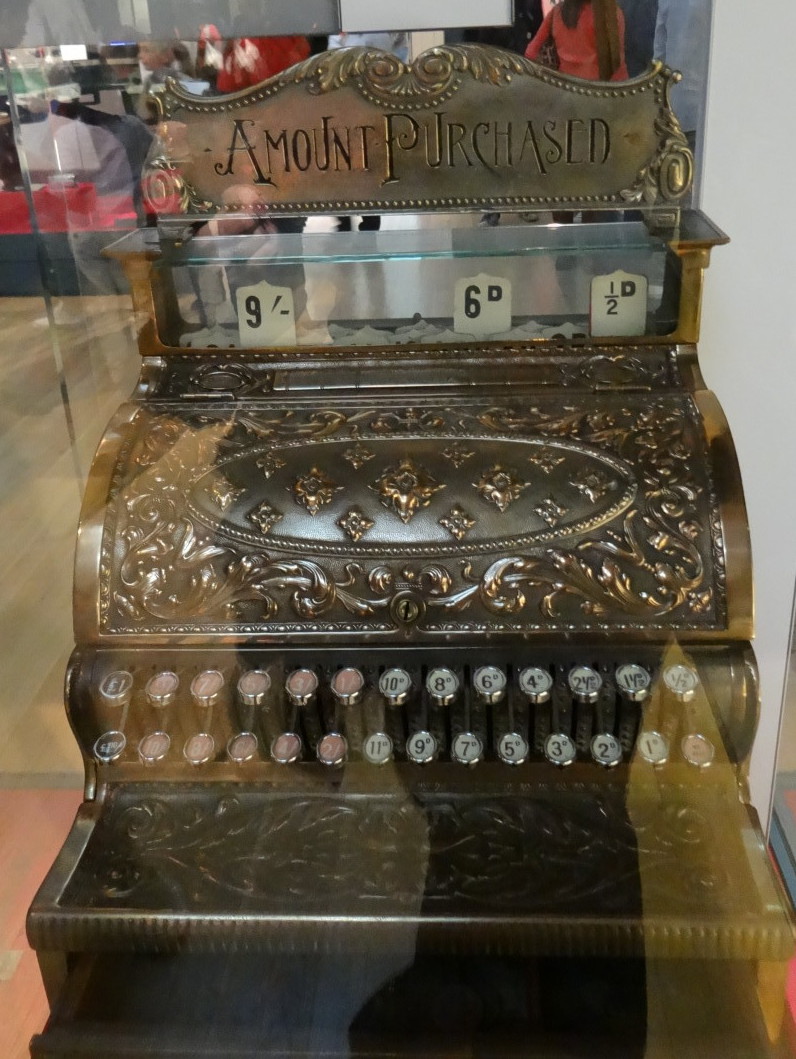
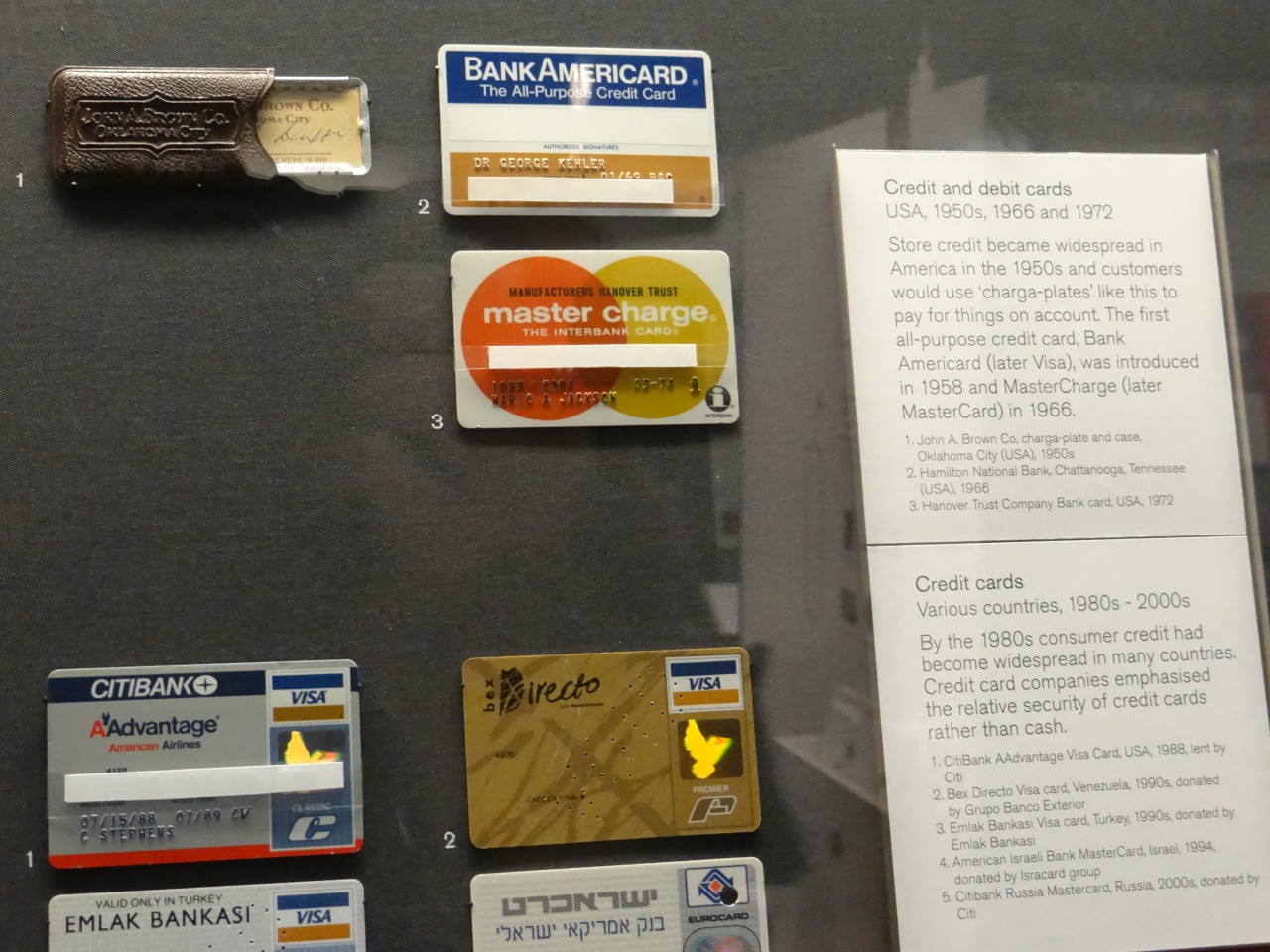

Realizing the sheer volume of holdings after the currency collection, I decided it was easier for my short visit to focus on the photos (you can take photos without flash).
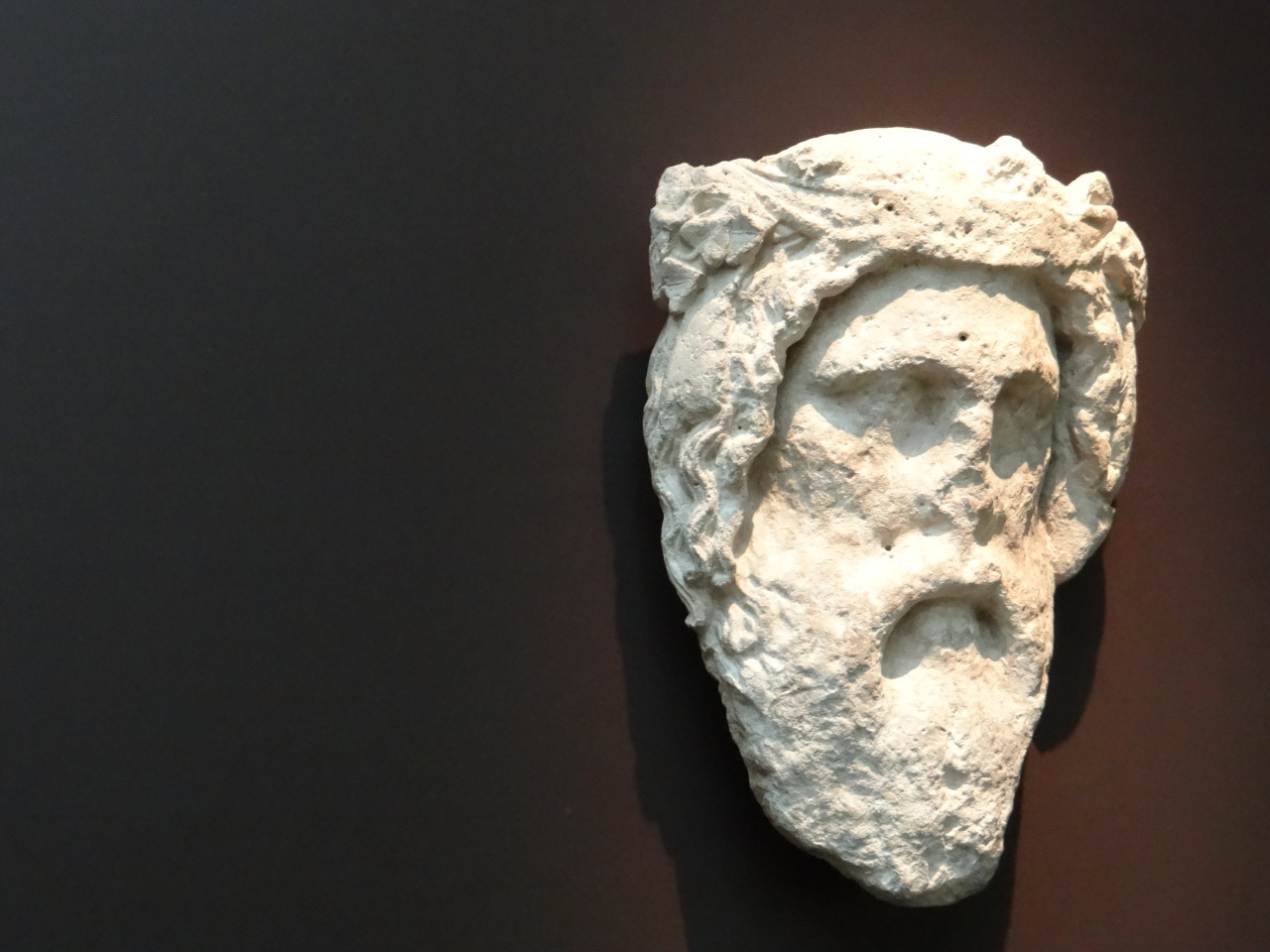
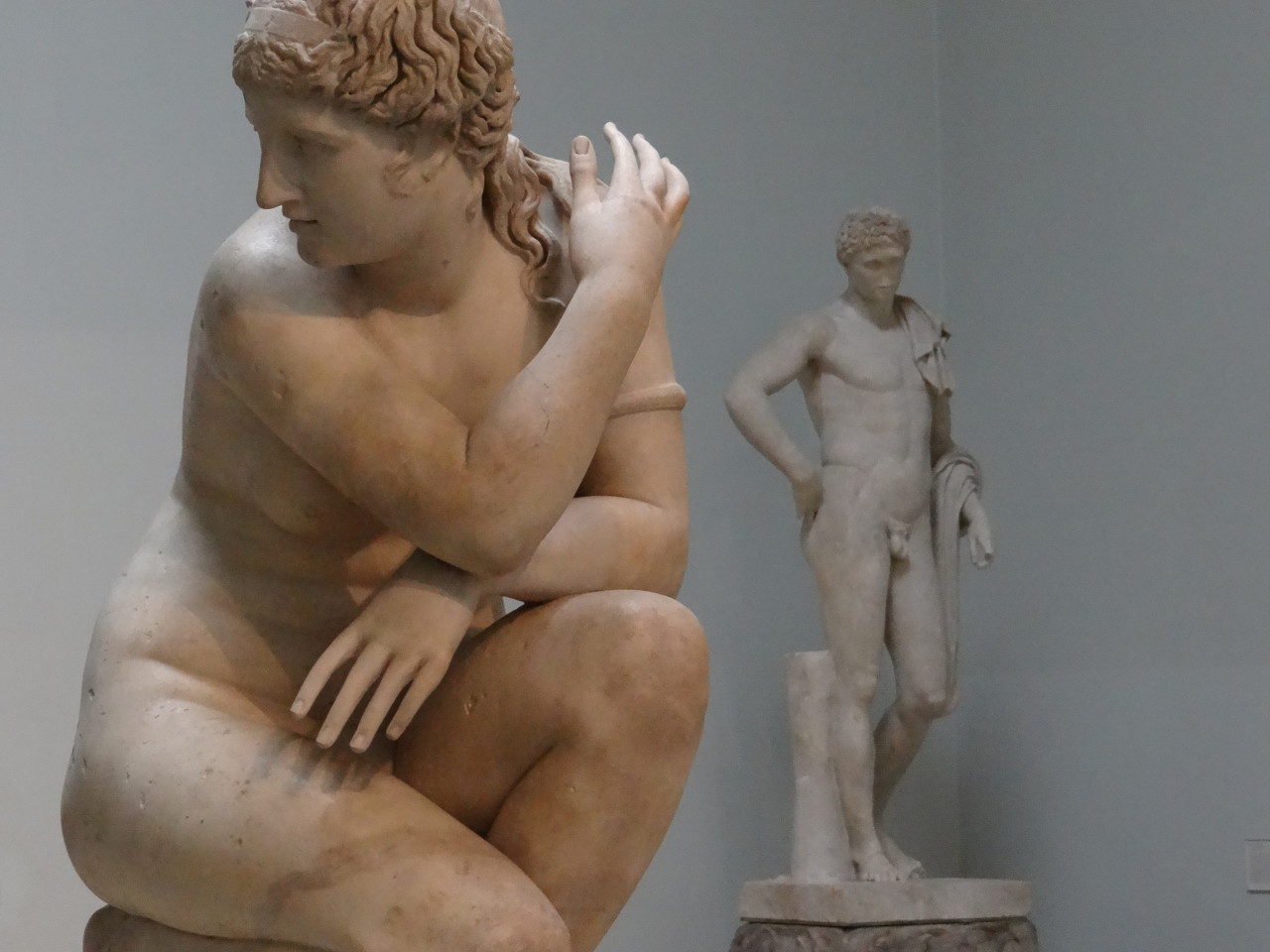
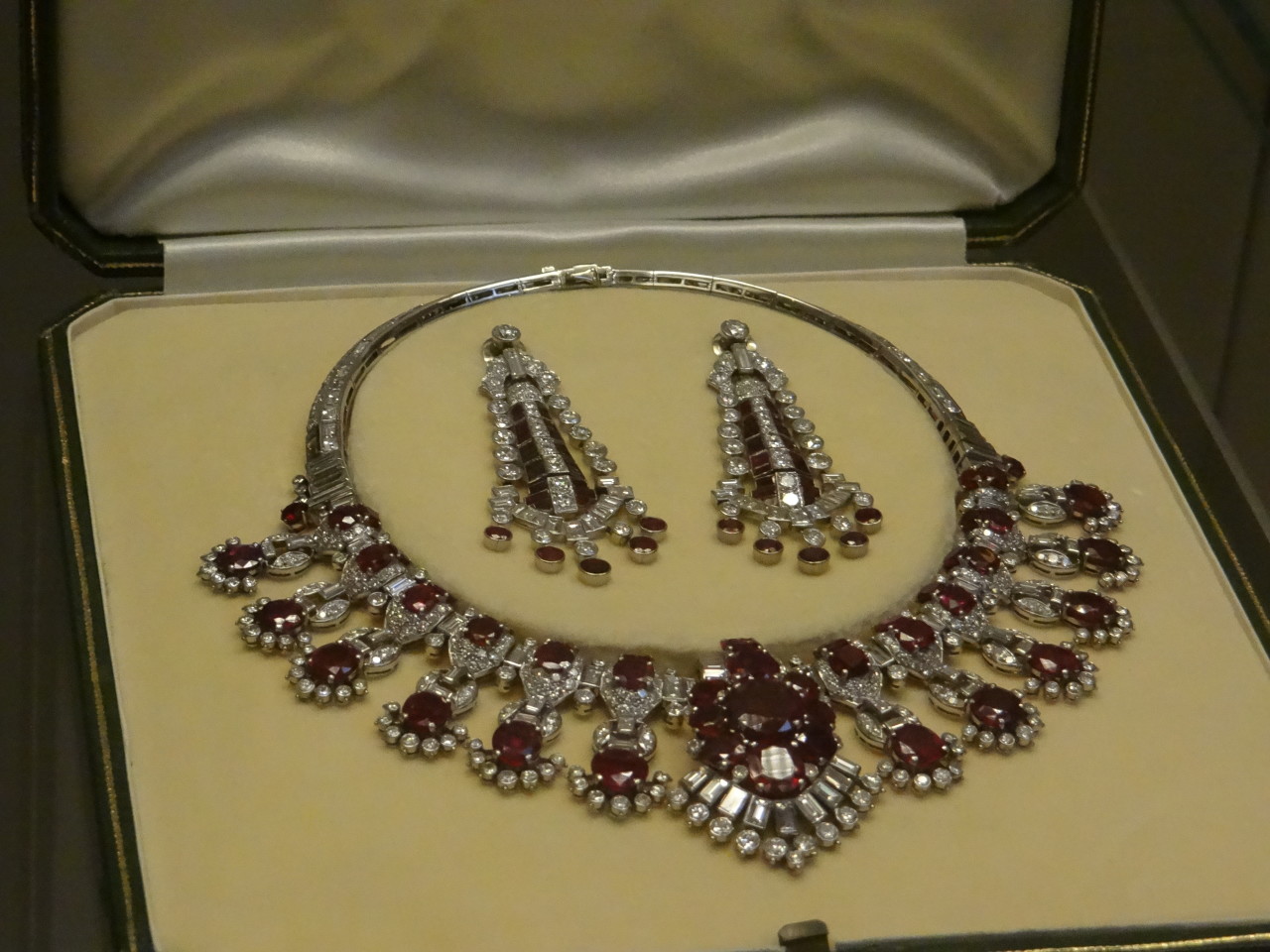
Moving through the galleries, I was drawn over to the cabinets with the jewelry collection. What girl wouldn’t want to wear the intricate art around their necks? Just looking at the jewelry made me create a time in my head when I could wear the necklace and earrings to complete my outfit to the ball. It’s quite nice to live in the movie in my head.
Seeing the crowds converged around the Rosetta Stone (in a glass enclosure), a photo was tricky. It is quite impressive sight and if you hold your ground you can get close to view the writings.
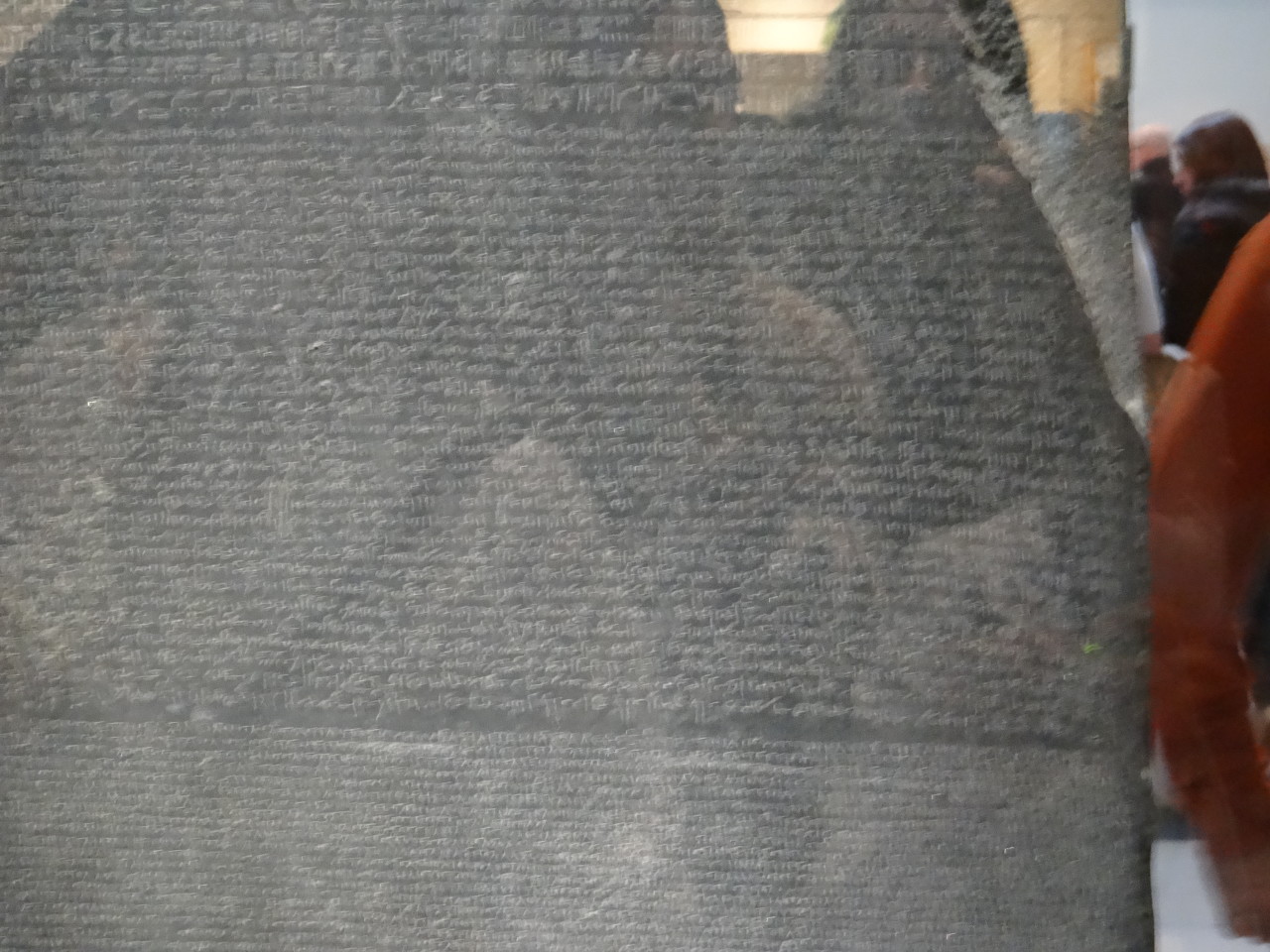
After viewing the Rosetta Stone, I considered my “drive by” of the British Museum, albeit way too short, complete for the day. Happily the rains led me to the musuem for the first, but not that last time. Have you visited The British Museum? If so, what is your favorite collection, gallery or holding in the collection?
]]>
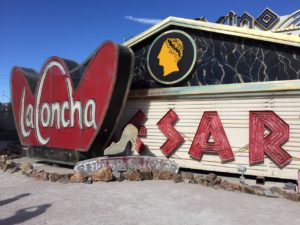
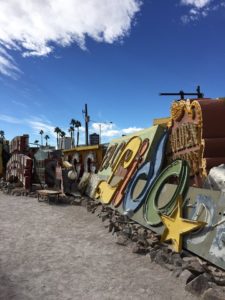
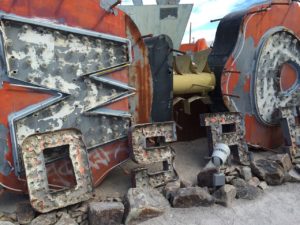
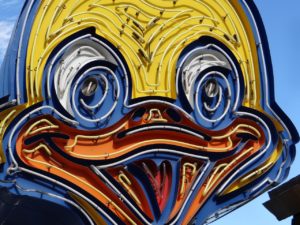
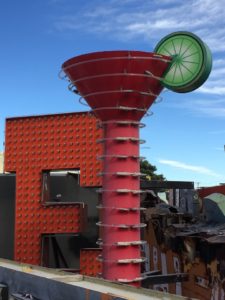
It was bright sunny day in Las Vegas and I was taking a tour through the history of the city in the faded glow of the infamous neon signs that recalled a story of Las Vegas so long ago. With a collection of signs dating back to the 1930’s to modern day, I imagined a different time. Back when the Rat Pack and the Mob (Bugsy Siegel) ruled the city – a time made glamourous and violent on television and in movies. Each of the neon signs in the neon boneyard, part of the Neon Museum, tell a story of a legendary casino, restaurant, hotel or business in Las Vegas. Each one is a work of art with yards of tubing, neon bulbs and unique craftsmanship. Many signs are in disarray from the desert elements as seen during the tour of the outdoor spaces. Nine signs have been restored and are now installed throughout the city as public art. A few other signs have been restored and are aglow at night on the tour while others (i.e. Hard Rock Guitar) are waiting for your help to restore them to their original beauty.
The Neon Museum is located further down the Strip so I had to take a cab from the Wynn Hotel (about $10). When the cab arrived at the museum entrance, I already felt a bit of a throwback to an earlier time in motel history as I entered the restored lobby of the former La Concha motel. The building hosts the front desk, a gift shop and bathrooms (accessed outside). The one hour tours are led by a guide and on my tour, we were led by a Las Vegas local and former district attorney. Neon Museum tours are offered every 20 minutes all day and into the night. The night time tours get to see a few illuminated signs.
Tip: Book online in advance as the tours are small and sell out quickly.
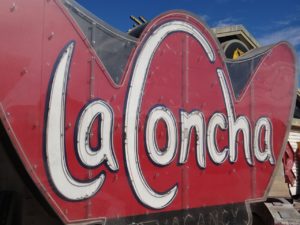
The more than 200 signs located outside are arranged in a J shaped sand filled walking path. The guide told us that it is a one-time walking tour so take photos while he talks as we wouldn’t have an opportunity to go back (usually due to the crowds and tour behind). Since it was a quiet day we did linger a bit longer to allow a few of us (me and a UK photographer) to take more photos. The tour group was small with ten visitors which was a good size to hear the guide talk about the history of the signs.
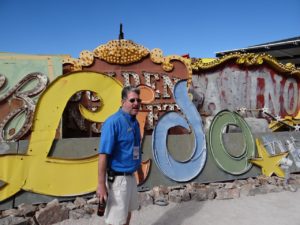
The Famous Neon Museum Signs
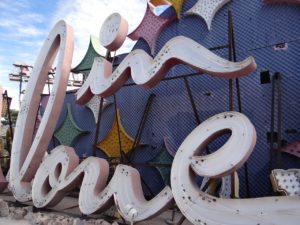
The cursive “in Love” sign is a favorite for couples and those who get married at the Neon Museum. There was a wedding during my tour visit – the ceremony has it’s own location at the musuem.
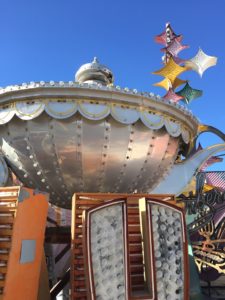
The Aladdin Hotel was famous for Elvis Presley’s wedding to Priscilla in 1967. This is the iconic Aladdin lamp, sadly you can’t get close to rub it for a wish as it’s behind a few other signs, plus no touching is a rule on the tour.
Binion’s Horseshoe Casino had a few signs on its facade. One of those with interlocking H’s sits in the side yard behind a fence waiting to be restored in order to move to the tourist area. It contained eight miles of neon and 30,000 light bulbs when it was installed in 1961.
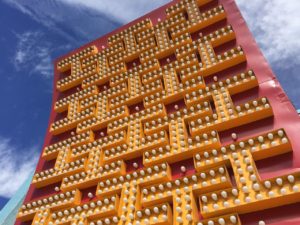
The Las Vegas Casinos Signs at the Neon Museum
The tour started with the casino signs and I was struggling to remember any of these casinos as most seemed to be before my time. I did notice the $ in the Sassy Sally’s sign which was a subliminal message about money but I never heard of Sassy Sally’s casino.
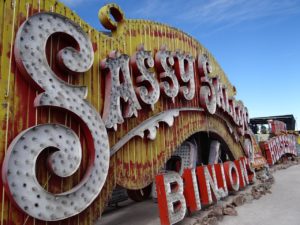
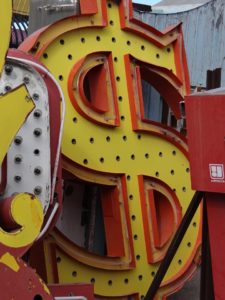
Las Vegas Motel & Hotel signs at the Neon Museum
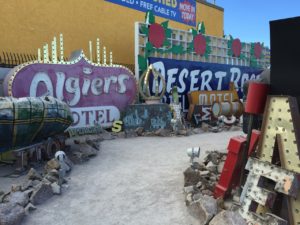
Before the mega casino and hotels, Las Vegas had a plethora of motels in the desert. The hotel and motel signs welcome you at the end of the casino signs as you turn a corner. Taking a cue from it’s desert location is the Yucca Motel and its interesting sign you can’t miss!
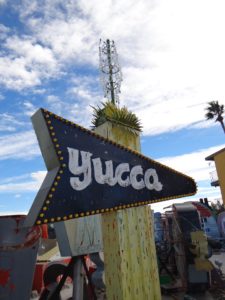
The Desert Rose sign was faded and the bright blue, white and red sign has now been restored.
Las Vegas Business Signs at the Neon Museum
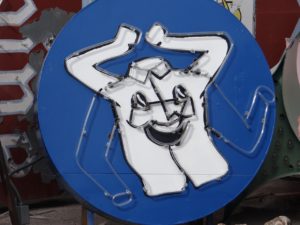
In a small roundabout on the left after the hotels/motels is a section for signs from Las Vegas businesses. One local favorite was designed by the owner’s young daughter – this happy dancing shirt was perched above the Steiner Cleaners shop.
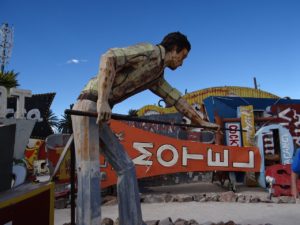
What is surprising about the signs is the sheer size up close, an example is the guy playing pool. He is massive and made of metal and neon. I’m sure he looked small when perched in his original location.
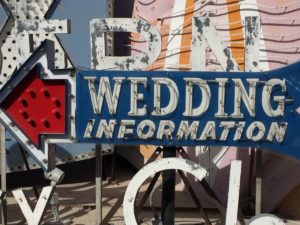
Don’t forget the wedding business and various restaurants in Las Vegas – there’s so many of each and these are a few neon signs in the Neon Museum collection. I wonder how many weddings started with a steak dinner, trip to the wedding chapel and then a honeymoon at the local motel?
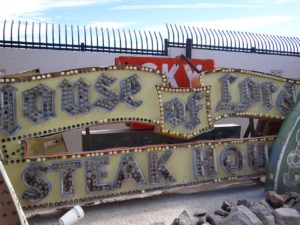
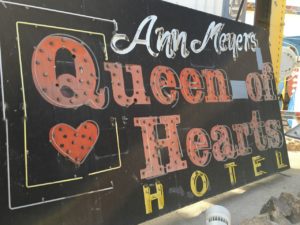
Smaller Neon Signs at the Neon Museum
The larger neon signs seem to get much of the notice but there are smaller signs, symbols and props that complete the neon sign vision. Here are a few smaller touches to look for on your visit.
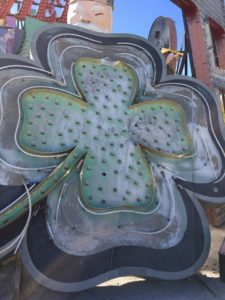
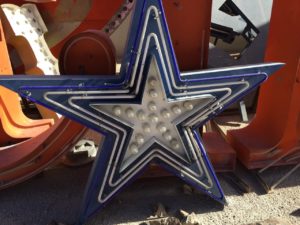
Neon Signs Restored at the Neon Musuem
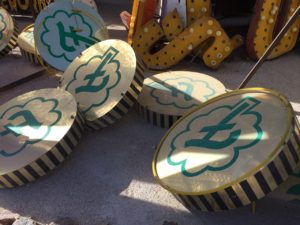
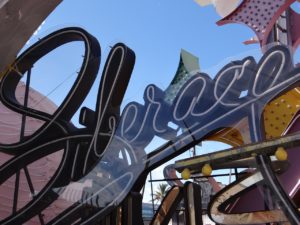
The cost to restore a signs can be quite a significant investment so the non-profit relies on donations. Currently, they are raising money to restore the iconic Hard Rock Guitar, estimated to cost $350,000 for restoration and maintenance), you can donate to the neon sign restoration to see it light up again. A few other restored neon signs have been completed (Desert Rose above and Liberace sign below)
The Liberace (don’t know who he is? He was a Las Vegas icon) signature sign was restored to acknowledge the famous entertainer and is now behind partition to protect it.
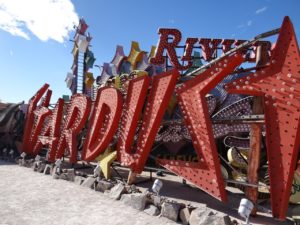
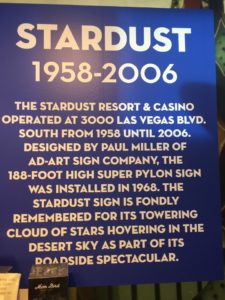
The Stardust sign, once the tallest sign in the world in 1968 is a highlight as the tour ends its time in the collection of signs.
Neon Museum – North Gallery End Point
In the North Gallery area (a common area viewable from the start and end points of the tour) are a plethora of signs that the guide will point out to explain. You can spend a bit more time in this area pre/post tour. You can also look back at the starting point of the tour.
The Neon Museum Gift Shop
All tours end in the gift shop and the Neon Museum gift shop has a good selection of souvenirs, books about Las Vegas and Neon signs and snacks. The prices were reasonable and support the work of the non-profit museum.
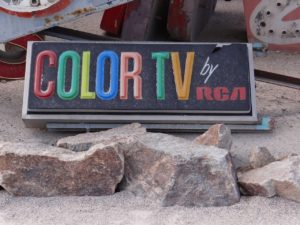
Neon Signs in Las Vegas
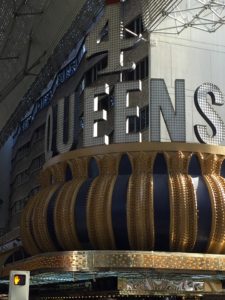
The museum has restored nine signs and installed them as public art throughout the city. A nighttime tour of these signs is offered by the museum. If you venture to the Freemont Street Experience (frankly not my favorite spot) you can see other neon signs such as Binion’s and the 4 Queens Casino as well as many new neon signs in the area.
Fun Neon Sign Photo Game
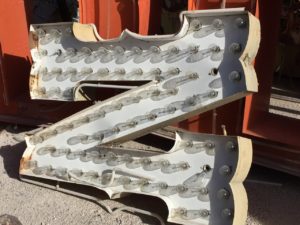
Look to take photos of each letter of your name and then create your own artwork at home. Note that if you have a “Z” like me, you’ll need to improvise a sideways “N”.
Final Thoughts – The Neon Museum Tour
This was a lovely tour that I’d highly recommend you take time out of your Las Vegas schedule to visit. You should also book online in advance as the small tour size sells out quickly especially for more popular times and the photo walks. For me, I was super excited to learn more about the signs history, the colorful characters behind the signs and the museum’s efforts to preserve the history of Las Vegas through its neon signs.
Art Museums often have the “permanent collection” which you see the same pieces with each visit and it’s the temporary exhibits that draw you back to discover or re-discover an artist and their work. For my Art Weekend in Washington, D.C. I would discover many new (to me) American artists in the Decorative Arts. My brain actually got a work out trying to take it all in and process because The Renwick Gallery, one museum of many in the Smithsonian collection, had three temporary exhibits and one small permanent collection to experience.
The Renwick Gallery is located diagonal from the White House at 1661 Pennsylvania Avenue (Pennsylvania at 17th Street N.W.) in a stunning historic building built in 1858 to be an art museum, the first of its kind. So if you are in D.C. to visit the White House, you have no excuses not to pop into The Renwick as it’s not only free admission but a small footprint so unlike many other museums, it is not overwhelming to the art lover and your family & friends who are not into art or museums. You can convince them to explore with you.
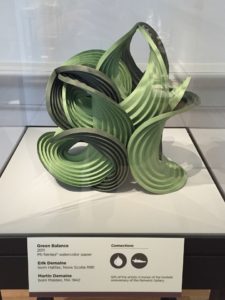
Expecting crafts works in ceramics, glass, basket weaving, I was pleasantly surprised by the additional temporary exhibits and the unique and varied permanent collection.
The Renwick Gallery – Arrival
The Renwick Gallery is located over two floors and is easy to navigate (they have an elevator too). If you choose to visit both floors, I would allow about two hours. If you are a drive by art fan then you can do it in under an hour but you will be deprived of getting to know more about the artist and their works (just saying….stay longer).
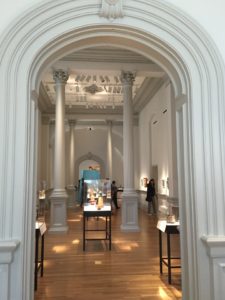
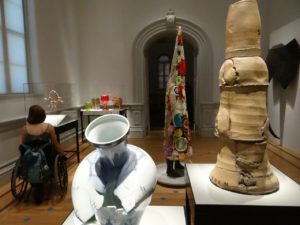
When you arrive, the guard will do a bag check before you can explore but then you are free to wander about. The displays are nicely set up to allow for people to move around and on the day of my visit, a women in a wheelchair was easily able to navigate in the rooms. The main stairs welcomed visitors with unexpected art to walk all over – the red carpet shaped in a wavy form and part of the lighting exhibit at the top of stairs hanging from the ceiling. An LED lighting display that never shows the same pattern twice. It was sparkling and momentarily cool.
Parallax Gap at the Renwick Gallery
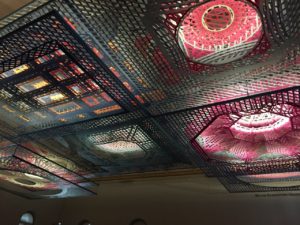
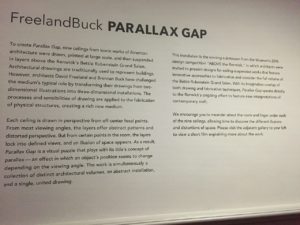
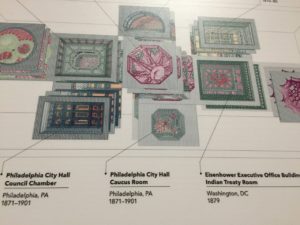
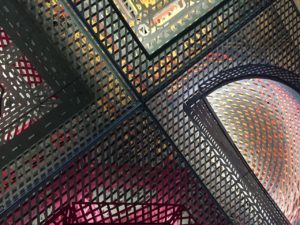
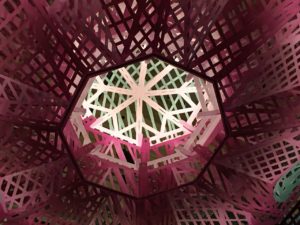
I was at the Renwick Gallery for the first time to view the Parallax Gap installation (on display until February 11, 2018 so you have time to go) in the Grand Salon on the 2nd floor. The installation was commissioned for the large ceiling space and is a collection of nine iconic ceilings around the U.S. imagined and intertwined in a visual art display. The vantage points of the space seem fixed but as you move about the room, the perspective seems to change. The layers of color and materials make each point of view unique in my opinion. The design was created by an architecture firm, FreelandBuck, and installed in layers based on the time lapse video. The fact that designs are displayed on different shelves and heights adds to the depth and experience – what do you see? Do you see a shape or design you know or is it all new? You and I could take millions of photos and video and see the art differently.
[embedyt] https://www.youtube.com/watch?v=0KLzJUTVZ6I[/embedyt]
People were walking around the space to photo the Parallax Gap at different angles with a few choosing to lay on the floor to experience one or more of the iconic ceilings. Two of those ceilings are from Philadelphia City Hall, which itself is an iconic building full of unique architecture in my hometown. I’ve seen both ceilings that inspired the designers and it’s interesting to see how the architects see the ceiling vs. what I see.
June Schwarcz – Invention & Variation
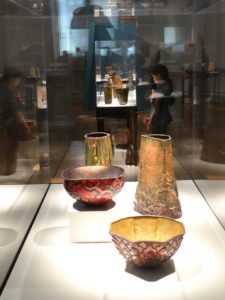
I’ve never heard of American Artist, June Schwarcz, who is known for her enamel work. Her exhibit, Invention & Variation, was a retrospective of her life’s work including some pieces from her personal collection never seen before (sadly the show ended on August 20th).
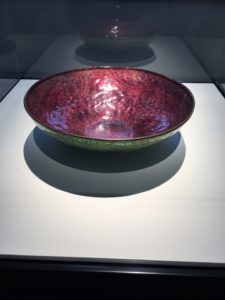
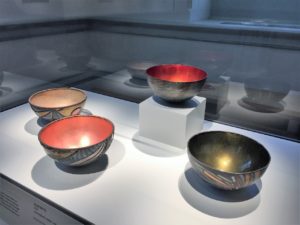
Her career was fascinating as it spanned over sixty years and she was a trailblazer in her craft. Shown on the 1st floor in two rooms, the strong colors and unique talent were on display in over fifty pieces. In addition to enamel work, she utilized electroplating and other metal works, which for her time, was significant achievement in the art world. This was the first time in over 15 years her work was on display. It was beautiful.
Peter Voulkos – The Breakthrough Years
Another artist I wasn’t aware of, this time in the ceramics field. His early career, 1953-1968, is curated in over thirty pieces in the exhibit, again many not seen in years (over 40 years!). I was drawn to the shapes to the abstracts to the uniqueness of it all. How lovely to discover an artist whose work seems so contemporary and find out when he conceived and created it was before you were born. So the art world gets to re-discover his works while I get a fresh perspective and discover the work.
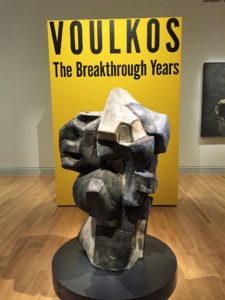
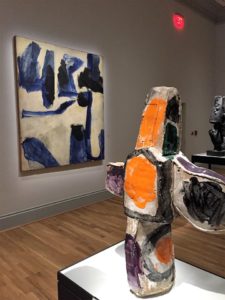
Connections: Contemporary Crafts at the Renwick Gallery
The Renwick Gallery permanent collection of over eighty works including new acquisitions and old favorites arrived back at the gallery in the summer. The works are set to stay indefinitely on the second level when the space is free. The collection is called “Connections” as the curators have set up the art in ways that they may be connected over time. Each piece tells a story. Just like the arts & crafts in your home which each have their own unique stories and are blended into the rooms as you create a unique look and feel to your home. The look and feel in Connections was openness in space and art with a bit of latitude for the artwork.
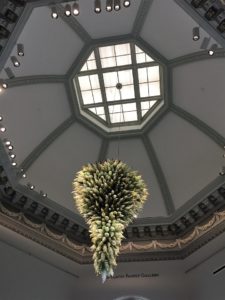
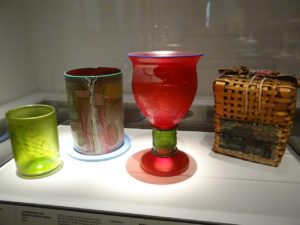
Rather than travel through time in a linear way, you can see a modern Chihuly glass chandelier in the same room with mixed media and historic works. For me, it made for an interesting visit and at times as with all modern art a few “seriously, how is that museum worthy art?” I’m still waiting on a museum to call me about my Sony Walkman after my V&A visit in London. But alas, I digress into my love/hate relationship with modern art that was re-ignited at the Chicago Art Institute, years ago. There were a few pieces were I didn’t use my inside voice and you heard a “seriously?” (sorry). But that’s the fun with art – to spark a conversation about your experience.
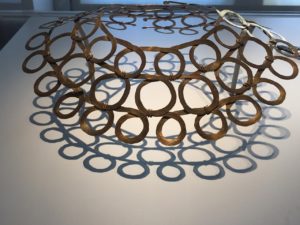
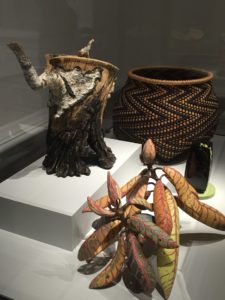
At the Renwick Gallery, I had a few favorite pieces –
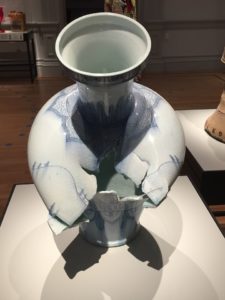
This was my favorite, Vase with Landscape and Dinosaur, 2014, by Steven Young Lee. At first with the lighting casting a shadow it appeared to be a creature and I thought that was the dinosaur part of the piece until I looked on the back to see the landscape and dinosaur. The beauty of the broken-ness of the piece is haunting. I know that it is deconstruction and meant to be this way but its imperfections make it gorgeous to me.
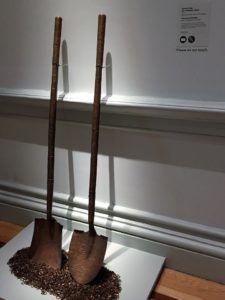
That shovels on the wall “The Craftsman Series: Shovels” by Stacey Lee Webber are another story and definitely in my “seriously?” bucket. I have the shovel on the right in my shed now and no musuem is after to me to acquire it thus the conundrum of art.
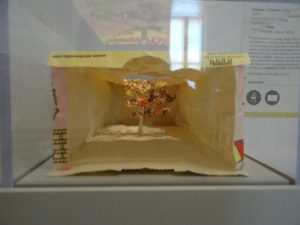
The intricate detail and patience to create this forest out of a McDonalds Happy Meal bag was unique. Imagine trying to turn your slices of paper into this and having such a small work space. Notice – Forest (Autumn), 2002, was created by Yuken Teruya. He definitely knows how to make the most of his happy meal and recycling materials. (sorry about the glare, this delicate work was under glass)
Overall Impression of The Renwick Gallery
I’m pretty glad we kicked off the D.C. Art Weekend at The Renwick Gallery as it set a high bar for the other art galleries and installations. The gallery is easy to visit and should be added to your next D.C. itinerary. It’s free! We all love free and we all love discovering something new.
Upcoming Art Exhibit at The Renwick Gallery
Next Year’s anticipated exhibit is “No Spectators: The Art of Burning Man” will take over the entire gallery from March 30, 2018 – September 16, 2018. It will bring the maker culture of the Burning Man event to D.C. and showcase the spirit of the festival in jewelry, art, clothes and more. That’s a bold choice to shake up what you think of the American Decorative Arts and that’s pretty awesome to make the art accessible to everyone without waiting for decades to put it in glass as a piece of history – history is being made now in all that we do, see, wear and experience.
]]>
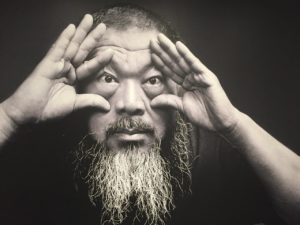
My art skills are limited to badly drawn stick figures and flowers. I’ve attempted mosaics, pottery and a few other creative endeavors but am keeping my day job in accounting/finance. Even as a child, my Lego creations showed no imagination. That’s why I leave the Lego art to the professionals – the master builders/artists like Nathan Sawaya (Art of the Brick) and Ai Weiwei who has created “Trace at Hirshhorn” in Washington, D.C. I was able to experience this powerful, thought-provoking exhibit as part of my Art Weekend in D.C.
Art at the Hirshhorn – Lobby Exhibits
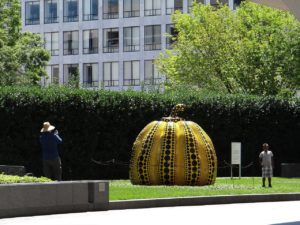
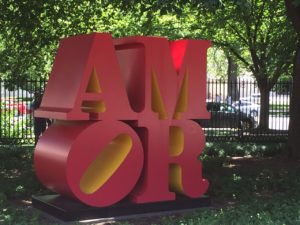
After making my wish at the Yoko Ono’s Wish Tree for Washington, DC in the Hirshhorn Sculpture Garden, I walked toward the gallery entrance and was pleasantly surprised by the Kusama pumpkin outside. Kusama created the Infinity Mirrors exhibit which is currently touring North America courtesy of the Hirshhorn which first showed the works earlier this year.
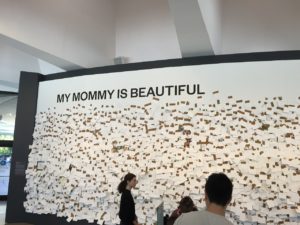
While our destination was “Trace at Hirshhorn, by Ai Weiwei”, when we entered the Hirshhorn (free admission) Yoko Ono’s interactive “My Mommy is Beautiful” was on display on the lobby wall, inviting visitors to add to the exhibit their memories of why their mother is beautiful. As we rode the escalator up one level, I could see the exhibit “Belief and Doubt” by Barbara Kruger displayed on the lower level. The words were challenging thought. Art was all around forcing my brain to think today.
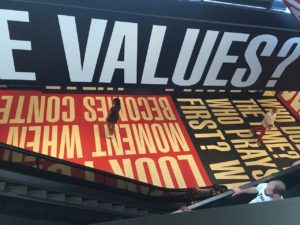
Trace at Hirshhorn – The Outer Ring Galleries
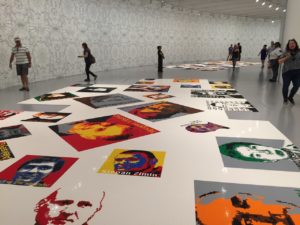
Silly me, I had no idea or background about “Trace at Hirshhorn” which is often the best way to see art – without expectation. I read the summary on the wall about how Weiwei was portraying political dissidents around the world using Legos. I had no idea how vast the art was until I walked inside to see the floors covered in Lego portraits in six different sections.
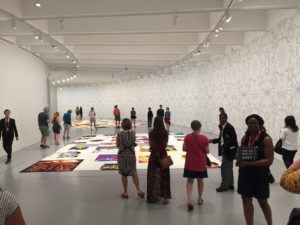
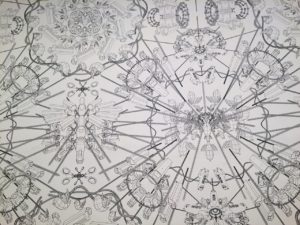
The walls, usually where much art is hung, was absent pictures and covered in wallpaper that definitely deserved a second (or third) look closer. The “wallpaper” was oddly titled “The Plain Version of the Animal That Looks Like a Llama but is really an Alpaca” contained no animals that I could see (there is an alpaca somewhere).
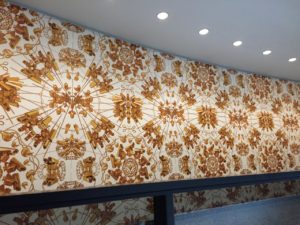
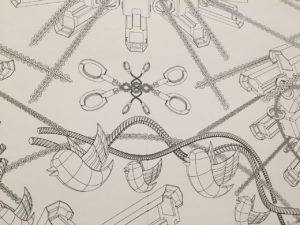
The gold patterned paper contained many objects that sought to restrain people (handcuffs), restrict their movement (video surveillance) and silence their voice via social media (twitter bird). The wallpaper was a jail to the folks already imprisoned in the portraits on the floor. The artist, himself, was detained in China subjected to interrogation, imprisonment in 2011 and denied travel until 2015. Trace was commissioned in 2014 as an art installation for the infamous Alcatraz prison in San Francisco. The portraits, in Lego bricks, were put together by hand by the artist and many volunteers following the artist’s vision/direction.
Trace at Hirshhorn by Ai Weiwei – The Portraits
The portraits on the floor were haunting. From up close they were colorful Legos pieced together to create a tapestry of art. Step back a bit or use your camera “to see differently” and you’ll see the person come into clear view along with their name. To me, this perspective was quite fascinating because how do you see and know people today – up close or from far away? Do you really see the person and let them exist in your world or do you only see what you want to see in their views and opinions? I was probably over thinking the art but it was quite a thought-provoking exhibit for me. While Dr. Martin Luther King seemed a logical choice, I think the jury is out on Chelsea Manning (recently released from prison) and Edward Snowden (in exile in Russia) – the U.S. had six portraits featured in the work.
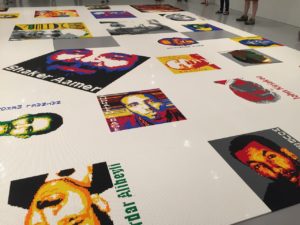
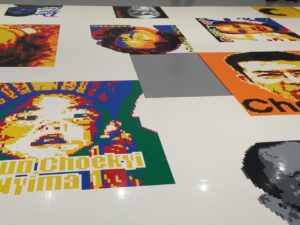
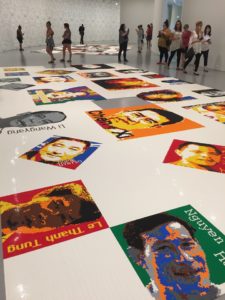
Yes, you can marvel at Weiwei’s use of over 1.2+ million Legos (thought to represent freedom and how easily it can be constructed and deconstructed) and the 176 realistic portraits shown on the floor but then you need to think about who he chose to feature (his research, input by Amnesty International and other human rights groups), how he grouped them together and what prison he created for them on the floor for us to look down upon.
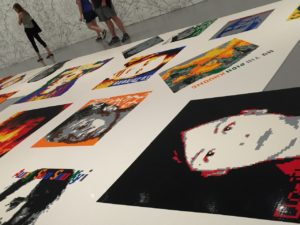
How many times to we look down on others that disagree with us, do things we disagree with or say something we don’t like? Are they brave, crazy or criminal? Would the art resonated differently if he made each portrait separately and framed it on the wall? If he gave a voice to each person by naming them, their cause and their outcome, would he be elevating them to prominence in our conversation (in our googling of their lives)? For many, in their countries, they can be seen as criminals or heroes depending on their crime. For example, In the U.S., where do you fall with Edward Snowden – criminal or hero?
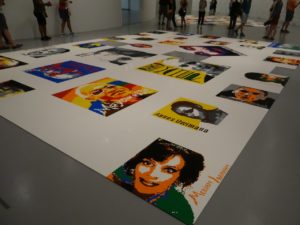
It’s an interesting conversation that merges politics, culture, personal belief with freedom and what we think that is. Freedom of Speech is a hallmark of the U.S. but for many around the world they don’t have this freedom and in Weiwei’s “Trace at Hirshhorn” we have the freedom to view his work and to make our own decisions. Art? Politics? Freedoms? – All heady conversations sparked by Legos. Powerful thoughts, interesting conversations and interior monologues to be had at Trace at Hirshhorn by Ai Weiwei.
To learn more about the individuals shown in portrait, visit For-Site.Org The exhibit, Trace at Hirshhorn, runs through January 1, 2018 in Washington, D.C.
Have you seen this exhibit either in San Francisco at Alcatraz or at the Hirshhorn in D.C.? What are your thoughts?
]]>
Washington, D.C. is a three-hour train ride from Philly and yet I’ve only visited three times over the years –in high school, when a friend lived in the city and last time for my trip to South Africa (the award ticket from IAD-JNB ). D.C. really is a wonderful city with so many great FREE things to do. So when I read about the travel blogger meet up called #BloggersTakeTheCity, I thought it was time to go back to D.C. and see what’s new. There’s a lot going on in the arts and culture scene that reminded me that D.C. is so much more than crazy politics we hear every day.
My weekend in D.C. would begin Friday night and end Sunday at lunch and in between that time, I was busy, so busy exploring the city’s art and culture scene, well only scratching the surface. Just like the Louvre with eight miles of art that you can never really fully see in one visit, let alone five visits, my D.C. art experience was just the appetizer to remind me to come back and visit more.
Special Thanks to our fearless leader, Nicki of EatLiveTravelDrink for deciding we should meet up in real life and have fun exploring her city. She, along with Kate @washingtondc, curated a wonderful Art, Food and Fun weekend for our group of twelve travel bloggers from around the U.S. (New Hampshire, Maryland, Virginia, D.C., Philly (me), Chicago, New York and California).
The short version art weekend in D.C. itinerary was created for travel industry professionals (writers, travel agents, meeting planners, etc.) to give them a familiarization (FAM) of the current art attractions in the city. Read more below for summary and a photo from each stop. Look for posts in the upcoming weeks with more detail and photos.
Friday
- Fairmont D.C. Hotel Gold Welcome
- Silent Disco D.C. at the Embassy Row Hotel Rooftop
Saturday
- Art Exhibits at The Renwick Gallery (Parallax Gap ceiling installation plus temporary exhibits and permanent collection)
- National Gallery Sculpture Garden
- Hirshhorn Museum & Sculpture Garden
- “Trace” by Ai Wei Wei
- “Wish Tree for Washington, DC” by Yoko Ono
- Lunch at Hill Country BBQ (a taste of Texas in D.C.)
- National Building Museum (“The Hive”)
- Union Market
- Rum Tasting at Cotton & Reed
- Dinner at Carmine’s NYC in D.C.
- Moonlight Monument Trolley Tour
Sunday
- Artechouse (XYZT exhibit)
- Food Tour of Georgetown with CarpeDC
Now if you are exhausted by the above itinerary (who wouldn’t be) for the Art Weekend in D.C., don’t think I went back to the hotel after the Food Tour – I kept up the busy pace until the last-minute I had to go home on Amtrak on Monday with a visit to the Capitol, Library of Congress and a quick pop into the Supreme Court building (sadly court was not in session). I finished the amazing D.C. visit with the best burger in D.C. (seriously it was amazing!). I didn’t have a chance to bring back D.C. Souvenirs but now I have a reason to return!
I hope you find something new to discover on your next trip to Washington, D.C.
Now for the Long Version……of the Art Weekend in D.C.
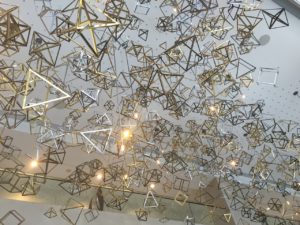
Itinerary for an Art Weekend in Washington, D.C.
Travel Tip: When you have large group, Uber XL is your friend. Assign one/two people to order all of the cars and pay, then collect money from everyone to reimburse them at the end of the weekend.
Friday – Art Weekend in D.C. – Luxury Hotel and Rooftop Dancing
5 p.m. – Fairmont D.C. Hotel Welcome
For a weekend of art, it seemed fitting to be staying at the newly renovated Fairmont D.C. in Georgetown. As you enter the lobby you are struck by the ceiling art and the mixed material designs plus that table! The bright and airy lobby space led to a sunken lobby bar and out to the patio space that would host a jazz trio on Sunday night. Art, Music and Luxury all before I’ve seen the rooms! It was a great start to the weekend.

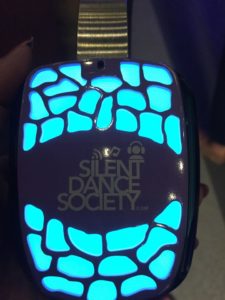
8 p.m. – Silent Dance Society’s Friday Night Silent Disco at the Embassy Row Hotel
Friday night lights were courtesy of our rooftop Silent Disco visit. Set on the rooftop of the Embassy Row Hotel, the Silent Dance Society hosts a Friday night Silent Disco with views of the city from above. A bit skeptical to the event, thinking I was too old, I ended up surprised at how much I loved it. With all ages dancing and mingling, the disco of my past (screaming to talk, one DJ with good and bad songs, etc.) was upgraded to three DJs, a headset of my own and the ability to dance when and where I wanted. Bonus points for singing out loud. The biggest obstacle after my preconceived notion was trying not to fall into the pool whilst dancing.
Saturday – Art Weekend in D.C. – Art, Walk, Eat, Repeat
8 a.m. – Breakfast in the Gold Lounge at the Fairmont, D.C. in Georgetown
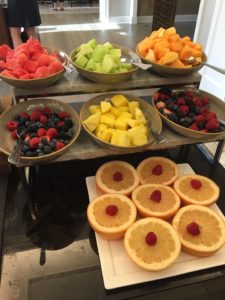
Waking up early to make the 8 am breakfast in the lounge was a bit tough because we not only had a late night at the Silent Disco but the King bed was so comfortable I could have stayed in it all day happily living off room service and using the spa. The lounge breakfast buffet offering is quite varied to satisfy most appetites. I could have survived on the crispy bacon and fruit alone!
10 a.m. – The Renwick Gallery, a Smithsonian Museum
Our first stop of the day was the Renwick Gallery near the White House. The highlighted installation, Parallax Gap was on display in the Salon on the 2nd floor. We would first need to experience the red carpet up the stairs and the LED installation overhead. With time to explore the other rooms of the decorative arts gallery, I was of course drawn to the Chihuly as well as other pieces on display. The gallery entry is free and I would schedule at least an hour if you want to do an art drive by of the rooms. Two hours if you want to leisurely explore.
Noon – National Gallery Sculpture Garden
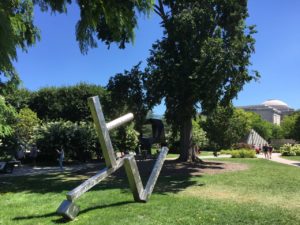
Walking past the White House crowds we were on a trek to the Hirshhorn via the National Gallery Sculpture Garden which has a large fountain and is surrounded by sculptures, benches and performance spaces. You can easily spend an hour just strolling the garden taking in the sculptures.
1 p.m. – Hirshhorn Museum & Sculpture Garden
Arriving first at the Hirshhorn Sculpture Garden we all made a wish at Yoko Ono’s Wish Tree for Washington, DC
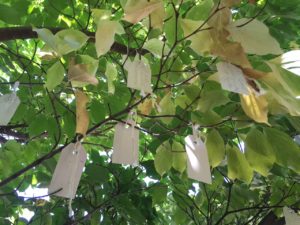
After wishing for world peace, lottery wins and some candy (a lot of walking, we were hungry), we entered the Hirshhorn and rode the escalator up one floor to begin our journey through “Trace”. The walls were adorned with a special wallpaper that had symbols of imprisonment when you looked closer. On the floor over a few areas were portraits of political dissidents around the world created with Legos. Yes, Legos, over one million Legos to create the 176 portraits. Up close to the edge you couldn’t see the portraits as well as you did with a step back. This powerful art lends itself to deep conversations about passion, conviction and politics and how far are you willing to go. It’s no coincidence that you are looking down at the floor, down at the portraits – it’s meant to be that way as society looks down on prisoners.
2 p.m. – A Bit of Texas in D.C. at Hill Country BBQ
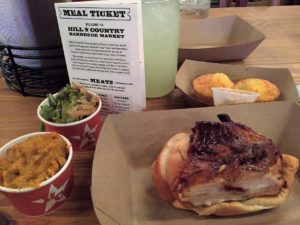
With a thought-provoking visit ending, it was now time to decompress the mornings’ art with a lunch at Hill Country BBQ. An odd place for me as I’m not a fan of BBQ, however, it’s a great place for groups and families to eat as the prices are reasonable and the portions easily shared. They have happy hour specials, live music and you definitely should make a reservation as it’s a popular place. With my gluten-free diet, I was happy to see they have a GF menu. I chose chicken, cornbread and lemonade. It’s on tours like this that I discover places I probably would have overlooked normally. With my meal ticket of options, I got a taste of Texas in D.C.
3 p.m. – “The Hive” at the National Building Museum
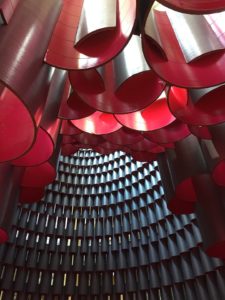
But the art wasn’t over yet! Our next stop was the National Building Museum (our feet decided it was time to call an Uber) which was hosting “The Hive”, a building block of paper rolls that was more than I could ever think to do. My art skill ends at stick figures and pyramids of Legos. Walking through the giant structure in the lobby of the museum, the colors were highlighted from the sunlight pouring in above. A smaller hive inside invited kids of all ages to make music.
4 p.m. – Happy Hour Rum Tastings at Cotton & Reed
Happy Hour featured a highlight of locally made Rum tastings in D.C. We needed Uber to transport us to the Union Market area where we would walk a few steps past the market to Cotton & Reed, a Rum distillery. The rum shots were lined up waiting for us as we would learn from one of the founders all about their rum, its history and how they are shaking up the D.C. cocktail scene. After our shots of 90 proof white rum and the others, we did a quick spin in Union Market walking past the stalls of local vendors selling foods, drinks and treats. Sadly, the donuts were all sold out.
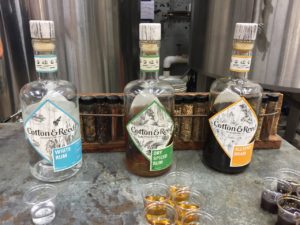
5 p.m. – Back to the Hotel to get ready for our 6 p.m. dinner reservation (Uber called for the twenty-minute ride from Union Market to the Fairmont, D.C.).
6 p.m. – Carmine’s NYC in D.C.
We had a reservation at Carmine’s D.C., a long time NYC Italian restaurant outpost in D.C., a favorite of large groups, family styled Italian dining and for those needing a secret service entrance.
As I’m now 90% gluten and dairy free (I keep hitting a pizza or cupcake wall), I wouldn’t think to go for pasta but was happy to see Carmine’s NYC offered a gluten-free menu (as well as garlic free, dairy free, vegan and vegetarian menus). I chose a simple gluten-free pasta Pomodoro and they brought a family sharing portion which I hated to waste but seriously it was massive. The group had a tomato/mozzarella appetizer, a bread basket, Caesar salad, pasta dish and chicken Marsala served family style.

The famous dessert “the Titanic” consisted of a gluten-free chocolate torte (I could eat that), with a plethora of vanilla and chocolate ice cream scoops plus whipped crème. Finishing touches were the banana on either side of the torte with strawberries, chocolate sauce and cookie straws. In a word – WOW!

9 p.m. – We Missed the Evening Trolley Tour of the Monuments
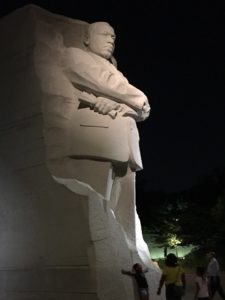
As our dinner went long (group of 12 can’t eat in an hour) we missed our 7:30 p.m. Moonlight Monument Tour (3 hours) with Old Town Trolley (I was bummed because I was looking forward to a break from walking and, of course, wore the cute, not walking shoes). So we did our own DIY (do it yourself) Evening Monuments tour.
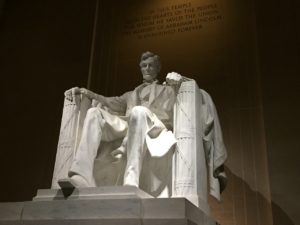
I opted to go to the Lincoln Memorial and then walk to the MLK and FDR monuments, while the other group chose the Lincoln Memorial, Reflection Pool and National Monument (see the photos at #BloggersTakeTheCity and #myDCcool). We had to Uber to the Lincoln Memorial and then could easily to walk to all of those other monuments until we could walk no more (my Uber app was on fire). In the cab, exhausted, my friend said we walked over 17,000 steps today which probably didn’t negate any of those “Titanic” calories.
10:30 p.m. – Back at the Fairmont D.C.
Falling into bed and sleep was very easy after a long day of art and food with a side of monuments. Waking up before 7 a.m. to do it all again wasn’t easy.
Sunday – Art Weekend in D.C. – Tech and Food
8 a.m. – Breakfast and Discussions in the Gold Lounge of the luxury hotel in D.C. – The Fairmont Georgetown
10 a.m. – Artechouse
The group would visit an interesting art installation at Artechouse near the Mandarin Oriental hotel (need Uber) for the XYZT installation. The groups were limited in number and time in the exhibit. I had no clue what to expect so was surprised by the futuristic interactive exhibits that changed with my movement, my whispers, my snapping fingers and my jumps. Blending art and technology, I was immersed childlike into a new world to discover and experience art differently.
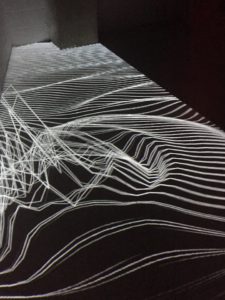
Art Weekend in D.C.
Noon – Candy Jars and Goodbyes to our Art Weekend in D.C.
With the last of the art for the weekend, we headed back to the hotel just as the snacks were being put out in the lounge. Jars of candy favorites with bags to fill plus cookies were easy to takeaway (yes, we ate breakfast and were on the way to lunch or a food tour but it’s free candy!).
1:00 p.m. – Georgetown Food Tour or Ritz Carlton Brunch
The groups then split into those attending the Ritz Carlton Brunch and those off on a food tour of Georgetown with CarpeDC food tours. I chose the food tour despite the fact that I knew gluten/dairy free would have no food to eat (advance notice can cater to vegetarians). The walking tour was a history of Georgetown though it’s churches and homes with five food stops. My friends at the Ritz Carlton met the chefs and learned about the farm to table approach as they dined on special menu items like steak frites (I should have been at the air-conditioned Ritz Carlton instead of outside in the 90+ degree sunny day).
Final Thoughts – Art Weekend in D.C.
The jam-packed Art & Food weekend in D.C. was thoughtfully crafted and so much fun. I loved learning about new art, dancing on rooftops, tasting both Texas and NYC in D.C., and sleeping in luxury. So many things I probably wouldn’t have done if I wasn’t with the group.
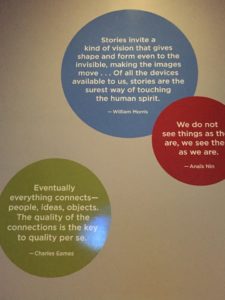
Now since it’s meant to be an Art & Food Weekend in D.C. for you, I’d suggest
- Pick and choose from the above two-day itinerary to craft your D.C. experience – you can’t do it all in one trip plus you need time to discover on your own
- Agree a leisurely pace as it’s a vacation (holiday).
- Sleep late and order room service to fully enjoy the luxurious surroundings at the Fairmont D.C.
- Bring good walking shoes for the days and the cute shoes for the nighttime Ubers.
- Definitely find that 90 proof run at Cotton & Reed for a Pina Colada (or two)
As you know, I rarely do press trips or sponsored tours unless I think there is great content for me to discover and share with you. As I love luxury hotels, art and walking, this was a perfect weekend to participate in. It was a mix of my money (i.e. – hotel media rate, taxi, Ubers, Amtrak and extras), free admission (Smithsonian museums) and complimentary visits/tours/food. As always, my opinions are uniquely mine.
A Note of Thanks – Art & Food Weekend in D.C.
Thanks to the various sponsors for a fun Art & Food weekend in D.C.– check them out on Twitter, Facebook and Instagram.
- Washington, D.C. Tourism Board for organizing our weekend @washingtondc
- The Fairmont D.C. to Diana and her fantastic team for a warm welcome cocktail party, fabulous Gold lounge service and for providing a Gold upgrade with our media rates @FairmontDC #Fairmontmoments
- Silent Dance Society (@silentDsociety) and The Embassy Row Hotel (@embassyrowhotel) for Silent Disco on the Rooftop
- Hill Country BBQ for My Meal Ticket to a Taste of Texas (@hillcountrybbq)
- Carmine’s NYC for the Gluten Free Pasta and the Titanic of a dessert (@carminesnyc)
- Artechouse – Art meets Technology – XYZT Exhibit (@artechouse)
- The National Building Museum –“The Hive” Special Exhibit (@buildingmusuem) #HiveDC
- Cotton & Reed – I do like Pina Coladas and at 90 proof I’m sure to be singing in the rain after! (@cottonandreed, #BornToRum)
- Old Town Trolley – Sorry to have missed the Moonlight Monuments Tour – next time? (@oldtowntrolley)
- The Ritz Carlton – I didn’t attend the Brunch but thanks for wowing my friends with the food tastings (@ritzcarlton) Next time?
- CarpeDC Food Tour (@CarpeDCfood) for showing me Georgetown through its churches, homes and food

The following are FREE admission for all guests for your Art Weekend in D.C.:
- Hirshhorn Museum & Sculpture Garden (@hirshhorn) – “Wish Tree for Washington, DC” and “Trace”
- The Renwick Gallery (@americanart) – “Parallax Gap”, new (to me) artist exhibits and the wonderful permanent collection
- National Gallery Sculpture Garden
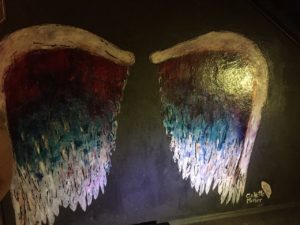
]]>