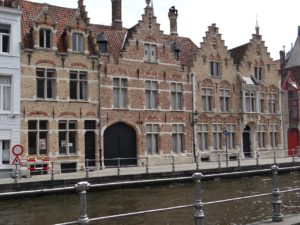
One day in any city is a tough call – there’s so much to see, do and eat how can you squeeze it all in? The answer is you don’t. Consider the “one day only” visit an appetizer to the city which may (or may not) tempt you to return. For those visiting via a cruise ship port at Zeebrugge, there’s often a plethora of ship tours (expensive), private tours (more flexible and often less expensive) and the do it yourself version. Bruges (or Brugge) is a magical cobblestone city with a famous bell tower (Bruges Belfry), a plethora of chocolate shops in Bruges along with beer, chocolate and friet (French fries) museums. Add in a Bruges canal boat tour, shopping options, churches, walking tours and the famous horse drawn carriage tours and your options and mind are on overload.
So I would suggest choosing two “must do” attractions, add in one awesome lunch and a few snacks along the way (and to bring home) to enjoy the city at a leisurely pace. Any time left over is a bonus to explore or enjoy the view along the canal.
Bruges What to Do in One Day
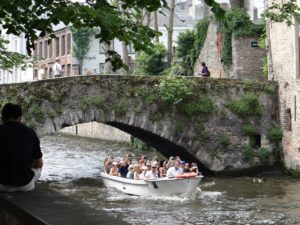
Most tourists will enter from the canal side of the main street and cross over the small bridge to walk along the street filled with chocolate, cookies, waffles and other souvenir shops. If you continue to walk straight for about five minutes you’ll arrive in the market square with the Bruges Belfry on your left. You’ll also see a French fry food truck selling very expensive fries – I’d go elsewhere for much less to be honest as they have “tourist prices”. There are many quirky museums in the city (one for lamps!) along with churches and art museums, etc. Below are top attractions for most visitors, especially “check the box” visitors.
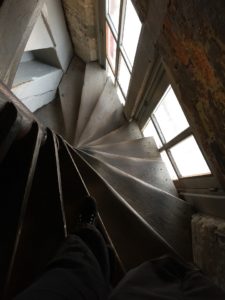
- Bruges Belfry (allow 2-3 hours to visit the Belfort) entrance is controlled and limited so you need to wait for someone to exit before a visitor is allowed to enter. The lines will look scary but the lobby is small so allot about an hour in line (if the line is on the courtyard stairs) and another hour to visit/climb. Wear flat comfortable shoes and be ready to climb winding stairs of various materials (marble, wood, concrete, etc.) in very tight spaces. Its 366 steps up and 366 steps down.
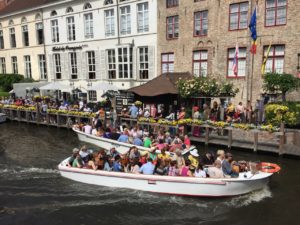
- Bruges Canal Boat Tour (allow 1.5 hours) – the cruise is 30 minutes but the wait can be up to an hour in the hot sun. You might want to go a bit further into the city to find another boarding location with less of a wait.
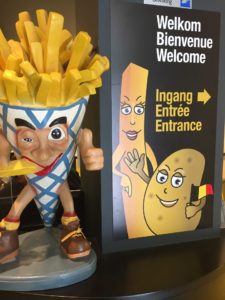
- Bruges Friet Museum (allow 1 hour – 1.5 if you visit the café for fresh friets) – this quirky museum celebrates the potato and the magnificent creation by the Belgians – the Belgian Friet. Incorrectly named French Fries you can learn the history in this restored church building. The displays are low tech but quite interesting.
- Choco-Story in Bruges (allow 2 hours, longer if you don’t hit the chocolate demonstration times right) – Created by the folks behind the Friet Museum (you can buy a combo ticket to visit both in the same day), this lovely museum walks you through the history of chocolate and Belgian chocolate with low tech museum displays, a short film, chocolate art and a chocolate demonstration with samples.
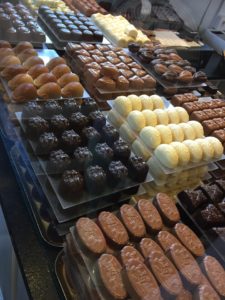
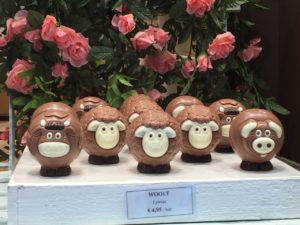
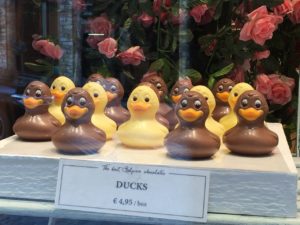
- Chocolate Shops in Bruges (time will vary) – there are close to 90, yes 90! Chocolate shops in the small city. Talk about catering to tourists. Any flavor you can think of, you can find. Any single origin country bar you want, you can find it. If you want chocolate shaped like animals, they have it, chocolate shaped in naughty ways, they have it, chocolate bars, breakaway, ice cream, popsicles, fudge, chocolate, chocolate, chocolate – you’ll find it. Go experiment and buy chocolate in a few places to sample the different types. They also have sugar free chocolate and lactose free chocolate. If traveling, some shops will offer cool bags (added fee).
- Bruges Beer Museum – The Beer Museum is centrally located on the Market Square. The museum offers a variety of Belgian beer (over 10 brands) to enjoy at the bar. The tour is easy to follow and if you love beer or are keen to learn more about the process, this is an interesting option.
- Walking Tour of Bruges – Legends Tours offers free walking tours of Bruges daily (please tip as that’s how they earn their living) as well as chocolate and beer tours (not free – prices on website to book). I wandered on my own aimlessly because I didn’t know about the free walking tours (next time!)
- Horse Drawn Carriage Tours – to be honest, these carriage rides will fly past you as the horses are galloping through the city at a quick pace so don’t expect these to be leisurely. They are also expensive so you mileage may vary on whether this is a good deal and unique experience.
(Not Chocolate) Desserts in Bruges
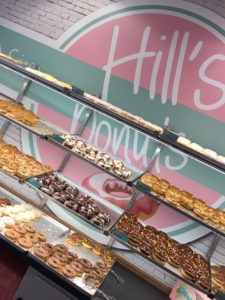
- Bruges Donut Shop – Hill’s Donuts is an alternative to the chocolate shops – channel your inner Homer Simpson and you won’t be able to pick just one – there are so many choices –
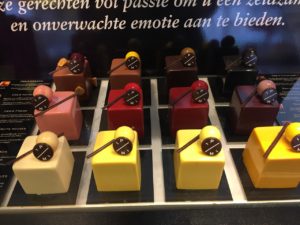
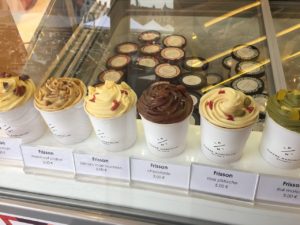
- Ice Cream & Cake – in the main market square, the small chocolate shop by Pierre Marcolini, one of my favorite chocolatiers, offers ice cream as well as gorgeous chocolate cakes that are works of art that are almost too pretty to eat.
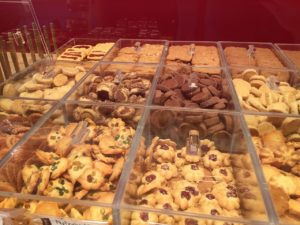
- Juliette Biscuit (Cookie) Shop – This bespoke cookie shop caught my eye on the main street (on the right) as I walked toward the market square. In a town of chocolate, cookies get to be a unique option. Named for the owner’s daughter, the shop sells pre-packaged as well as loose (pick your own) cookies. A nice change from chocolate and make great gifts (if you can resist eating them on the way back to the ship or on the ship). I opted to pick my cookies which are priced by weight.
- Belgian Waffles – the history is funny that the “Brussels waffle” introduced at the World’s Fair had a name change to “Belgian waffle” because Americans didn’t know where Brussels was (geez first we get the fries wrong and now the waffles – sorry Belgium!). There are two kinds of waffles – the Belgian waffle and the Liege waffle which is like a crunchy donut with powdered sugar. Normally, you would eat as “takeaway” street food with your hands but you probably expect ice cream and over the top toppings so don’t worry, they’ve adapted for your tastes. The main street has the “House of Waffles” which is popular with both a sit down restaurant and a takeout window.
- Tarteline has the prettiest cakes if you want to have a tea time break or hot chocolate!
- St. Paulus Bakery was my go to for croissants and pain au chocolat.
Where to Eat Lunch in Bruges (or Dinner)
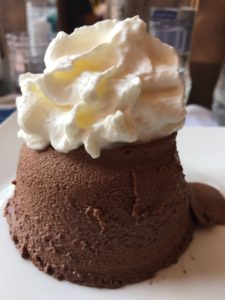
As you can imagine, there are a plethora of food options in the city and while I’d love to eat chocolate all day long, I needed real food and protein. The market square will have great views but be mindful of the prices. You may want to wander a few minutes away from the market square to find small cafes along the canals and with outdoor seating. Here’s where I ate during my time in Bruges
- De Gastro is a Belgian restaurant which had a set lunch menu (3 courses – starter – entrée – dessert) for a reasonable price as well as an ala cart menu that has enough choice to satisfy most. I chose the soup, ½ roast chicken, choice of salad/fries and dessert/coffee. The other option was pasta Bolognese. T My dessert? Chocolate Mousse of course!
- Eekhoetje Tea Room (no website) has a good selection of sandwiches and salads as well as desserts. They were so kind to let me be the last guest as they were closing soon. I ordered a simple toasted sandwich and a custard tart topped with raspberries.
- Amuni was fantastic for Italian food – they call Slow Food. The contemporary designed restaurant will make you forget you are in Bruges – there are a few areas to enjoy your meal – the bar, courtyard both inside and outside as well as a large dining room. While tempted by the pizza, I chose the pasta and bread basket along with a glass of red and of course dessert!
- El Churrasco Argentino (no website) had a crowd inside and out each time I passed by. I went early enough that no reservation was needed and enjoyed friendly service along with a yummy steak, bread basket and many dipping options, a glass of red and dessert. As a solo diner, I was welcomed and the staff was attentive throughout my meal. At no time was I rushed out of my booth despite folks waiting to get in and that was much appreciated.
- Blackbird is a pretty restaurant, it’s almost romantic and definitely social media design friendly. I visited for breakfast but didn’t stay as I didn’t like the set breakfast menu – I just wanted an ala carte breakfast. The concierge said it was a wonderful restaurant, hopefully I can try next time for lunch where there’s more flexibility in food choice.
Final Thoughts Zeebrugge – One Day in Bruges, Belgium
One Day in Bruges is a wonderful time to explore this charming city during a cruise stop in Zeebrugge, a day trip from Ghent (Gent) or Brussels or a short drive from wherever you may be. I’ve heard it called “the Disneyland of Belgium” because of the tourists influx, packing canal boats and cafes, etc. but who cares really? I love Disney and the magic that it creates even for a short time to escape the daily drama of life. That said, there are small streets to get lost in and a nice wander through the city to quiet parts where you can enjoy the architecture, pick up a sandwich and sit along the canal and just be. You can’t do that in any Disney park! Be mindful that depending on the time of year, the city may be packed with cruise tourists just like you – it’s a small town so be patient – eat some chocolate, drink some beer and remember you are on vacation so just enjoy the time.
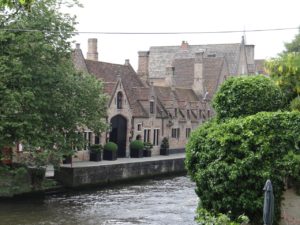
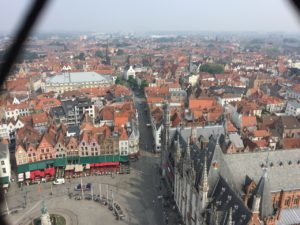
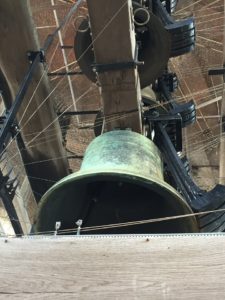
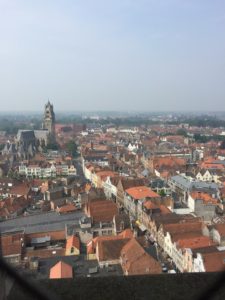
366 stairs to the top. I’m not quite sure what I expected at the Bruges Belfry Climb of the bell tower but once I started, I had to finish. The Belfry of Bruges is a medieval tower in the center of town and was featured in the classic dark comedy In Bruges (2008). Overlooking the market square and the canals, it’s a lovely vantage point to take in the views of the city. Of course, I had to climb it and learn more as it’s the highlight attraction in the city along with the canal boat tours. 366 steps to the top doesn’t sound like a lot given the “walk 10,000 steps in a day” but believe me it’s a workout. The reward is great – views and bells and if you are lucky with timing you can experience the bells as they play (see video below).
Climbing the Stairs at the Bruges Bell Tower
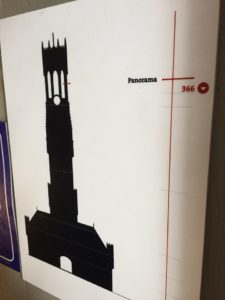
As you climb the narrow winding staircase up the bell tower in Bruges you are reminded with each flight where you are in the climb to the top which is 366 stairs.
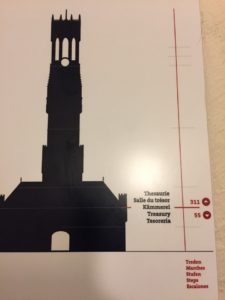
If you are like me, you’ll get winded halfway up and start cursing your decision to climb the stairs as your “exercise for the day”. Near the top when you are ready to stop, you’ll find a landing in the drum room which allows you to see the mechanical workings of the bells which control the timing and the music, which is changed every two years. There are a few benches on this landing to catch your breath. You are so close to the top now as the pictures keep reminding you.
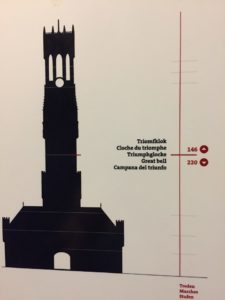
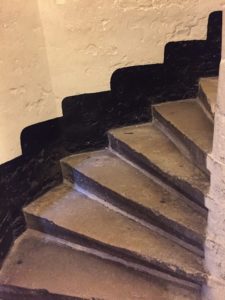
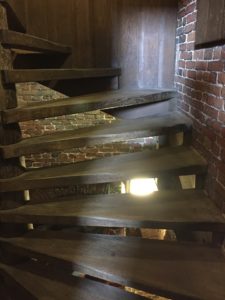
Just a few more twists and turns of the stairs to ascend.When you see the last step, you’ll start celebrating the accomplishment – sure 366 steps doesn’t seem like much but trust me, it really is a workout. If you have big feet like me, those small steps are much more challenging. Add to that, the stairs are not consistent in material, quality or distance. So expect stone, wood, marble that has worn and is uneven. You may need to hold onto the wall, a rail or other as you climb up and down.
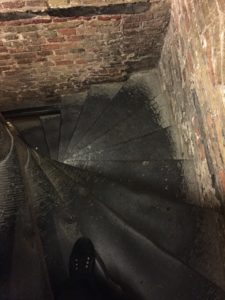
The reward for your efforts? The views! Panoramic views of the city of Bruges.
Watch & Listen to the Bruges Belfry Bells Play
If you time it right (or wrong depending to your feelings about loud bells) you’ll be under the bells as they play their medley for all to hear. You may want to bring earplugs for those with sensitive hearing or those who want to muffle the sounds.
[embedyt] https://www.youtube.com/watch?v=FD8oOr5-dig[/embedyt]
For me, I was fascinated by the sounds emanating from the different sized bells and enthralled by watching the mechanical motions of the triggers tapping the bells to produce the “bongs” and “bells”. Bells swinging, ropes above, and metal bars tapping above was beauty in motion. Having seen the inner workings a level below and realizing how this is still working today is pretty cool. There are over forty bells ranging in size and weight to produce the sounds.
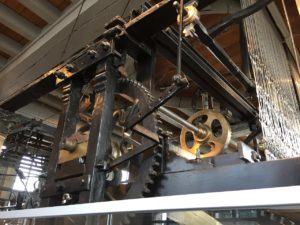
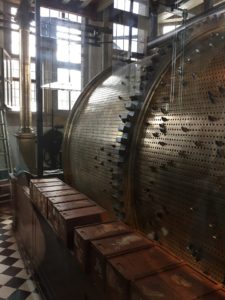
The Bruges Bells
The Great Bell has changed over the years, with the last change in 1800 with the “Bell Maria” transferred from a local church. The “Bell Maria” was cast in 1680 and still rings today. If you spend time in the Drum Room on the way up (to catch your breath) or on the way down (to spend time reading the displays), you’ll learn that the brass drum is thought to be the largest brass drum in existence. With 30,500 pins to operate the outside clappers (122) on the 37 larger bells, the music medley is a wonder to experience and watch.
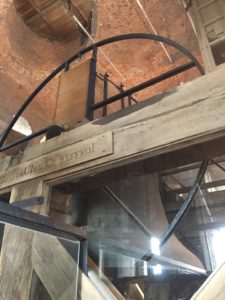
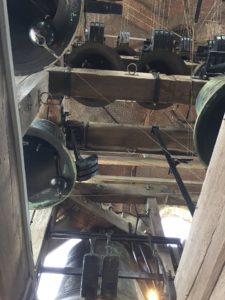
Bruges Belfry Climb Entrance
Access to climb the tower is tightly controlled given the steep spiral staircase climb to allow for folks to climb up and let others climb down which is why there is such a long line at the entrance. When you buy your ticket at the window there is then a turnstile with a red or green light. If green light you can walk through to begin the climb, if red light you need to wait until someone exits. This is important if you are a family or group – you may only get one or two people through at a time, if that is the case, arrange to meet on the first landing above. Otherwise, let each person go through and wait on the other side of the lobby.
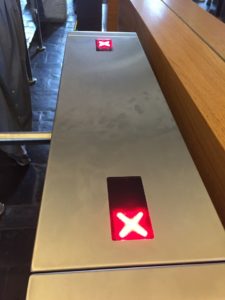
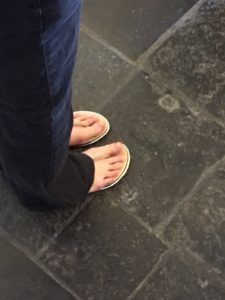
Note: Footwear choice is very important. I saw women in flip flops and others in high heels who (smartly) abandoned the line once realizing the climb. If you choose not to climb, you can still learn about the Bruges Belfry in the courtyard which has information display boards.
Final Thoughts from Climbing the Bruges Belfry
Climbing down 366 stairs is just as challenging as going up the stairs. There are ropes on the walls in tight spaces and you need to be aware of those climbing up and navigate where you will stand to let folks pass because you can’t both share the stairs at the same time. As you look down and climb down, you again see the signs on the walls indicating where you are in the journey to the bottom. 366 stairs down to the lobby is a quick task. As you exit the stairs and walk through the turnstile, the green light pings for another guest to begin their climb to the top of the Bruges Belfry.
The Belfry opens at 9:30 a.m. and closes at 6 p.m. – I arrived near 10 a.m. and waited about twenty minutes in line before starting the climb. I noticed many of the crowds to the city arrive by tour bus around 10 a.m. so I’d recommend going to the Belfry before 10 a.m.
]]>
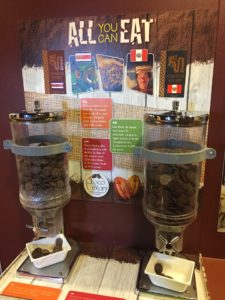
As if nearly 90 chocolate shops in Bruges wasn’t enough….there’s Choco Story which is a CHOCOLATE MUSEUM in Bruges. A museum dedicated to the origin of chocolate around the world and in Belgium. If there was any attraction that had my name written all over it – it was this! As part of my combination ticket with the Friet Museum (the museum of French fries), I was able to indulge in my chocolate addiction without judgement. It didn’t hurt that there are free chocolate discs to eat as much as you want as you tour the exhibits. This is an in depth love of chocolate and its history telling a story throughout the historic building in the center of Bruges.
Location of Choco Story Bruges
If you are coming from the Belfry and market square, the Choco Story, chocolate museum in Bruges, is a short walk away on Wijnzakstraat 2 (Sint-Jansplein). It’s not far from the Friet Musuem – just down a side street and on the corner of a historic brick building, the banner on the side wall is the only indication you’ve found it. Entering the small lobby, I showed my ticket and received an awkward laminated map of the museum. It showed me the path from start to finish (chocolate demonstration and tasting) along with visit information.
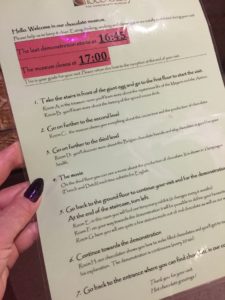
Choco Story Begins with the Mayans
The thoughtfully curated chocolate story started with the Mayans on the ground floor. It all starts with the cacao plant. When I visited the Caribbean island of Antigua, our tour stopped at a cacao plant and the guide opened it to show us what would later become cacao beans once they were dried out. From there, chocolate begins its journey. It’s a lot of work and there is talk of a chocolate shortage due to climate change and other environmental issues. For now, we get to enjoy the history of the Mayans.
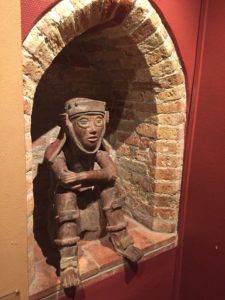
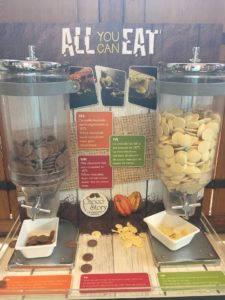
The story continues up the stairs which themselves are quite the attraction. As you weave around the displays, there are help yourself chocolate stations (where is my Ziploc bag when I need it?) which allow you to eat as much as you want in milk, dark and white chocolate discs. Need I say more?
The Choco Story Bruges Displays
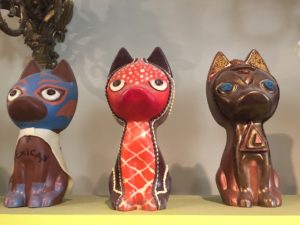
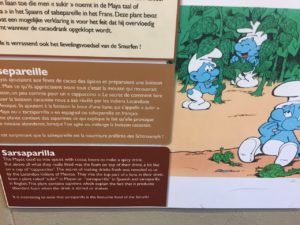
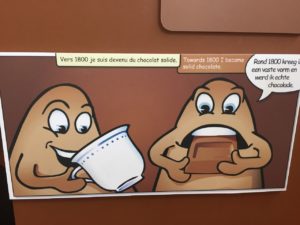
For a bit of fun in the displays there were Lego like toy displays for the kids (and adults) to enjoy as well as cartoon chocolate mascot and of course Smurfs! I now know years later what the smurfs meant when they talked about Sarsaparilla!
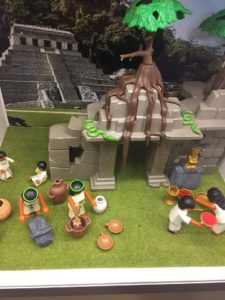
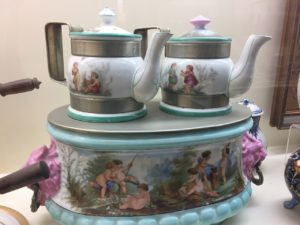
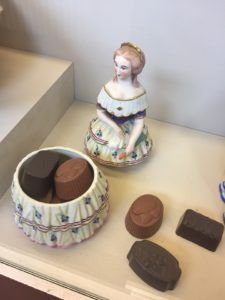
As I walked around, I was intrigued by pots to melt the chocolate into drinking chocolate and the china cups created for enjoying the liquid chocolate drinks. The men with mustaches had their own uniquely designed cups. As chocolates were an indulgent treat to share, there were specially crafted chocolate display accessories for the home. The small rooms are curated nicely with a mix of historical items in the display cabinets along with walls adorned by posters and advertising.
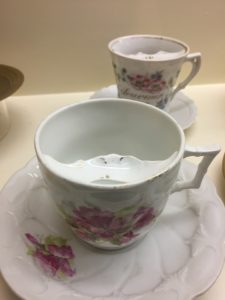
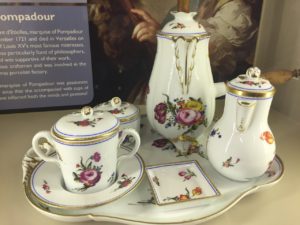
Mixed in are the free chocolate stands – with only two types displayed, they tend to be milk & dark chocolate and milk & white chocolate.
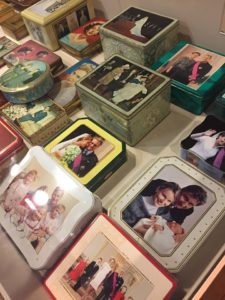
The Belgium Royal Family have a tradition of sending chocolates and have commemorative tins each year. A bit of the tin history is on display along with packaging and advertisements over the years.
Making Chocolate – The Supplies
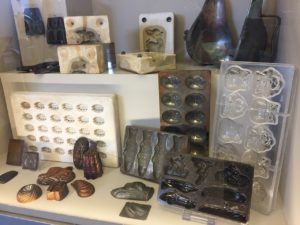
The Belgian molds and shaped were represented in the plastic and iron pans. The various equipment used to make chocolates took up a good deal of space in the exhibit. When you think about chocolate, I doubt you think about the various steps and patience that is required to make your favorite creations.
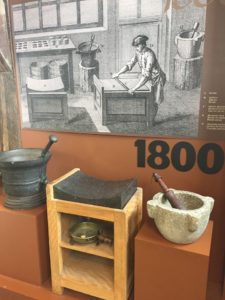
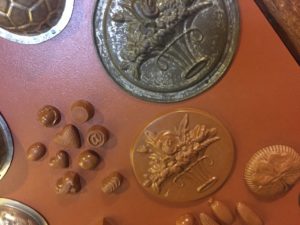
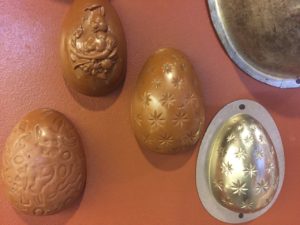
Just looking at the various equipment used over the years, the myriad of molds and pans and other chocolate making supplies, you can really appreciate the pastry chefs around the world that specialize in chocolate. The molds might have flowers or logos or the name of the chocolate shop. They could be the popular egg shape or whatever you can think of to create a mold for. While it might look a bit easy in the factories churning out favorite chocolate recipes, in Belgium, many shops are still producing pieces by hand – true artisan chocolate.
The Making of Chocolate Film
In the screening room, one of the last stops on the upper floor, a film is playing on a loop. It’s a “behind the scenes” at the Belcolade Belgian chocolate factory, owned by the Choco Story founders. It showcases all of the steps you’ve read about in the Choco Story museum into the factory experience. It starts with the cacao plant and ends with the chocolates produced on the factory line. Seeing how chocolate comes to life gives a new appreciation to the process in my opinion. Once you are finished here, since there are seats, many folks stay through another showing, you can proceed to the ground floor to watch the chocolate demonstration.
The Chocolate Art Sculptures
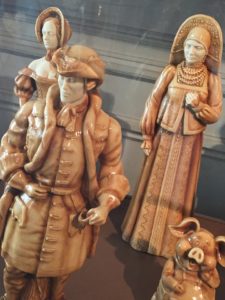
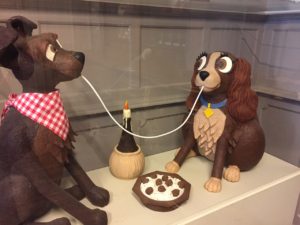
On the way to the chocolate demonstration and tasting which is held twice an hour, I played a game on the wall to see which country of origin best matched my chocolate tastes. The result was Costa Rica, a destination I’ve not yet visited but now have a good reason to. I then passed by the room of Chocolate art, well actually I the aroma of chocolate greeted me a few steps before I entered the room. All of the sculptures are made with chocolate. Can you tell? If you thought the chocolate Easter bunny you consume each year was the ultimate chocolate experience, well take a look at these works of art. Sure they look too good to eat….but really? It’s chocolate! Which would you pick to indulge in?

Chocolate Demonstration & Tasting
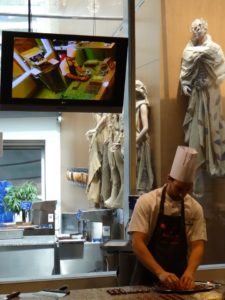
The pastry chef starts a chocolate demonstration which lasts about 15 minutes which is easy to watch live or via the television monitor above and includes tastings. The chef explained in English how they make chocolate before filling the molds, tempering it and cooling the molds before expelling the chocolates to the serving tray for attendees to sample. The praline filled chocolates were rich in texture with a smooth after taste that lingered on your tongue. After the demonstration was over, the chef escorted the group out of the demonstration room and allowed us more chocolate to enjoy (I may have taken two pieces).
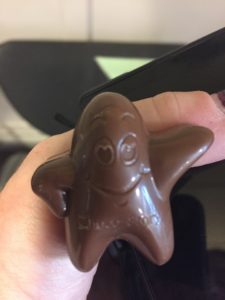
Exit through the Choco Story Gift Shop
Surprisingly, the gift shop had a limited selection of chocolates available for purchase. The praline crème filled chocolates that we tasted in the demonstration room were available in a small box (of course, I bought a box) along with smaller chocolate gifts. There were also books, t-shirts and other chocolate related souvenirs.
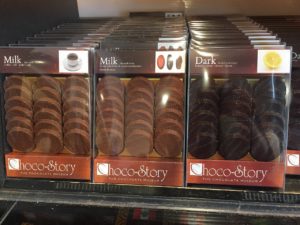
Sweet Endings – Chocolate Museum in Bruges
Um, Chocolate! How could I not LOVE Choco Story Bruges? Its simple setup over multiple floors in small rooms lends itself to an intimate visit and luck for me it was a quiet Wednesday at the end of May before the summer crowds. The Choco Story Bruges is a wonderful way to learn more about chocolate from bean to bar and beyond. My inner chocoholic was happy to learn more about her favorite indulgence at the chocolate museum in Bruges. Choco Story is open daily from 10 a.m. – 5 p.m. and I would allocate two hours to explore if you are keen to read the displays.
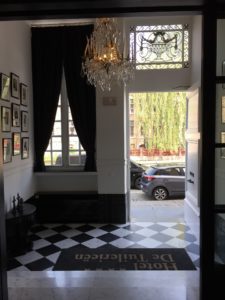
Located a few steps away from the corner bus stop, across from the canal is an unassuming white building set back from the street with a few marble steps to enter the archway. As I stepped inside, I was instantly transported to a luxury hotel filled with history and famous guests as evidenced by the black and white photos, some signed, on the walls. Above me was a crystal chandelier and below me the black and white tiles both of which added to the historic building (15th century), the luxury four star hotel that lies beyond and the distinctive difference just a few steps back on the street facing the old town of Bruges. I chose to stay for two nights in Bruges at the oddly named and hard to pronounce Hotel De Tuilerieen, a Bruges luxury hotel and member of Small Luxury Hotels (note: if you book direct with hotel you don’t get SLH loyalty credit) I booked direct with the hotel using their website which offered discounts and lower prices than competitor websites.
Hotel De Tuilerieen Bruges Location
It doesn’t get any better than this – the hotel is across from the Dijver canal, many rooms have a view of the canal and the Bruges Belfry is in the short distance. This area is where the hordes of day trip tourists (yes, hoards that I saw descend starting at 10 am.) begin their tour of Bruges. With the small bridge over the canal, the main canal boat tours of Bruges start and end here. So you can sit on the grass along the canal and people watch. If you venture up the cobblestone road (use the sidewalks or run the risk of being trampled by the very quick horse led carriage rides) which is lined with souvenir and Bruges chocolate shops, you will arrive in the Grote Markt (market square) which is filled with all things tourist centered around the infamous Belfry. A bit further afield (10 minute walk) is the Friet Museum celebrating all things potato and the Choco Story Museum for chocolate history.
Arrival in Bruges
I chose to arrive by taxi from the train station but you can easily take the bus direct to the hotel (if you don’t have a lot of luggage). The standard check in was 3 p.m. and I arrived at 11 a.m. so my room sadly was not ready and wouldn’t be until at least 3 p.m. so the front desk did the pre-check in (passport scan, credit card hold, etc.) and held my luggage while providing me a map to get oriented with the town. I was off to explore on the unusually hot and humid June day.
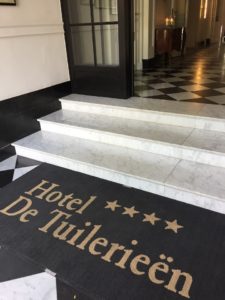
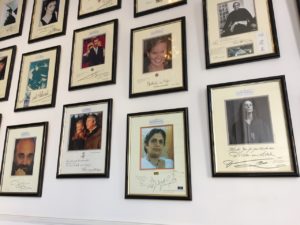
My King Room at Hotel De Tuilerieen Bruges
I arrived back to the hotel at 3 p.m. on the dot because I was exhausted by the sun and craving a sliver of air conditioning. My room was ready and the bags were already placed inside. The front desk associate guided me to my room on the top floor. The small elevator fits maybe four people inside and quickly arrived to the hot hallway. When my door was opened, I felt the cool breeze inside as the air conditioning had been turned on to cool the room. I was surprised by the large room with sloped walls (yes, I hit my head a few times) and imagined that the stars of the movie “In Bruges” might have stayed in this lovely room with a view. I could tell that this wasn’t the lowest category room I booked online so I was happy with the upgrade.
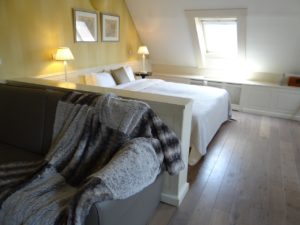
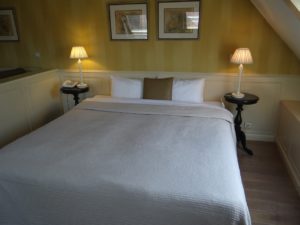
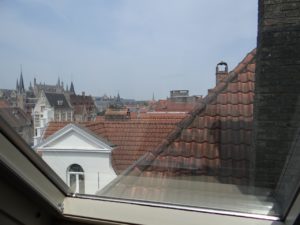
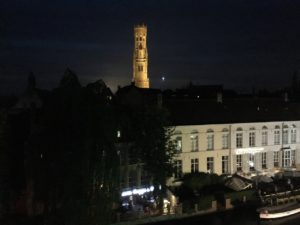
The hardwood floors were the second thing I noticed before taking in the many windows that opened and looked out across the rooftops of the city and the prize view of the canal across the road and the Bruges Belfry. I rarely get a room with a view so I was enchanted by it day and night.
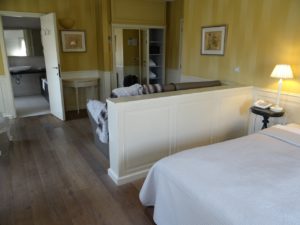
The room had a small divider between the coach (pull out) and the bed. The pictures above the bed were….interesting (art fans can appreciate). Along the wall under the windows were a desk area, television and space to store luggage. A separate table between two chairs would provide my daily free bottles of water. The closet area near the front door held the safe, robes and shelves.
Bathroom Hotel De Tuilerieen
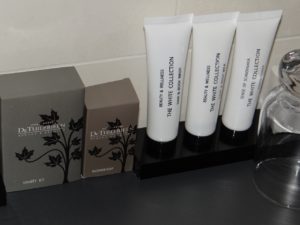
Moving from the hardwood floors, I entered the modern tiled bathroom. The bathroom had a shower/tub combination, glass partition to open/close and for me, I thought it was a bit high to climb in/out of so take caution. The toiletries were branded for the hotel. The towels were laid out on a heated rack (love that) and I had a makeup chair with vanity near the hairdryer. Ample plush towels were supplied as was a robe (in closet).

Common Areas at Hotel De Tuilerieen Bruges
There is no restaurant onsite other than breakfast buffet option. I declined the breakfast buffet offer in the reservation as they didn’t offer an ala carte option to accommodate my food intolerance. The breakfast room was pretty from the outside but I didn’t visit.
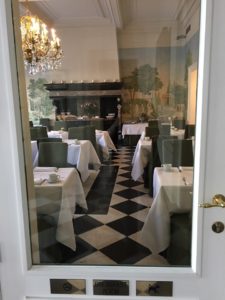
The bar area was open at night, during the day it can be used as a quiet lounge. There is a larger living room area in the back of the hotel.
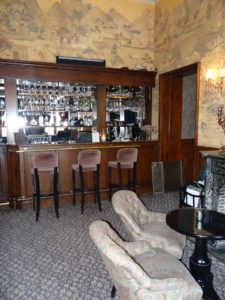
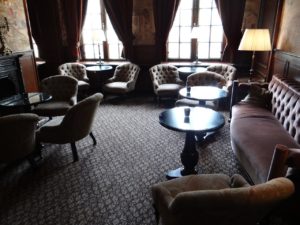
The common areas highlighted the architecture and history of the building unlike the guest rooms which are more modern and minimalistic.
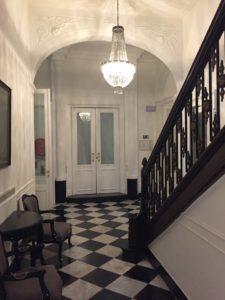
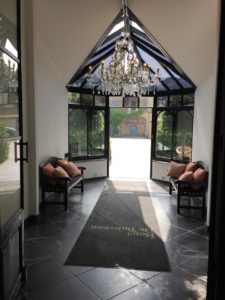
Staff at Hotel De Tuilerieen Bruges
The front desk staff was split for me. There was the “by the book guy” who checked me in and was hard to engage with outside of the tasks at hand. The other staff member was “friendly guy” who smiled, engaged in conversation and was happy to make recommendations on the map. As the hotel key weights a ton, you can’t carry it with you so you need to engage with the front desk coming and going. Each were attentive and able to assist me with each request but overall it was a mix of personalities and styles.
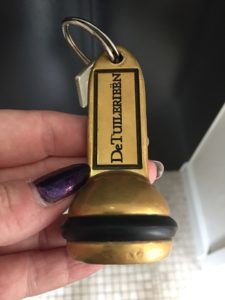
Overall – Luxury Bruges Hotel De Tuilerieen
Sometimes “Location – Location – Location” often sacrifices something for the fantastic location and grand views (price, room size, etc.) but that wasn’t the case at Hotel De Tuilerieen, it was spot on start to finish. I enjoyed being able to feel like I had the town to myself in the early mornings and late evenings. The room was the perfect escape during the day when the crowds or heat became too much. And the highlight was going to sleep with this view from my comfy bed. Doesn’t get better than that.
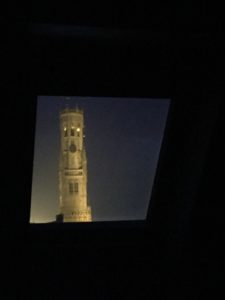
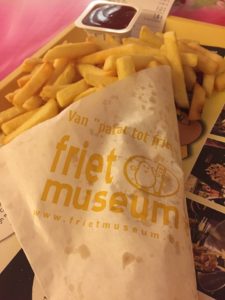
If you are reading from the U.S. this week, I’m sure you’ve seen or heard the soundbite “…eat only six French fries as a portion” – yes, we all laughed because who can only eat six individual fries? I know that fries aren’t quite healthy but they are really tasty and that matters (in moderation of course). We love french fries in the U.S., chips in the U.K., friets in Belgium and the potato in general in its many fried forms around the world. This love of the potato and its fried form in Belgium is taken to a new level at the Friet Museum. I thought I was passionate about French fries but I never thought to open a museum of french fries to celebrate the history of potato and the evolution to fries (Belgian Friets). So join me on this quirky museum tour of the Friet Museum Bruges.
Belgian Friets or French Fries?
Legend has it that during the world war, the Belgian soldiers shared their Friets (fries) with American soldiers who thought the soldiers were French and called them French Fries and thus was born the French fry. The French have never claimed the French fry and the Belgians have had to live without the fame and glory knowing that they created this popular potato concoction. Belgian Friets are unique in that they are cooked in two separate phases and served in a paper cone to eat on the go usually with a mayonnaise on top (or other delightful condiment) and a wooden fork like utensil.
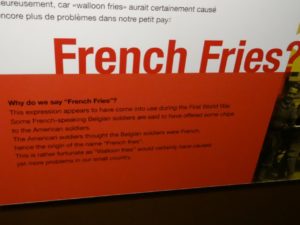
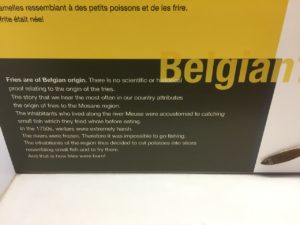
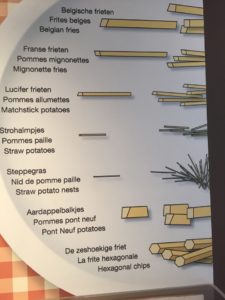
In Belgium, the type of friet depends on the measurement in millimeters (mm) or centimeters (cm). They include Belgian fries, mignonette, matchstick, straw potatoes, straw potato nests, pont neuf. Honestly, I don’t care what you call them or how they measure up, I’m always ready to eat fries…..and definitely more than six fries.

Friet Museum Bruges
I ended up at the Friets Museum because it seemed quirky enough to visit in Bruges plus I could get fresh friets at the end of the visit in the basement snack bar (discount coupon provided with admission receipt). I also had the false illusion that after climbing up and down the 366 stairs at the Bruges Belfry, I could indulge in the fries without guilt.
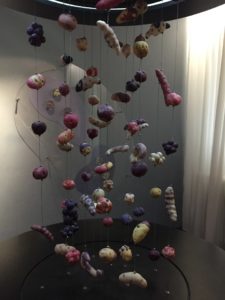
The museum is open from 10 a.m. until 5 p.m. each day and located five minutes from the market square and Belfry of Bruges. The entry fee is 7 Euro (adult) so I combined it with the Choco-Story ticket (a museum about chocolate, including Belgian Chocolates – sign me up) – two museums dedicated to two of my favorites foods – french fries and chocolate.
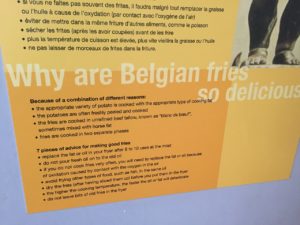
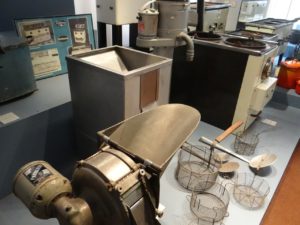
How much is there to learn about the potato? More than you’d think and I was actually surprised by it all – it was quite interesting. The museum, founded in 2008, explores the very beginnings of the potato in various environments and continents and is set up to educate you (and many schoolchildren). It then showcases farming techniques and tools before moving on to the preparation stage of the potato and cooking options.
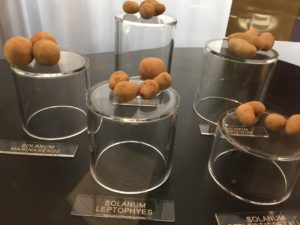

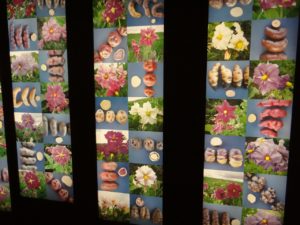
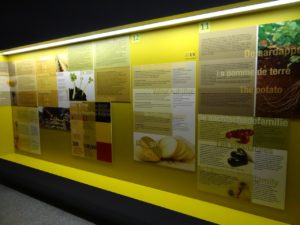
Friet Museum Building
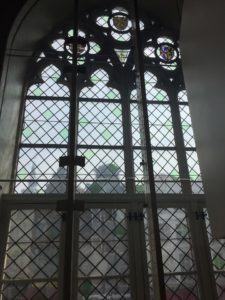
With the displays similar to museums, it was easy to navigate and read the boards throughout the exhibit as it continued upstairs in the 14th and 15th century buildings (one of the oldest in town, formerly the Genoa commercial representation building and annex with the date 1399 on the outside facade) to the large vaulted room that streamed light through the ornate Gothic glass windows. In this room, you can discover the fun side of the potato in the form of Friets and fries and all the ways to enjoy our potato addiction. Popular condiments by country – Belgium enjoys mayonnaise and a sauce pomes Friets (similar to béarnaise). I’m quite the fan of the truffle mayo that I had in Rotterdam with my Friets.
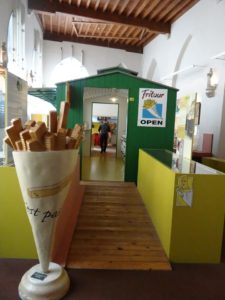
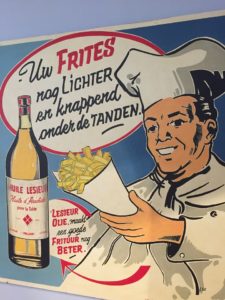
This colorful and slightly interactive room was designed for the kids but adults can enjoy just as much as the advertisements adorn the room as do the mini kitchens and cookware stations. The displays are in a few languages, including English. Its low tech but seriously educational in the “I’d watch this documentary on television and find it fascinating” kind of way.
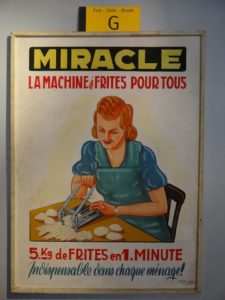
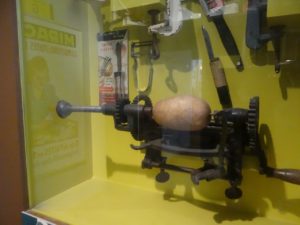
Once you have gone through the mock friet shop and read the colorful advertisements on the wall, you descend the stairs back to either exit on the main floor or continue to the basement snack bar for the freshest Friets you’ll have in Bruges.
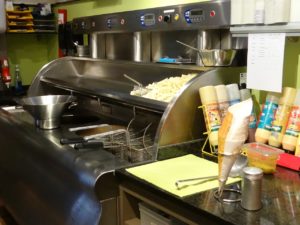
Friet Museum Snackbar – Friets Tasting
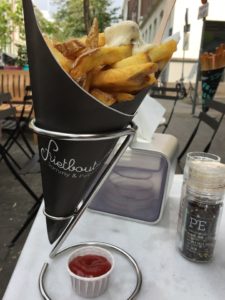
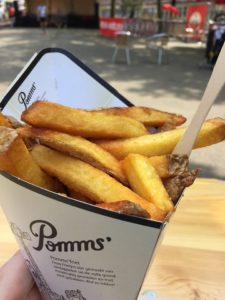
The snack bar sells a few other snacks and drinks but I was keen on an order of Belgian Friets with a side of ketchup (there’s an entire menu of condiments each for an additional fee). I was given a beeper after ordering and was able to watch the two man operation go about creating the customer’s orders. While waiting and watching, I sat at a table in the basement and admired the stone walls and archways of the original building. When my beeper went off, I retrieved my tray with Friets spilling out of the paper cone. As this was my lunch (hey, no judgement), I easily ate all of the fries (after adding some salt).
Final Thoughts – Bruges Frietmuseum
Once full of fries, I walked through the small gift shop (always a gift shop) to exit. What looked like an odd place from the outside was really a thoughtful surprise. Two families created the Frietmuseum and ChocoStory to celebrate Belgian’s culinary favorites – fries and chocolate. The collection was thoughtfully curated, easy to understand, flowed nicely throughout the building and provided educational value. You can easily visit in about an hour if there are no crowds and you decide to read a few displays. I’m glad I decided to be quirky and visit the Frietmuseum in Bruges.
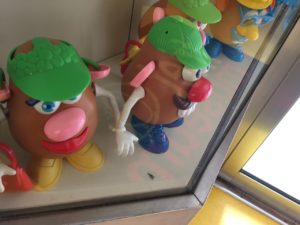
Seriously though, who can say no to french fries? I ate fries in Rotterdam, Bruges, Ghent and London on my trip. Now I know so much more thanks to my visit to the Friet Museum Bruges.

It’s no secret, I’m a chocoholic. I developed this chocolate sweet tooth later in life and as I get older, I’m definitely more selective in what I choose to indulge in. So when I planned my last-minute trip to Rotterdam and Belgium (Bruges and Ghent), I knew I needed to leave room in my suitcase to bring home chocolate – a lot of Belgian chocolate. When I started researching Chocolate in Bruges, imagine my surprise to learn there are over ninety (yes 90!) chocolate shops (the Visit Flanders Chocolate Brochure press material lists over 300 chocolate shops in the region) which doesn’t include donuts, cookies and bakery shops selling chocolate flavored treats. In addition to my research, I asked for recommendations. I would need to eat a lot of chocolate over my three days to find my best chocolate shops in Bruges. While these are my three favorite chocolate shops, I would urge you to also explore the many local shops to find what you like best. There is literally every flavor you can imagine, textures and options in milk, dark and white chocolate.
Life Before Posh Chocolates
Growing up in the U.S. on Hershey’s, M&M (Mars) and Nestle (to name a few) plus my love of Twix, I didn’t know any better – I didn’t know the world of chocolate that existed outside of the name brands at the supermarket, pharmacies and Wawa. My Halloween pillowcases were full of KitKat, Nestle Crunch, Hershey bars and kisses and a whole lot of Reese cups. That’s the chocolate of my youth – the chocolate that my dad introduced us to as my mom hated chocolate (I don’t understand this either).
My parents were shocked when I started spending more than $7+ on a chocolate bar from Vosges (Chicago) or Éclat (Philadelphia) or came home with bags of posh chocolates from Europe (or the very different tasting Twix and Kit Kats). I still remember how crushed I was when I brought my dad a fancy box of chocolates from Paris and with his first bite, his face said it all and then he his words matched his face with “yuck”. He had only ever eaten US milk chocolate so wasn’t ready to jump into other types of chocolate. The dark chocolate and creamier milk chocolates in Europe (and beyond) were definitely flavors and textures that I needed to learn to appreciate with a lot of tasty research. Pairing with local wine made the chocolates even better. Some people like to travel and shop for clothes, I like to travel and shop for chocolate and wine, my way to taste the destination.
Belgian Chocolates
What makes Belgian chocolate so coveted and tasty? I learned a few things during my tour of the chocolate museum – a Choco Story Bruges – which traces chocolate from the Aztecs and Mayas to European chocolate. Belgian chocolates have a high cocoa content, use 100% cocoa butter and are credited with creating the classic praline. Belgian chocolate is exported (over 60% of production) around the world via brands like Neuhaus, Leonidas, Callebaut, Belcolade and Godiva to name a few. There are so many more award-winning chefs and chocolatiers throughout the country creating new chocolate varieties, flavors and tastings for everyone to enjoy. There is also the Salon du Chocolat each year, celebrating all things chocolate (add that to your festivals list – who needs a music fest when you can have a chocolate fest?).
Bruges Chocolate Shops
For my visit to Bruges, I focused on the smaller chocolatiers in the city. In my short visit, I visited ten chocolate shops over three days buying small samples and then going back for larger purchases to bring home with me to the U.S. These were my favorite three chocolate shops in Bruges (alphabetical order).
Chocolatier Dumon Bruges
Chocolatier Dumon is a cute little shop located a few yards away from the central market square. When I entered, I was immediately overwhelmed (in a good way) by the smell of chocolate and the vast choice of shiny chocolates in prepared packages or made to order. The chocolates are not labeled and the store is geared for tourists who order boxes based on size (number of pieces) and price and need only say “nuts or no nuts”. The associates will then choose a sample for you.
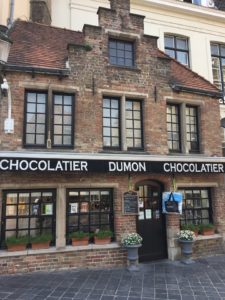
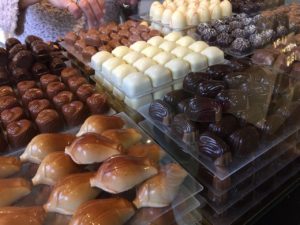
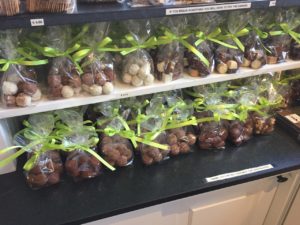
Me being picky me, wanted to know what each chocolate was filled with. The store was empty so I didn’t think it was too much to ask for what I wanted. One woman was a bit annoyed by me (if she only knew my much pickier chocolate friends) and did the “nuts or no nuts” while her colleague indulged my curiosity. The chocolates are quite creamy and filled with classic crèmes, caramel and fruit flavors. My box of 12 pieces was a nice mix and surprisingly very affordable (under 10 euro) as were the prices of prepackaged options on the shelves. The store sells ice packs for the chocolates if you are there on a hot day or transporting the chocolates home. I ate the chocolates during my visit to Bruges – they are easy to enjoy but very rich so you can’t eat too many at once (I tried).
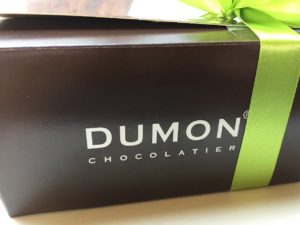
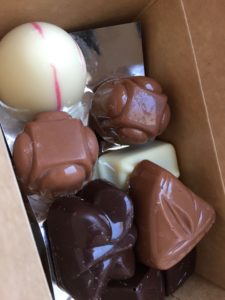
Verdict – There are no surprises at Chocolatier Dumon Bruges – this is the classic chocolate shop with affordable chocolates to please everyone on your list. Note that as they are handmade and fresh, the shelf life is not long (maybe a week or less) for optimal tasting enjoyment.
Pierre Marcolini Bruges
The small chocolate shop is on the market square (next to Godiva). The Pierre Marcolini window was so pretty that I was face pressed to peer into the closed shop window featuring the artwork in cake. I would research the shop back at the hotel and plan my morning visit for the next day.
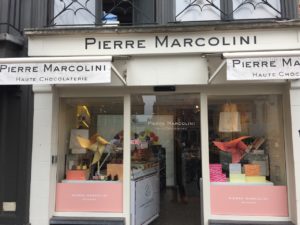
The pretty cakes in the window were what originally called to me. Once inside the store, I was lured by the boxes of hearts, the handmade jellies and so much more. Unlike Dumon, Pierre Marcolini has everything in boxes and collections as well as offers individuals cakes and ice cream options.
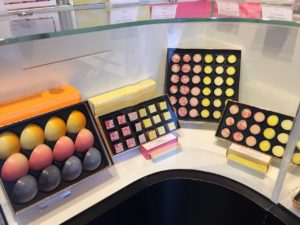
It was like walking into a luxury store that you could actually afford something – if not a boxed collection, a cake, if not a cake then ice cream or ice cream bar. The saleswoman hadn’t even taken the covers off of the glass cases when I arrived ready to buy as quickly as possible.
I took the chocolate mousse cake with me to Ghent 1898 The Post Hotel to enjoy with a glass of wine (perfect combination). I brought boxes of chocolate hearts, chocolate sampler and fruit jellies home for my family to enjoy. Pierre Marcolini has been called a “taste designer” in search of creating a better and lighter chocolate experience. I’d say he’s definitely succeeded with the taste and experience. I thoroughly enjoyed the Pierre Marcolini creations as did my family.
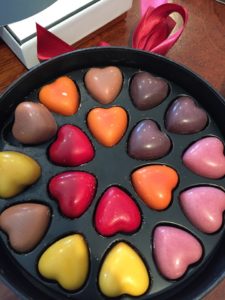
Verdict – This is a luxury chocolate shop for fancy chocolate gifts hence “Haute Chocolatier”. It is also a social media goldmine of colorful cakes (almost too pretty to eat), ice cream and chocolates heart in flavors that you already love – raspberry, caramel, passion fruit, praline, lime and pistachio. Stores are located around the world, weirdly the only U.S. store is in Hawaii?!
The Chocolate Line Bruges
The Chocolate Line is a five-minute walk from the Belfry and market square past the many shops. You’ll see a tree-lined pedestrian area on the left hand side in the middle of the road as well as fast food and fast casual cafes on either side. The Chocolate Line shop is by the award-winning chef Dominique Persoone. His creation of chocolates in over 40 flavors, tree to bar chocolates and single source chocolate bars will overwhelm you with choice in Bruges and Antwerp. The shop had just opened at 9:30 am and the chocolates were stacked to the top ready for the swells of customers, tour groups and locals. I was customer number one that morning and the associate was more than willing to indulge my questions to ensure I chose the best chocolates for me that represented The Chocolate Line.
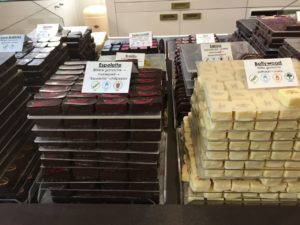
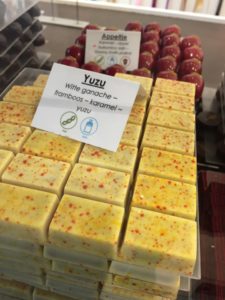
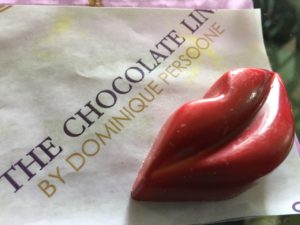
The chocolates are all labeled to make it easy to navigate (their website is quite nice with ingredients and allergens). With so many choices, it’s hard to narrow down what you want to add to your purple box. I chose a box of 18 (gluttony embraced) pieces as my research box. I started off with my comfort zone of raspberry, nuts, caramel, chocolate fillings before indulging in flavors like the miss piggy (chocolate ganache, almond praline, bacon and quinoa), apple, liquor filled options (Zapata rum, vodka, Cabernet Sauvignon and Bombay sapphire gin in red lips) and other interesting flavors.
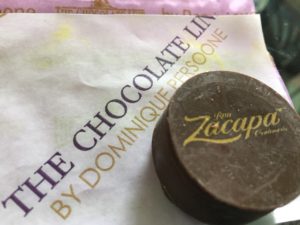
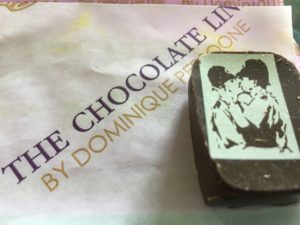
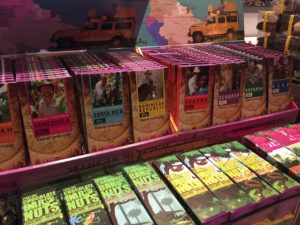
I added in single source chocolate bars to taste the flavors of Costa Rica, Peru and Ecuador, just a few of the nine countries represented by chocolate bars.
The Chocolate Line uses ingredients others may be surprised by – onion, sake, beetroot, Havana leaves, basil, rice vinegar, sansho pepper, sun-dried tomatoes, chili pepper, wasabi, hemp seeds and poppy seeds. You may enjoy the espresso coffee, lavender, mint leaves, passion fruit, banana, raisin and marzipan. There is a bit of rock star glamour to the chocolate involving showing the Rolling Stones how to sniff the chocolate powder in the shooter. Persoone also created a chocolate lipstick and other offshoots with chocolate. The Chocolate Line is about flavors, adventure and pushing chocolate comfort zones in a variety of ways.
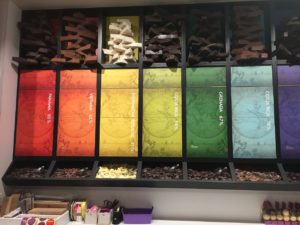
Verdict – If you are an adventurous chocolate lover, The Chocolate Line is your happy place. If you are just a simple chocolate fan, you’ll find a lot to love here as well from chocolate bars, origin chocolate discs and souvenir boxes sorted by type (fruit, nuts, etc.). For individual chocolate pieces, try to eat within a week to fully enjoy the experience.
Non-Chocolate Options in Bruges
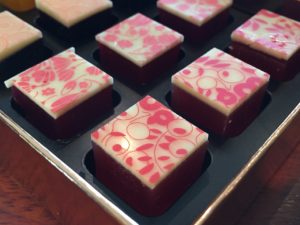
Ok, maybe you’re like my mother who had a negative chocolate experience growing up or you prefer other types of desserts/treats. Don’t despair, Pierre Marcolini has fruit jellies that are gorgeous to look at and eat. There are other sugar options in the city of Bruges. You can enjoy donuts at Hill’s Donuts, cookies at Juliette’s or pastries/croissants at the many bakeries in town. You might even want a Belgian waffle with ice cream (Mom’s favorite).
More Chocolate Shops in Bruges
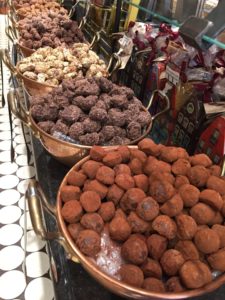
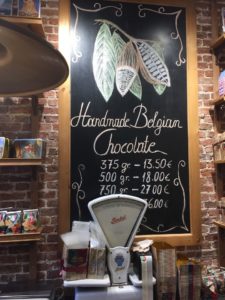
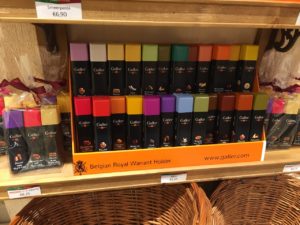
There is a chocolate shop for everyone in Bruges. If you want cute animals, naughty bits and sayings, packaged Bruges souvenirs. There are chocolate dusted truffles in bins, chocolate by the kilo, chocolate by the piece, bricks of chocolate that are hammered into pieces. If you have a sweet tooth, Bruges is the place to (over) indulge. It’s ok if you just want to eat chocolate all day – there’s even a museum with all you can eat chocolate discs while you tour at the Choco-Story Bruges.
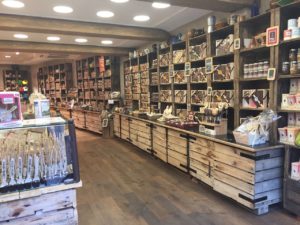
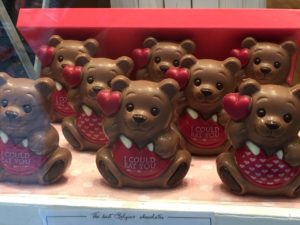
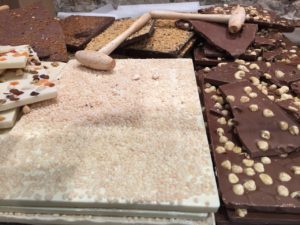
There are chocolate tours in Bruges as well as classes on making/working with chocolate. Since I’ve done chocolate classes at home and have done behind the scenes pastry tours of chocolate I wanted to run around the city on my own tasting chocolate croissants, chocolate donuts, chocolate truffles, chocolate cookies and chocolates.
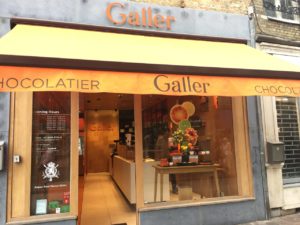
Final Thoughts – Chocolate Shops in Bruges
The Belfry in Bruges has 366 steps to climb to the top and 366 steps back to the bottom. In my mind, those stairs helped negate some of the chocolate calories consumed (let’s not get technical and point out that I probably burned enough calories for only one truffle). Thankfully, you gained no weight reading this post (I can’t say the same) as I had a lot of fun with the blog research into my three Best Chocolate Shops in Bruges. Note that because it was a hot summer day, I skipped the drinking chocolates and hot chocolate options – those will need to wait for my next visit along with the other 80 chocolate shops!
Do you have a favorite chocolate shop in Bruges? A favorite Belgian chocolate brand? Share in the comments please so I can add to my list of chocolates to research next time.
]]>
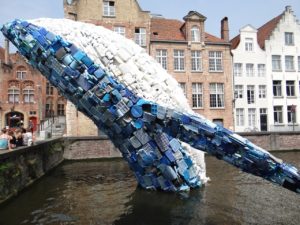
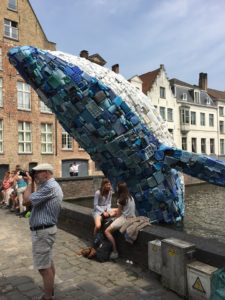
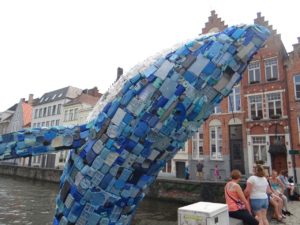
When I turned the corner walking toward the canal and the city center of Bruges (site of the Jan Van Eyck statue), I didn’t expect to see a massive four story high plastic whale “Skyscraper” aka “The Bruges Whale” trying to jump out of the water in the canal. The Bruges Whale is part of the Triennale Brugges which is an art exhibit held every three years throughout the city of Bruges, Belgium; this year’s theme is “Liquid City” and features fifteen works meant to be experienced, provoke conversation and serve as a meeting point. Contemporary art will definitely evoke a feeling from me – more often it is anger and confusion and sometimes it causes me to explore further and challenge my own beliefs. The Bruges Whale was a haunting piece that even now, a few weeks removed, continues to resonant with me.
Experiencing the Bruges Whale
Art can be very powerful and emotional, it might even get you to think. “The Bruges Whale” is like a tail fin to the head. It’s message is so strong you almost want to cry when you think about what people are doing to the oceans and to the wildlife (what’s left). For me, it felt as if the Bruges Whale wanted to escape the water and the plastic and beach itself on land (where it would likely die) rather than live in the water. You might think (or feel) otherwise when you see it in person or experience it from the water. That’s what art is meant to do….be an individual experience that may lead to a larger conversation. I kept coming back to the Bruges Whale many times during my three day visit to Bruges.
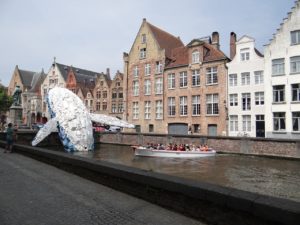
I saw it from all angles including the water on the canal boat tour. Each time I saw it at different times of day and night it was powerful and affected me. I watched other people interact with it and was a bit surprised that there wasn’t an environmental group or other nearby to engage people in the art – to talk about the plastic in the water and our responsibility today and in the future. For many, it was a photo op but I felt that so much more could have been said, more could be done to educate visitors or have a call to action. So while this was to be a post about plastic whale art in Bruges (look it’s so pretty), it’s a bit more now.
Time To Tweet “The Bruges Whale” and Learn More
So as I tweeted out my photos and mentioned it was “thought provoking”, the design firm replied to tag the other groups involved in creating this Skyscraper. So here’s more information about this art piece and hopefully once Triennale Brugges concludes in September, the Bruges Whale “Skyscraper” will travel to other cities to start a conversation about our role in plastics, consumption and ocean garbage.
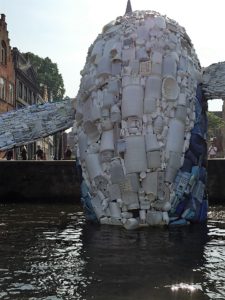
The New York based architect design firm, StudioKCA, designed Skyscraper (aka The Bruges Whale) and they collected over 5 tons of blue and white plastic waste from the Pacific Ocean that washed up along the Hawaiian shoreline. They also collected plastic waste found in the NYC waterways and Bruges canals. 5 tons of plastic waste in 4 months! That alone should make you sad, it makes me sad. Working in partnership with the Surfrider Foundation (Kauai Chapter) and Hawaii Wildllife Fund to collect, clean and sort the plastics that would be used in the Bruges Whale piece, StudioKCA also sought additional funding of $15,000 via their Bruges Whale Kickstarter campaign to support the heavy lifting (steel fabrication, assembly, transport, etc.).
I’m sure you are thinking 5 tons of blue & white plastic must be a lot but sadly it’s barely a drop of water in the ocean. Estimates are that there are 150 million (yes million) tons of plastic trash in the ocean with an additional eight million tons added each year. This isn’t global warming, this is MAN MADE catastrophe in the water in my opinion. The ocean has become a trash can and sadly wildlife suffer when they eat plastic (the now infamous turtle wtih a straw in its nose), get caught up in plastic and can ultimately die from plastic. The Bruges Whale is trying to make a statement about plastic waste in the oceans and the fact that we need to rethink how we use and dispose of plastic.
The Ban on Plastic Drinking Straws & Plastic Bags
Plastic bans have been in the news and social media lately (or maybe I’m more tuned in now). This past week, I’ve seen more stories and chatter about banning plastic straws, which isn’t a big laundry basket that ended up in the sea but given the sheer number of straws used worldwide on a daily basis (500 million per day in America!!!) – plastic drinking straws are a powerful start. They are so thin that they usually get past the filters at the processing centers. There are alternatives to plastic straws each with pros and cons so you need to research your best options if you give up plastic straws. Vancouver’s ban on plastic straws, foam cups and containers was recently passed and they are the first Canadian city to do so so this ban on plastics is only growing.
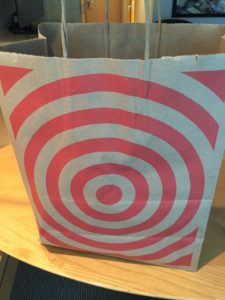
Another insidious plastic is the plastic bag that we all have from Target, CVS or a supermarket. These plastic bags are banned in a few U.S. cities like Seattle (where I received my first brown paper bag at Target) and many countries. I bring my own reusable bag for shopping when I travel (otherwise there is a fee for each plastic bag). It’s just a small step that each traveler can easily action immediately on their next trip.
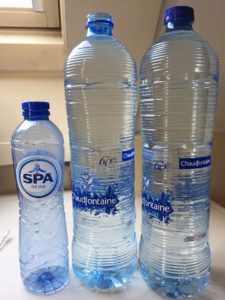
Choosing to bring your own reusable bag and refusing to use plastic drinking straws are a small step that we, as travelers, can make during our travels and in our everyday lives. It’s also something that we can educate others on – this plastic disaster. Many travelers already bring their own water bottles to refill in airports, hotels and in Bruges, there is a public water fountain to drink from. Again, all of these are small steps you can choose to do or not do. To be honest, I’m still learning – I’ve got my bag, say no to straws but am still having issues with bottled water abroad. During my trip to Rotterdam/Bruges/Ghent, restaurants served glass bottles of water (expensive) or charged (nominal) for filtered water. I would generally buy a small bottle of water (€2) and then go to the market for the larger (and cheaper at €1.10) bottles to refill the smaller bottle. Is recylcing enough? I don’t know to be honest.
The Great Pacific Garbage Patch
During my plastic googling, I learned (and sadly can’t unlearn) that there is something called “The Great Pacific Garbage Patch” (seriously? garbage patches and more than one? apparently about five known so far) is about 80% land made (Asia and the U.S.) while the other 20% is from boats in the water that either dump their trash or lose their shipping containers along the route. Recent estimates put the size at twice the state of Texas and costs to clean it up astounding (one estimate was $500m+ for one year). Since it’s “international waters” no country is keen to invest the time and money to clean the ocean so it’s up to the various non-profits that wish to do so. Since the garbage patch is still floating in the Pacific Ocean, it’s crazy to imagine that the bulk of the plastic materials collected and used in the making of the Bruges Whale “Skyscraper” wasn’t part of that. A few encouraging groups and people working on this massive endeavour The Ocean Cleanup and a Dutch high school kid who had an idea that now with $320m investment has produced a solution that is currently being tested in the Pacific Ocean.
Final Thoughts – The Bruges Whale & Plastic Waste
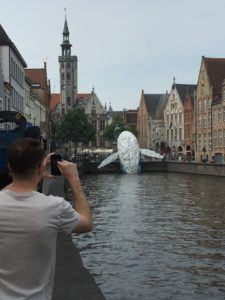
The Bruges Whale (Skyscraper) in the Triennale Bruges is hard to miss as it is only five minute walk beyond the Belfry (stay to the right and follow the road as it turns right toward the canal). The sheer size of the plastic whale is at first pretty stunning. After you read the information board it might make you ponder the oceans and plastic trash. But it may also stay with you long after you see it. In this Liquid City of Bruges – everything is fluid and change is possible once you look past the cute whale and truly see (and feel) the message.
How do you deal with plastic where you live? when you travel? Thoughts on the Bruges Whale?
]]>